India vs. Bharat: Contextual Name Explorer
Ready to Explore
Select a name and a context on the left to see detailed insights, etymological breakdowns, and usage recommendations.
INDIA VS BHARAT EXPLORERThe Two Names of One Land
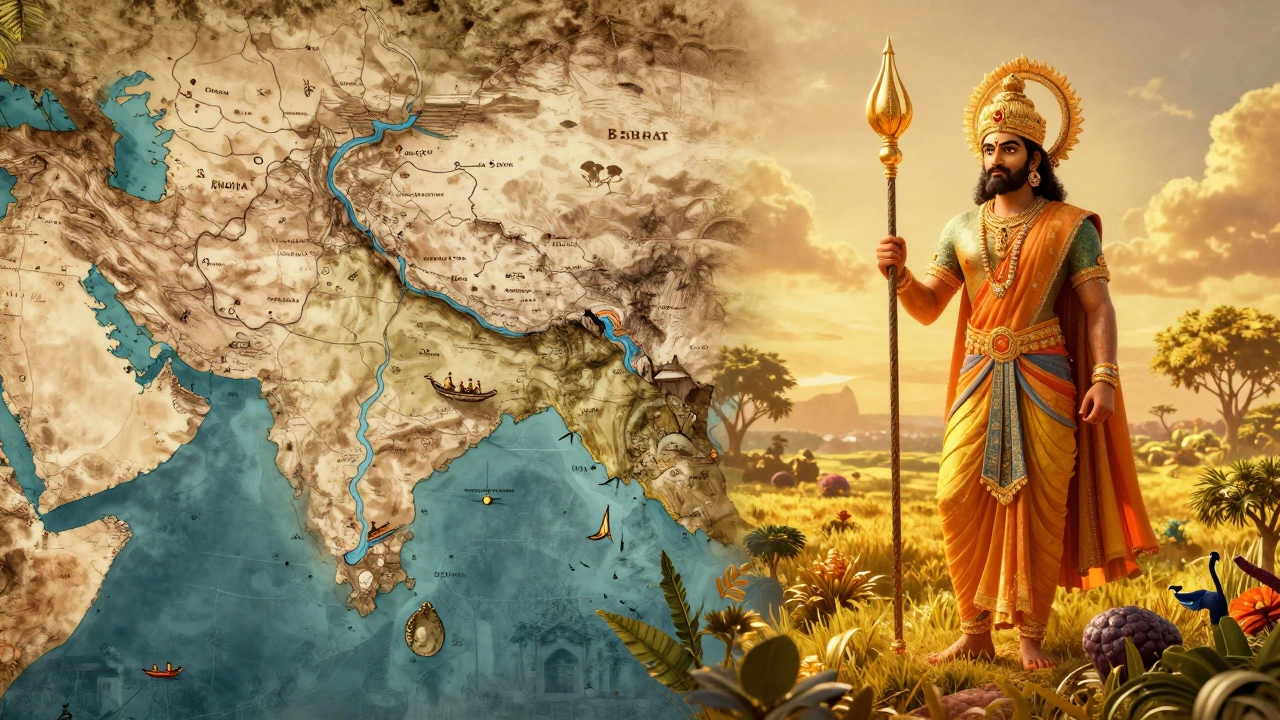
You have probably noticed something interesting. When you look at a map in English, the country is labeled India. But if you open the Constitution of that same country, or read a newspaper in Hindi, it is called Bharat The indigenous name for the Republic of India, derived from ancient Sanskrit texts.. This isn't just a translation quirk. It reflects a deep historical split between how the world sees the land and how its people see themselves.
If you are asking "What is the full meaning of India?", you are actually asking two different questions. You are asking about the external label given by travelers and traders, and you are asking about the internal identity rooted in thousands of years of mythology and geography. To understand the true weight of these names, we need to peel back the layers of linguistics, history, and colonial impact.
The External View: Where "India" Comes From
The name Sindhu The ancient Sanskrit name for the Indus River is the starting point. In the Vedic period, the great river flowing through the northwest was known as Sindhu. This river wasn't just water; it was a boundary, a lifeline, and a marker of civilization. The people living along its banks were called Sindhus.
Here is where the language shift happens. The Persians, who lived to the west, had a hard time pronouncing the "S" sound at the beginning of words. So, they turned "Sindhu" into "Hindu." They used this term to describe the lands beyond the Indus River. Later, the Greeks picked up the Persian word. Alexander the Great and his historians wrote about "Indos," which eventually morphed into "India" in Latin and then into modern European languages.
So, when you say "India," you are using a name that traveled thousands of miles. It passed through Persian ears, Greek maps, and Roman records before landing in English. It literally means "Land of the Indus River." For centuries, this was the only name the outside world knew. It defined the region by its western border rather than its cultural heart.
The Internal Identity: The Meaning of Bharat
While foreigners were calling it India, the people inside the subcontinent had their own name. That name is Bharata An ancient king and ancestor associated with the land of India in Hindu scriptures. But unlike "India," which is geographic, "Bharat" is mythological and spiritual.
The most common explanation comes from the Mahabharata One of the two major Sanskrit epics of ancient India, containing the story of the Pandavas and Kauravas. It refers to King Bharata, a legendary ruler who united the entire land under one rule. His reign was so prosperous and righteous that the land itself became synonymous with his name. If you ask an elder in rural India why the country is called Bharat, they will likely tell you it is because the land belongs to the descendants of Bharata.
There is another layer, though. In the Rigveda, the word "Bharata" also refers to a specific tribe or clan. Over time, as the influence of these clans spread across the subcontinent, the name expanded to cover the whole territory. It represents unity, strength, and a shared ancestry that predates any foreign invasion or colonial rule.
Other Ancient Names for the Subcontinent
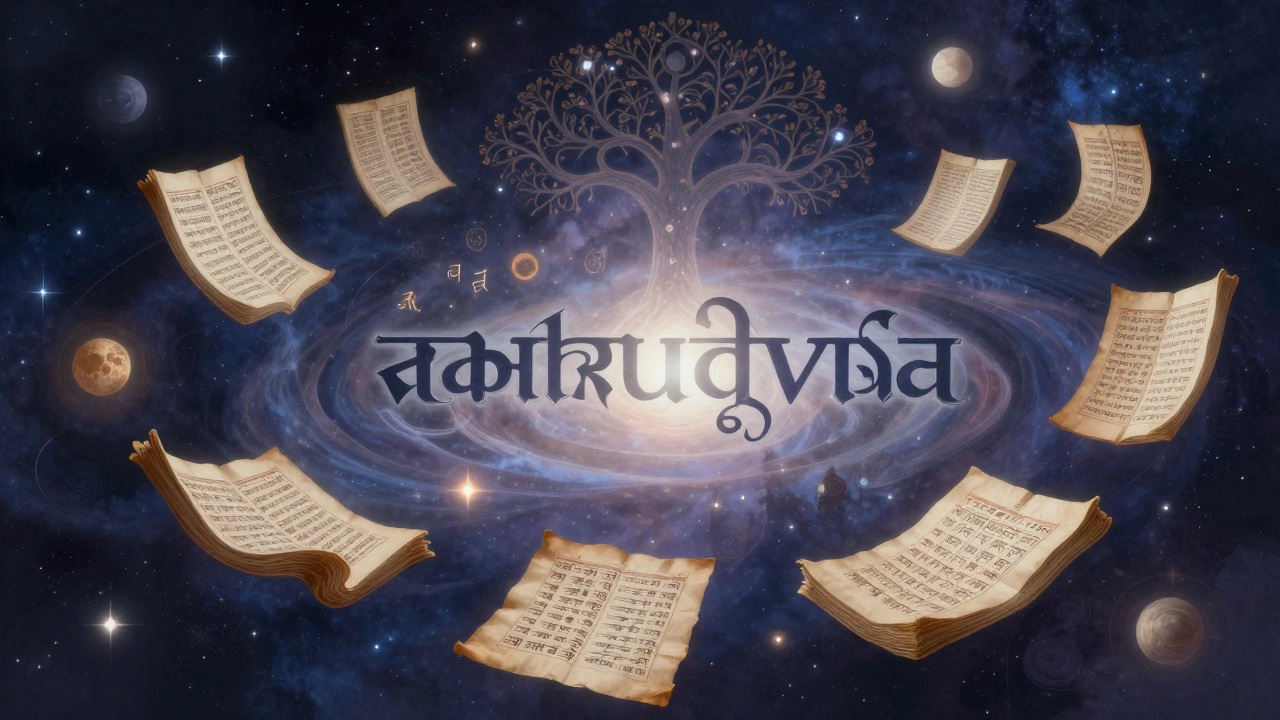
It wasn't just India and Bharat. Depending on who you talked to and where you stood, the land had other names too. These names reveal different aspects of the country's identity.
- Jambudvipa A cosmological concept in Hinduism, Buddhism, and Jainism referring to the terrestrial continent where humans live: In ancient cosmology, the world was divided into continents. Jambudvipa was the central continent, named after the mythical Jambu tree. It suggests a view of India as the center of the known world.
- Hindustan A term historically used to refer to the northern part of the Indian subcontinent, often associated with the Indo-Islamic culture: This word combines "Hindu" (from Sindhu) and "stan" (Persian for land). It originally referred to the northern plains but later came to represent the whole country during the Mughal era. It carries a strong cultural and poetic weight, especially in Urdu literature.
- Aryavarta The land of the Aryans, a term used in ancient texts to denote the northern regions of the Indian subcontinent: Meaning "Land of the Noble Ones," this term was used in early Sanskrit texts to describe the cultural heartland of the Vedic people. It is less commonly used today due to its complex historical associations.
- Bharatvarsha A term combining Bharat and Varsha (rain), implying the land of Bharat or the land that receives rain: This emphasizes the agricultural and monsoon-dependent nature of the civilization.
The Constitutional Debate: India vs. Bharat
You might wonder why this matters today. Well, it has been a topic of heated debate. For a long time, the official name of the country in international treaties was "Republic of India." However, the Constitution of India, adopted in 1950, stated clearly in Article 1: "India, that is Bharat, shall be a Union of States."
This phrasing was intentional. It acknowledged both names. "India" for the world, "Bharat" for the people. But recently, there has been a push to emphasize "Bharat" more strongly. Many argue that since "India" is a colonial-era derivative, the country should reclaim its indigenous name. Others point out that changing the name internationally would cause massive logistical headaches and disconnect the country from its global brand.
In 2024, a constitutional amendment was passed to make "Bharat" the primary official name alongside "India" in all government documents. This didn't change the English name used by the UN or FIFA, but it signaled a shift in national pride. It was a statement that the soul of the nation is Bharat, even if the passport says India.

Why the Distinction Matters to You
If you are writing content, traveling, or studying history, understanding this distinction helps you connect better. When you use "India," you are speaking the language of globalization, trade, and modern politics. When you use "Bharat," you are tapping into emotion, heritage, and spirituality.
Think about it like a person with a nickname. A child might be called "Mike" by friends and colleagues, but "Michael" by family and in formal settings. Both are correct. Both refer to the same person. But one feels casual and universal, while the other feels rooted and traditional. India is the Mike. Bharat is the Michael.
For creators and writers, using "Bharat" can add depth to your storytelling. It shows respect for the local perspective. It acknowledges that the land has a voice that existed long before British ships arrived. It’s not about rejecting the name India; it’s about honoring the name Bharat.
Common Misconceptions About the Name
There are some myths floating around that need clearing up. Let’s set the record straight.
Myth 1: India means "Riches" or "Gold". Some people claim that "India" comes from the Sanskrit word "Indu," meaning moon, or "Indra," the king of gods, suggesting wealth. While Indra is a significant deity, the linguistic evidence points firmly to the Indus River (Sindhu). The association with gold came later, from the Greek word "Indos" being linked to precious spices and gems found in the region, not from the name itself.
Myth 2: Bharat is a new political invention. No. The name Bharat appears in the Vedas, which are over 3,000 years old. It was used by Ashoka in his edicts. It was used by ancient scholars. The recent emphasis on it is political, but the name itself is ancient.
Myth 3: Hindustan is the same as India. Not exactly. Historically, Hindustan referred specifically to the northern part of the subcontinent, particularly the areas under Mughal control. Today, it is used poetically to mean the whole country, but geographically, it has a narrower scope.
How to Use These Names Correctly
If you are creating content for an international audience, stick with "India." It is the recognized standard. It avoids confusion. However, if you are writing about culture, religion, or history, weaving in "Bharat" adds authenticity.
For example, instead of saying "History of India," you could write "The Epic History of Bharat." Instead of "Indian Cuisine," consider "Culinary Traditions of Bharat." Small changes like this signal to your readers that you understand the nuance. It builds trust. It shows you aren't just skimming the surface.
Remember, language shapes perception. By choosing the right name, you choose the right lens through which your audience views the subject. Are you looking at a geopolitical entity? Use India. Are you exploring a civilizational soul? Use Bharat.
Is India and Bharat the same country?
Yes, they refer to the exact same geographical and political entity. "India" is the name used internationally and in English contexts, derived from the Indus River. "Bharat" is the indigenous name used within the country, derived from ancient Sanskrit texts and mythology. The Constitution of India recognizes both names.
Why is India called India?
The name India comes from the river Indus. In Sanskrit, the river was called Sindhu. The Persians pronounced it as Hindu, and the Greeks translated it to Indos. Over time, this evolved into India in Latin and English. It essentially means "Land of the Indus River."
Who gave the name Bharat to India?
The name Bharat is attributed to King Bharata, a legendary figure mentioned in the Mahabharata and other ancient texts. He is said to have ruled the entire land with righteousness, leading to the territory being named after him. The name also appears in the Rigveda, referring to an ancient tribe.
What is the difference between Hindustan and India?
Historically, Hindustan referred to the northern part of the Indian subcontinent, particularly the region influenced by Indo-Islamic culture. India refers to the entire country. Today, Hindustan is often used poetically or culturally to represent the whole nation, but it is not the official legal name.
Did India change its name to Bharat in 2024?
In 2024, India passed a constitutional amendment to include "Bharat" as the primary official name alongside "India" in domestic government documents. However, the international name remains "Republic of India" for diplomatic and treaty purposes. It was a reaffirmation of the indigenous name rather than a complete replacement.