
One-Line Poetry Analyzer
Enter your draft monostich or epigram below to check its syllable count, character length, and structural quality based on the guide's principles.
Ever stared at a blank page, felt a surge of emotion, and managed to squeeze it into exactly one sentence? You might think you just wrote a quote. But if that line has rhythm, imagery, or a twist, you’ve actually written a poem. It’s a common confusion. We are taught that poems need stanzas, rhymes, and pages. But the most powerful verses in history often fit on a single line.
If you are wondering what is a one-line poem called, the answer depends on where you look. In Western literature, it’s often a monostich or an epigram. In Japan, it’s a Haiku (though technically three lines, it’s often treated as a single thought). And in India, this tradition runs deep, from ancient Sanskrit sutras to modern Hindi couplets that function as singular poetic statements. Let’s break down the names, the rules, and how to write them yourself.
The Technical Name: Monostich
In strict literary terms, a one-line poem is called a Monostich. This word comes from the Greek "monos" meaning "single" and "stikhos" meaning "line". It is the simplest form of poetry possible. There are no other lines to support it. No chorus. No bridge. Just one standalone statement.
Most people don’t use the word "monostich" in daily conversation. It sounds academic. But knowing the term helps when you are researching poetry forms. A monostich can be free verse (no rhyme) or rhymed (if it rhymes with itself, which is rare unless it’s part of a larger structure, but usually, a monostich stands alone without needing a rhyme partner).
Why does this matter? Because brevity forces precision. When you only have one line, every word must earn its place. You cannot hide behind filler words. This makes the monostich a great exercise for writers who want to sharpen their voice.
The Famous Cousin: The Epigram
If the monostich is the technical name, the Epigram is the popular personality. An epigram is a brief, clever, and memorable statement. While epigrams can be two lines (couplets), many famous ones are just one line long.
Think of Oscar Wilde. He didn’t always write sonnets. He wrote sharp, one-liners that stuck in your brain:
- "I can resist everything except temptation."
- "Be yourself; everyone else is already taken."
These are technically prose quotes, but they function as poetry because of their rhythm and wit. In poetry circles, an epigrammatic monostich is prized for its "punchline" effect. It sets up an expectation and subverts it, or it states a truth so plainly that it becomes profound.
The key difference between a random tweet and an epigram is intentionality. An epigram is crafted. It uses devices like irony, paradox, or antithesis. If your one-line poem makes someone smile, frown, or nod in agreement immediately, you’ve likely written an epigram.
The Japanese Standard: Haiku
You cannot talk about short poetry without mentioning Haiku. Originating in Japan, the haiku is arguably the world’s most famous short form. Technically, a haiku is three lines with a 5-7-5 syllable structure. However, in English translation and modern practice, it is often viewed as a single moment captured in time.
Many beginners try to write haikus as one continuous line. For example:
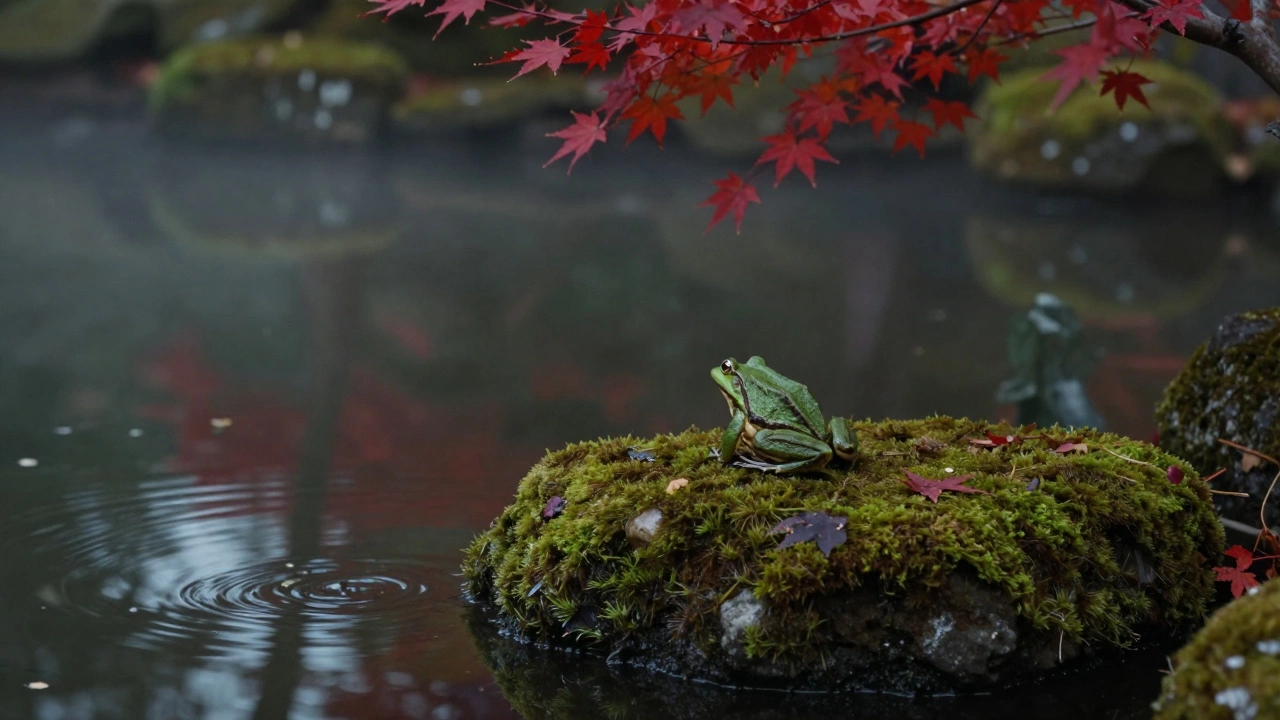
"An old silent pond... / A frog jumps into the pond- / Splash! Silence again."
This is Matsuo Bashō, the master of haiku. Notice how it captures a specific image (the pond), an action (the frog), and a feeling (silence). Even though it’s three lines, the *idea* is singular. If you were to compress this into one line for a social media caption, it would still retain its poetic essence.
Modern haiku in English often drops the 5-7-5 rule entirely, focusing instead on the "cutting word" or the juxtaposition of two images. If you are writing one-line poetry inspired by haiku, focus on nature, seasons, and a sudden shift in perspective.
One-Line Poetry in India: From Sutra to Status
Since you mentioned short poetry in India, this deserves special attention. Indian literature has a massive tradition of concise expression. The concept of Sutra literally means "thread" or "string," referring to aphoristic texts that condense complex philosophical ideas into single, dense lines. These aren’t just poems; they are instructions for life, compressed to save memory space before the printing press.
But let’s look at modern Indian poetry. In Hindi and Urdu traditions, we have the Misra or Sher. A Ghazal consists of couplets (two lines), but each half (misra) often stands as a complete poetic thought. Many poets today share single misras on Instagram or WhatsApp, treating them as one-line poems.
Consider this style of Hindi poetry:
"Khamoshi mein bhi shor hota hai, agar dil kisi ka ho."
(Translation: "There is noise even in silence, if the heart belongs to someone.")
This is a classic one-liner. It’s emotional, rhythmic, and complete. In the digital age, these have become "WhatsApp Statuses" or "Instagram Captions." They are the new folk poetry. People don’t call them monostichs; they call them "quotes" or "shayari." But structurally, they are one-line poems.
Indian one-line poetry often focuses on:
- Emotion: Love, heartbreak, longing.
- Nature: Rain, moon, flowers (very common in Tamil and Malayalam poetry too).
- Spirituality: Short mantras or reflections on God and self.
If you are writing in an Indian context, don’t worry about the Western term "monostich." Focus on the *rasa* (essence/flavor). Does your line evoke a feeling? If yes, it works.
Micro-Poetry: The Digital Age Format
In 2026, the most common place for one-line poetry is not a book-it’s social media. Platforms like X (formerly Twitter), Instagram, and Threads favor brevity. This has given rise to Micro-Poetry. Micro-poetry is any poem under 140 characters (or whatever the current limit is). It includes monostichs, haikus, and flash fiction.
Why is this format exploding?
- Attention Spans: People scroll fast. A one-liner stops the scroll.
- Shareability: It’s easy to retweet or repost a single line than a five-page epic.
- Accessibility: Anyone can write a one-liner. You don’t need a degree in creative writing.
Popular hashtags like #poetrycommunity or #shortpoetry are filled with monostichs. Writers like Rupi Kaur gained fame partly through this aesthetic-short, punchy, visual lines. While her work is often multi-line, the core unit is the single impactful sentence.
How to Write a Powerful One-Line Poem
So, you want to write one. Here is a simple framework. Don’t overthink it. Start with a feeling, then strip away everything unnecessary.
Step 1: Identify the Core Image
Don’t start with an abstract idea like "sadness." Start with a concrete object. A broken cup. A rainy window. A missed call. Concrete images trigger emotions faster than abstract words.
Step 2: Add a Twist or Contrast
A flat statement is just a fact. A poem needs tension. Use contrast. Light vs. Dark. Noise vs. Silence. Hope vs. Despair.
Bad: "The sun is hot."
Better: "The sun burns brighter than my hope."
Step 3: Cut the Fat
Read your line aloud. Remove any word that doesn’t change the meaning. If you can remove "very," "really," or "that," do it. Every syllable counts.
Step 4: Check the Rhythm
Does it sound good? Poetry is music for the eyes. Read it again. If you stumble, rewrite it. Simple words often have better rhythm than fancy ones.

Comparison: Types of Short Forms
| Form | Structure | Origin | Best Used For |
|---|---|---|---|
| Monostich | 1 Line | Western/Greek | Philosophical truths, witty observations |
| Epigram | 1-2 Lines | Classical Rome/Greece | Humor, satire, clever twists |
| Haiku | 3 Lines (5-7-5) | Japan | Nature, seasonal moments, mindfulness |
| Couplet | 2 Rhyming Lines | Global (Shakespeare, Urdu) | Romance, narrative closure |
| Sutra/Aphorism | 1 Dense Line | India/Sanskrit | Spiritual guidance, life lessons |
Common Mistakes to Avoid
Writing short is harder than writing long. Here is where most people fail:
- Being Too Vague: "Life is hard." This is true, but it’s boring. Show us *how* it’s hard. "The coffee went cold while I cried."
- Forcing Rhyme: If your one line doesn’t naturally rhyme, don’t force it. Forced rhymes make poetry feel childish. Free verse is perfectly valid.
- Ignoring Punctuation: In a one-liner, punctuation changes the meaning. A period ends the thought. An ellipsis (...) suggests continuation. A question mark invites the reader in. Choose wisely.
Final Thoughts on Brevity
Whether you call it a monostich, an epigram, a haiku fragment, or just a "good quote," the value lies in the impact. In a world full of noise, a single clear line cuts through. It respects the reader’s time. It demands attention.
Next time you feel a strong emotion, don’t write a paragraph. Try one line. See what happens. You might just discover that less really is more.
Is a haiku considered a one-line poem?
Technically, no. A traditional haiku has three lines with a 5-7-5 syllable count. However, because it expresses a single, unified moment or image, it is often grouped with short-form poetry. Some modern poets write haikus as a single line of text, but the structure remains distinct from a monostich.
What is the difference between a quote and a one-line poem?
A quote is usually a factual statement or opinion attributed to someone. A one-line poem uses literary devices like metaphor, rhythm, and imagery to evoke emotion. If a line makes you feel something deeply rather than just understand a point, it leans more toward poetry.
Can a one-line poem rhyme?
Yes, but it’s rare for a single line to rhyme with itself unless it uses internal rhyme (rhyming words within the same sentence). More commonly, a one-line poem is part of a larger rhyming scheme, but as a standalone monostich, it usually relies on rhythm and meaning rather than end-rhyme.
What are examples of famous one-line poems?
While many famous lines are part of longer poems, some stand alone. Examples include: "Hope is the thing with feathers" (Emily Dickinson, often cited as a stanza but functions as a singular image), or Oscar Wilde's epigrams like "I have nothing to declare except my genius." In Indian literature, short Bhakti verses or Tagore's Gitanjali excerpts often serve this purpose.
How do I start writing short poetry for Instagram?
Start by observing your surroundings. Pick one object or feeling. Write it down in a plain sentence. Then, remove unnecessary words. Add a metaphor or a twist. Keep it under 280 characters. Use relevant hashtags like #micro_poetry or #onelinerpoem to reach the right audience.