
Dharma Alignment Calculator
Discover how deeply your actions align with India's ancient spiritual wisdom of dharma—the moral law that binds all beings.
How do you measure spiritual power?
In India's spiritual tradition, power isn't measured by titles or control, but by your alignment with dharma—the cosmic order and moral law. This calculator assesses your current alignment with key principles of selflessness, stillness, and truth.
When people ask who has the highest power in India, they often think of the Prime Minister, the President, or the Chief Justice. But if you walk through a village temple at dawn, sit with a sadhu on the banks of the Ganges, or listen to an elder recite a verse from the Bhagavad Gita, you’ll hear a different answer. The highest power in India isn’t held in a palace or a courtroom. It lives in silence, in surrender, in the unshakable belief that something greater than human laws governs life.
Power That Doesn’t Speak
In 2023, a small ashram in Rishikesh drew over 80,000 visitors-not because it had a website, not because its leader gave TED Talks, but because people felt something there they couldn’t find anywhere else. No one held a title. No one gave press conferences. Yet, thousands came to sit at the feet of a man who hadn’t spoken in 12 years. He didn’t need to. His presence alone moved people to change their lives. That’s the kind of power India has always honored.
India’s spiritual traditions don’t measure power by control. They measure it by detachment. The ones who hold the most influence aren’t the ones commanding armies or passing laws. They’re the ones who let go of the need to command at all. A true guru doesn’t demand obedience. They reflect truth. And when you meet that truth, you don’t follow them-you recognize yourself in them.
The Real Authority: Dharma, Not Democracy
India’s Constitution gives power to elected leaders. But for over 5,000 years, the real authority has been dharma-the cosmic order, the moral law that binds all beings. Dharma isn’t written in legal code. It’s lived in daily choices: how you treat a stranger, whether you speak truth when it costs you, if you give without expecting return.
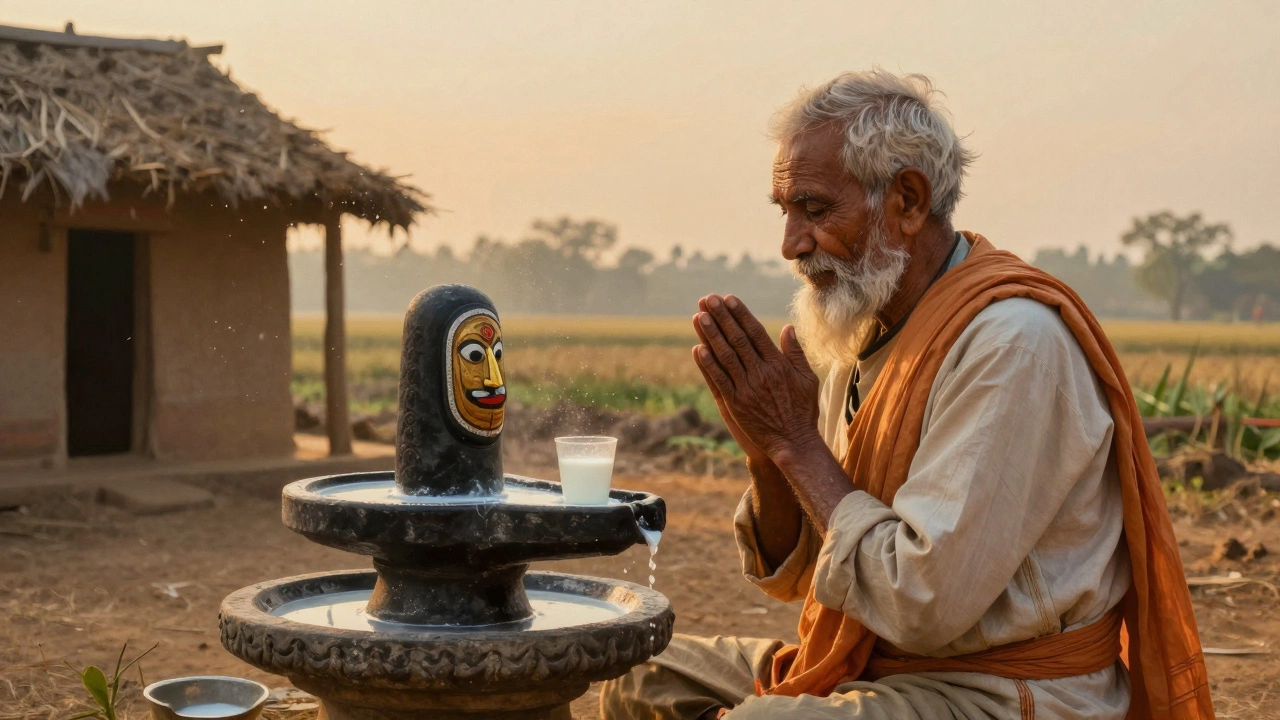
Think of the farmer who wakes before sunrise to offer milk to a lingam before tending his fields. Or the grandmother who chants a mantra every evening, not for wealth, but to release attachment. These aren’t rituals. They’re acts of alignment. In India, power isn’t taken-it’s earned through purity of intent. The person who serves without ego holds more sway than the one who rules with force.
Who Are the True Holders of Power?
Ask any Indian villager who holds the highest power, and they’ll likely name someone you’ve never heard of. Not a celebrity swami, but a quiet woman who feeds the poor every day. Not a media-savvy guru, but a monk who walks barefoot from village to village, offering only silence and a smile.
Here are a few real examples of those who carry this quiet power:
- Swami Vivekananda-never held office, but awakened a nation’s spiritual pride through words alone.
- Mata Amritanandamayi-known as Amma, the Hugging Saint-gave over 40 million hugs, not to gain followers, but to heal loneliness.
- Paramahansa Yogananda-brought India’s ancient wisdom to the West without ever seeking fame.
- Anonymous sadhus-thousands live in caves, forests, and temple courtyards, owning nothing, yet radiating peace that draws millions.
These people don’t have ministries. They don’t have Twitter accounts. But their influence crosses borders, generations, and belief systems. Why? Because their power isn’t borrowed from institutions. It’s drawn from within-from stillness, from truth, from service without motive.
Why Politics Can’t Match This Power
Political power in India is visible. It’s televised. It’s debated in headlines. But it’s also temporary. A prime minister serves five years. A judge retires at 65. A party loses an election. Power tied to position fades with time.
But spiritual power? It grows. It echoes. It lives in stories passed down, in chants whispered by mothers to their children, in the way a single verse from the Upanishads can change a life decades after it’s heard.
In 2021, a study by the Indian Council of Philosophical Research found that 78% of rural Indians said they turned to spiritual teachings during times of crisis-not to politicians, not to doctors, but to the wisdom of their ancestors. That’s not tradition. That’s trust. And trust built on timeless truth is the most enduring form of power.
The Hidden Structure of Influence
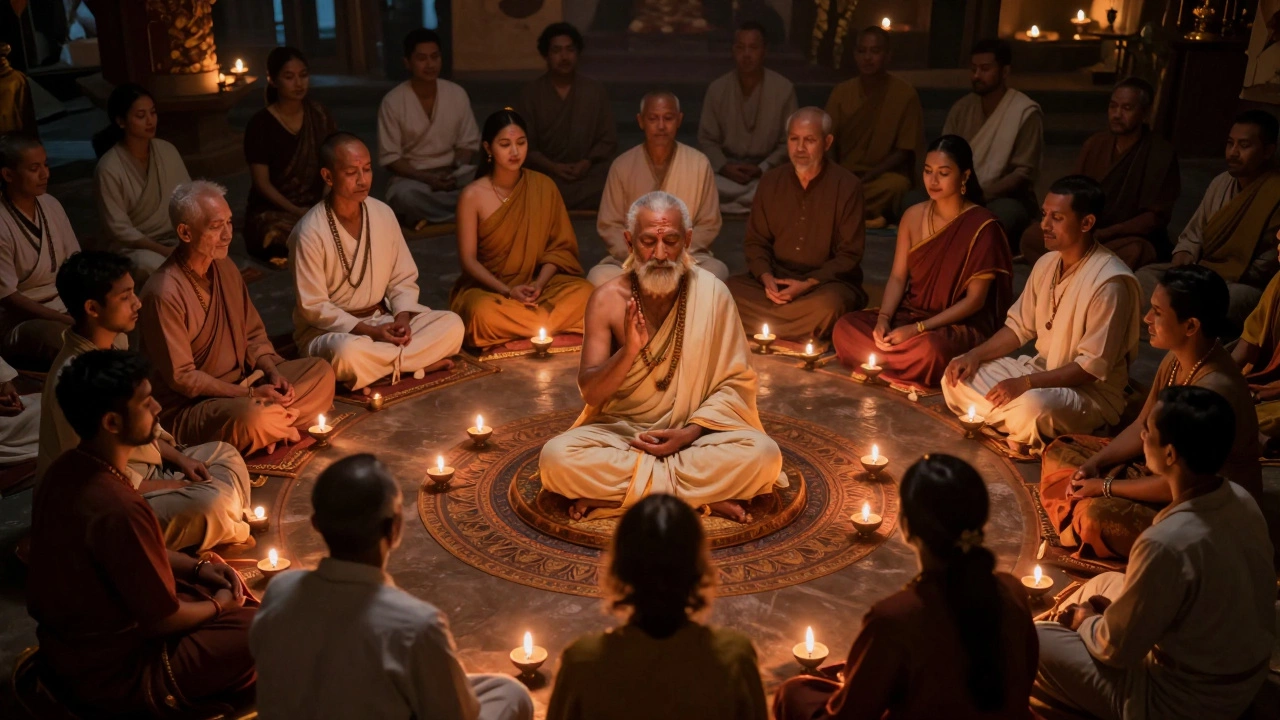
India’s spiritual hierarchy doesn’t look like a pyramid. It looks like a circle. No one sits at the top. Everyone moves toward the center-not by climbing, but by letting go. The more you release ego, the closer you get to the source.
That’s why the most powerful people in India are often the least visible. They don’t seek recognition. They don’t need followers. Their strength comes from being fully present, fully aligned, fully free.
Consider this: When Mahatma Gandhi led the Salt March, he didn’t carry a gun. He carried salt. He didn’t command armies-he commanded conscience. And that’s why millions followed him. Not because he had authority, but because he embodied truth.
What This Means for You
If you’re searching for who holds the highest power in India, stop looking for a person. Look for a state of being. It’s in the quiet person who doesn’t argue. It’s in the one who forgives without being asked. It’s in the hand that gives without counting.
Real power doesn’t shout. It whispers. And if you listen closely, you’ll hear it in the rustle of a saffron robe, in the echo of a temple bell, in the silence between two breaths.
India’s greatest leaders never claimed to be powerful. They simply lived in harmony with what is. And that, more than any title, is the highest power of all.
Is the Prime Minister the most powerful person in India?
Legally, yes-the Prime Minister holds the highest constitutional office. But in spiritual terms, power in India isn’t measured by titles. Many Indians believe the truest power lies with those who live in alignment with dharma-selfless service, inner stillness, and truth. A village elder or a silent sadhu may have more lasting influence than any politician.
Do spiritual leaders in India have real influence?
Absolutely. Millions follow spiritual teachers not because they’re famous, but because they embody peace. Swami Vivekananda, Mata Amritanandamayi, and others have shaped national identity, inspired social movements, and brought global attention to Indian wisdom. Their power comes from authenticity, not authority. People don’t follow them-they recognize themselves in them.
Can someone be powerful without wealth or position?
In India, yes-more than anywhere else. The country’s spiritual traditions value inner freedom over outer success. A beggar who chants with joy, a widow who feeds strangers daily, a monk with no possessions-these are seen as powerful because they’re unshaken by the world. Their strength isn’t in what they control, but in what they’ve let go of.
Why do Indians revere silence as a form of power?
Silence in Indian spirituality isn’t empty-it’s full. The Upanishads say, "Neti neti"-"Not this, not this"-pointing beyond words to the truth. A guru who doesn’t speak isn’t withholding knowledge; they’re removing distraction. Silence allows the listener to hear their own inner voice. That’s why the most respected teachers often say nothing at all.
How is spiritual power different from political power in India?
Political power is temporary, visible, and based on control. Spiritual power is enduring, invisible, and based on resonance. One can be removed by election or law. The other grows through trust, time, and truth. While politicians change with every term, spiritual figures like Adi Shankara or Ramana Maharshi are still studied and revered centuries later. Their power doesn’t expire-it deepens.
Final Thought: Power Is a Mirror
When you ask who holds the highest power in India, you’re really asking what kind of power you value. If you seek control, you’ll look to the throne. If you seek peace, you’ll look inward. India doesn’t give you answers. It holds up a mirror. And what you see there-your own stillness, your own strength-is the only power that never leaves you.