Wisdom Application Planner
Select a current challenge you are facing. This tool will recommend a relevant timeless quote and help you deconstruct it into an actionable step for the week.
Recommended Quote:
Core Lesson:
Your Weekly Action Plan:
Remember: Wisdom is pragmatic, not decorative. Reflect at the end of the week on whether this changed your outcome.
There is no single sentence that holds the title of "the wisest quote" for every person, at every moment. If you ask a grieving parent, they might point to words about loss and love. If you ask an entrepreneur facing bankruptcy, they will likely cite resilience or risk. The search for the ultimate piece of advice is really a search for relevance. We are looking for a mirror that reflects our current struggle back to us with clarity.
However, if we look at history, certain phrases have survived because they address the fundamental human condition: how to live well despite uncertainty. These aren't just catchy slogans; they are mental models for navigating chaos. Let's look at why some quotes stick while others fade, and which ones actually help you make better decisions today.
The Problem with Seeking One "Perfect" Quote
We often treat quotes like magic spells. We think if we memorize the right line, it will solve our problems. This is a trap. A quote is not a solution; it is a lens. It changes how you see the problem, but you still have to do the work. For example, knowing that Socrates said, "The unexamined life is not worth living," doesn't automatically make you self-aware. It just gives you permission to pause and ask yourself what you're doing.
The danger of chasing one "wisest" quote is that it promotes passive consumption. You read it, feel good for ten seconds, and then go back to scrolling. True wisdom requires application. When you strip away the poetic language, most great quotes boil down to simple behavioral instructions: be kind, stay curious, accept change, or take responsibility. The value isn't in the words themselves, but in the action they trigger.
Candidates for the Title: Why They Resonate
While there is no objective winner, a few contenders consistently rise to the top across cultures and centuries. Here is why they endure.
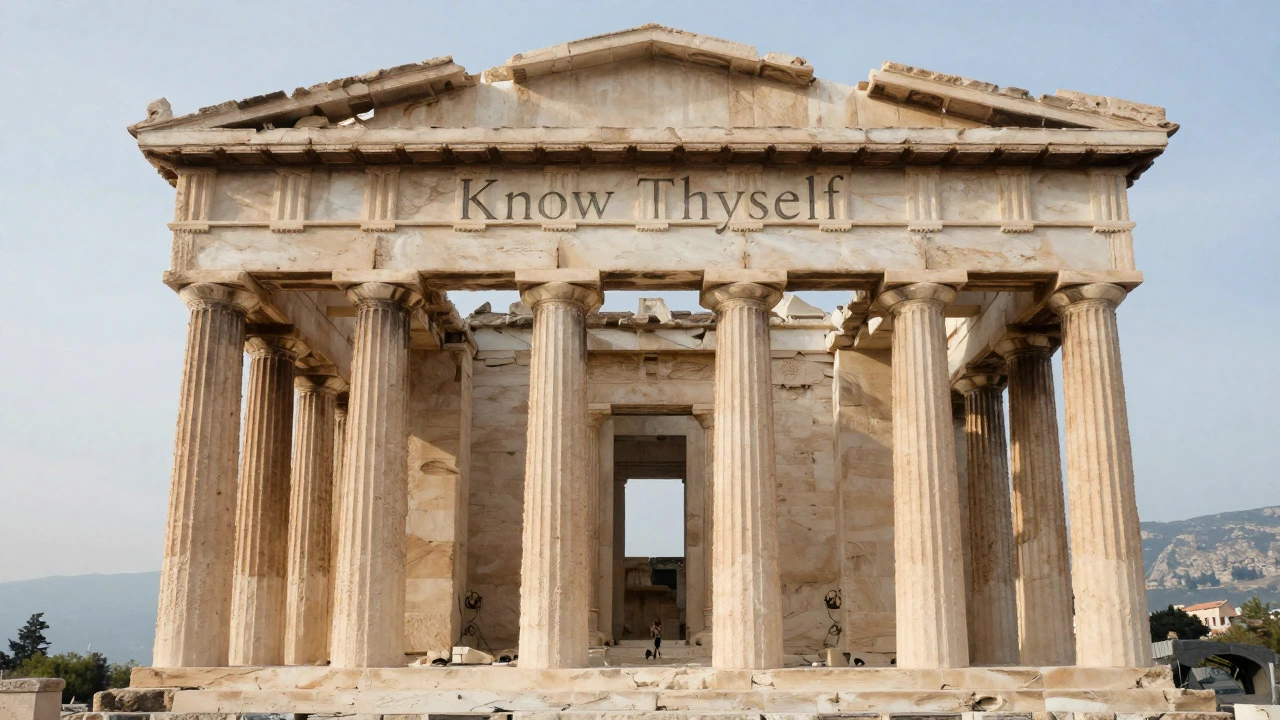
1. "Know Thyself."
Inscribed above the Temple of Apollo at Delphi, this command is attributed to various ancient Greek thinkers, including Thales and Socrates. It remains powerful because it is the root of all other wisdom. If you don't understand your own biases, fears, and desires, you cannot navigate the world accurately. In a modern context, this translates to emotional intelligence. Before you can lead a team or fix a relationship, you must audit your own internal state. It is the starting point of any meaningful growth.
2. "This too shall pass."
Often traced back to Persian poetry and later popularized by King Solomon (though historically debated), this phrase is the antidote to both arrogance and despair. It reminds us that high points are temporary, so don't get cocky, and low points are also temporary, so don't give up. This concept, known as impermanence in Buddhist philosophy, reduces anxiety. When you are stuck in traffic or dealing with a crisis, remembering that the current state is fluid helps you maintain perspective. It is a tool for emotional regulation.
3. "Be the change you wish to see in the world."
Popularly attributed to Mahatma Gandhi, though he phrased it differently in Hindi ("If we could change ourselves, the tendencies in the world would also change"), this quote shifts the locus of control from external to internal. We often wait for governments, companies, or partners to fix things. This quote argues that influence starts with personal behavior. It is actionable. Instead of complaining about a toxic workplace, you model respect. Instead of waiting for society to be kinder, you act kindly. It turns passive frustration into active agency.
| Quote Theme | Core Lesson | Best Applied When... | Potential Pitfall |
|---|---|---|---|
| Self-Awareness (Socrates) | Examine your motives | You feel confused or reactive | Can lead to over-analysis paralysis |
| Impermanence (Persian/Buddhist) | All states are temporary | You are experiencing extreme highs or lows | May encourage complacency if misused |
| Agency (Gandhi) | Action precedes result | You feel helpless or frustrated | Can ignore systemic issues requiring collective action |
Context Determines Wisdom
Wisdom is situational. A quote that is brilliant during a war might be useless during a creative block. Consider the difference between Stoic and Romantic philosophies. Stoics like Marcus Aurelius advise accepting fate and controlling only your reactions. Romantics like Ralph Waldo Emerson advocate for individual expression and breaking norms. Neither is wrong; they serve different needs. If you are trying to survive a trauma, Stoicism is wise. If you are trying to write a novel, Romanticism is wiser.
Think about your current life stage. Are you building something? Then quotes about discipline and consistency matter more. Are you losing something? Then quotes about acceptance and letting go are more relevant. The "wisest" quote is the one that matches your immediate reality. Ignoring context leads to bad advice. Telling someone who is hungry to "meditate on abundance" is not wisdom; it's noise.
How to Use Quotes Without Becoming Passive
To move beyond just reading quotes, you need a system for integrating them. Here is a practical approach:
- Select One Per Week: Don't overwhelm yourself. Pick one quote that resonates with a current challenge.
- Deconstruct It: Ask, "What specific behavior does this suggest?" If the quote is "Do hard things," what is one hard thing you avoided this week?
- Apply It Immediately: Use the quote as a prompt for action. If it's about kindness, send one thoughtful email. If it's about focus, turn off notifications for an hour.
- Reflect Later: At the end of the week, did the quote change your outcome? If not, discard it. Wisdom is pragmatic, not decorative.
This method turns abstract ideas into concrete habits. It prevents the "quote collection" syndrome where you save hundreds of images but change nothing in your life. The goal is not to know many quotes, but to live out a few deeply.
Why Ancient Wisdom Still Works Today
You might wonder why we still look to people from thousands of years ago. The answer is that human nature hasn't changed. We still fear death, seek connection, crave status, and struggle with uncertainty. Technology has changed, but the psychological drivers remain the same. A quote from Lao Tzu about water flowing around obstacles applies just as well to navigating office politics as it did to feudal China.
Moreover, these quotes have been stress-tested. They have survived empires rising and falling. If a piece of advice has remained relevant for 2,000 years, it likely touches on a universal truth. Modern self-help books often chase trends, but ancient wisdom focuses on foundations. Foundations last longer than trends.
Finding Your Own Wisdom
Ultimately, the wisest quote is the one you discover through experience. Reading about swimming won't teach you to swim. You have to get wet. Similarly, you learn about patience by being stuck in traffic without getting angry. You learn about courage by speaking up when it's scary. Once you've lived through these moments, the quotes become shorthand for lessons you already know. They validate your experience rather than replace it.
So, don't spend too much time searching for the perfect sentence. Spend time living a life that generates its own wisdom. When you face a difficult decision, trust your gut, check your facts, and act with integrity. That is the real wisdom. The quotes are just reminders along the way.
Is there an objectively wisest quote in history?
No. Wisdom is subjective and contextual. What is wise for one person in a specific situation may not apply to another. Quotes gain their power from how well they resonate with your current challenges and values, not from any inherent universal superiority.
Who said "Know thyself"?
The phrase "Know thyself" is famously inscribed at the Temple of Apollo at Delphi. While often attributed to Socrates, it was likely known earlier among the Seven Sages of Greece, such as Thales. It emphasizes the importance of self-awareness as the foundation of ethical living.
How can I use quotes to improve my daily life?
Instead of just reading quotes, pick one that addresses a current struggle. Break it down into a specific action. For example, if the quote is about gratitude, write down three things you are thankful for each day. Apply the lesson actively and reflect on whether it changed your perspective or behavior.
Why do ancient quotes still feel relevant today?
Human psychology and social dynamics have remained largely consistent throughout history. Issues like fear, ambition, relationships, and mortality are timeless. Ancient philosophers addressed these core human experiences, making their insights applicable regardless of technological advancements.
What is the difference between a smart quote and a wise quote?
A smart quote often demonstrates cleverness, wordplay, or intellectual insight. A wise quote offers guidance on how to live well, handle adversity, or understand human nature. Wisdom implies depth, empathy, and practical application to life's challenges, whereas smarts may just be about information or wit.