India Lifestyle Compatibility Quiz
Living in India involves navigating unique challenges like flexible time, intense community involvement, and sensory-rich environments. This tool helps you gauge how well your personality aligns with the typical Indian way of life.
Your Profile:
Score:
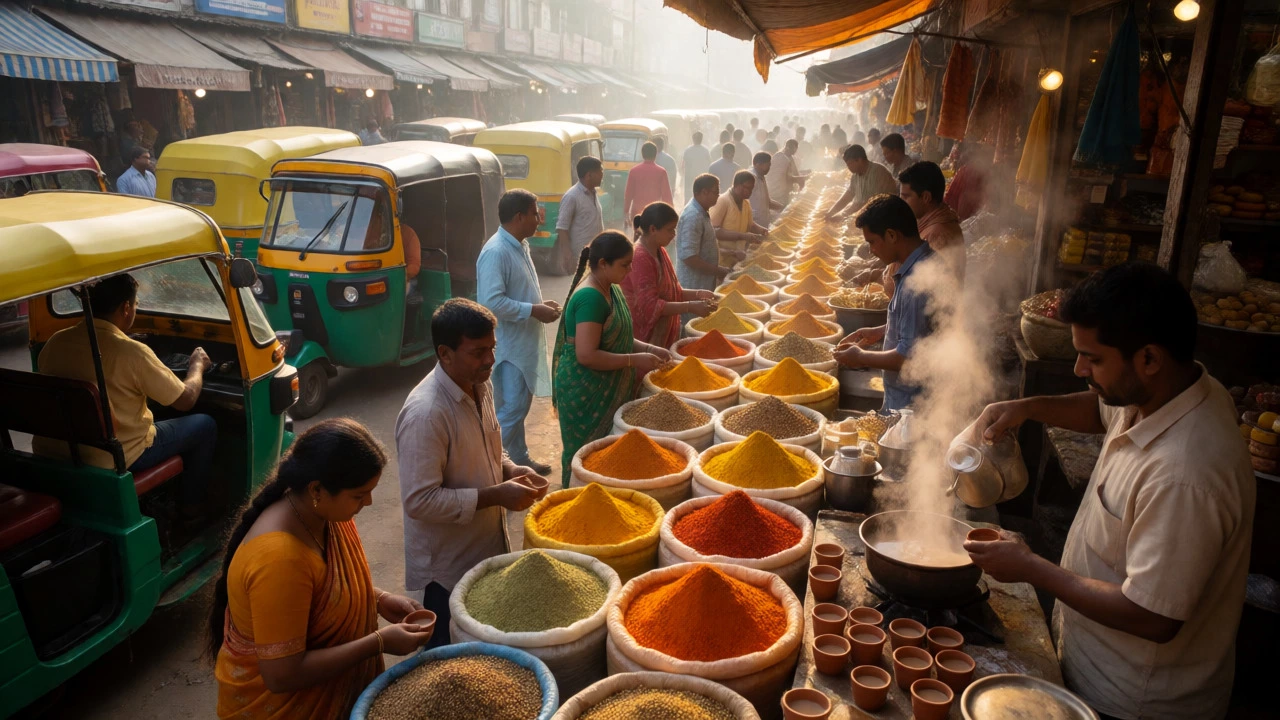
You step off a plane in Delhi or Mumbai, and the first thing that hits you isn't the heat-it's the noise. It’s a wall of sound: honking horns, temple bells, street vendors shouting prices, and thousands of conversations happening at once. If you are asking what is the way of life in India, you aren't just asking about food or festivals. You are asking about how people navigate chaos, community, and tradition in one of the most densely populated places on Earth.
Living here isn't like living in London or New York. The rules are different. Time is flexible. Personal space is a suggestion, not a rule. And family? Family is everything. Let’s break down what actually happens when you live here, stripped of the postcard filters.
The Rhythm of Daily Life
In most Western countries, your day is dictated by the clock. In India, it’s often dictated by the sun, the traffic, and the needs of the household. Mornings start early, usually before 6 AM. Why? Because the air is cooler, and the streets are quieter. This is when families wake up, offer prayers, and prepare for the day ahead.
Daily Routine in urban India typically involves navigating intense traffic to get children to school and parents to work. Unlike in many European cities where public transport is predictable, commuting in Indian metros can take two hours each way. But this doesn't stop the hustle. Street food stalls open before sunrise, serving hot chai (tea) and parathas (stuffed flatbreads) to office workers who grab them while walking.
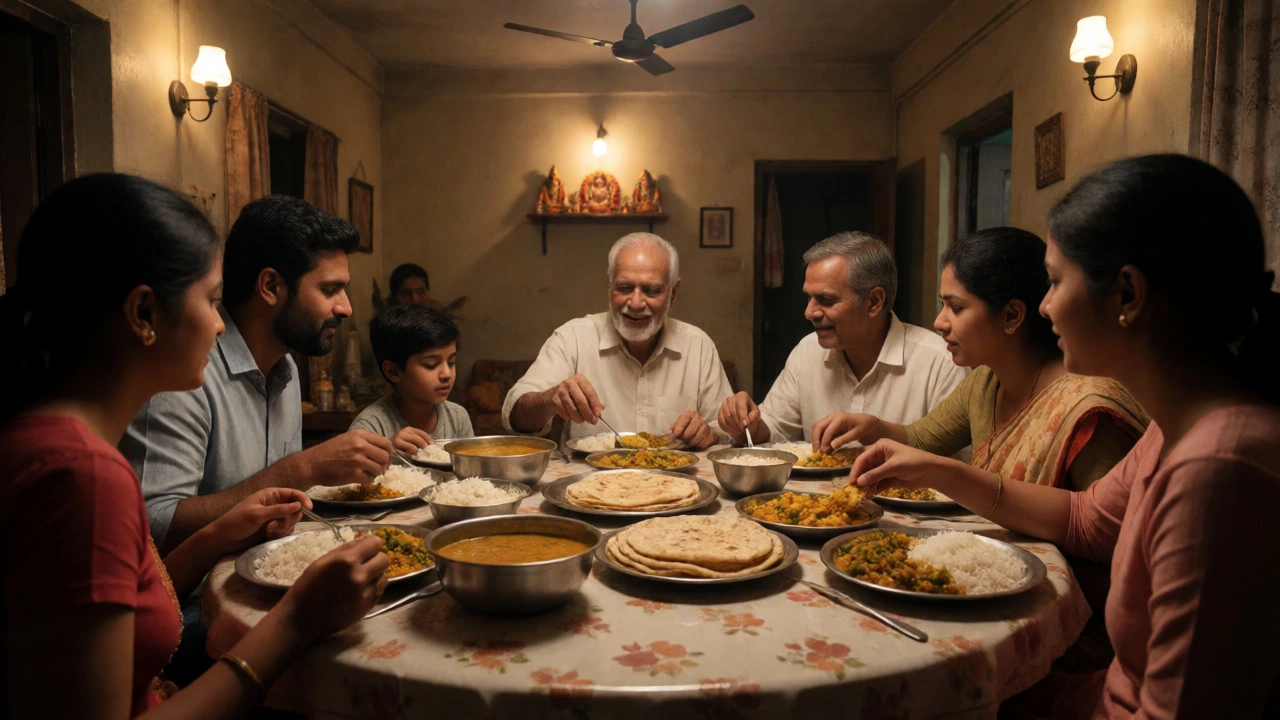
Afternoons are slow. In smaller towns, many businesses close during the hottest part of the day. People eat lunch around 1 PM, often the main meal of the day. Evenings are when the social fabric comes alive. Parks fill with families, women gather for gossip and shopping, and men play cricket or cards. Dinner is late, often after 8 PM, and is frequently a communal affair.
Family as the Core Unit
If there is one entity that defines Indian society, it is the Joint Family System. While nuclear families are becoming common in big cities due to housing constraints, the cultural ideal remains rooted in multi-generational living. Grandparents, parents, uncles, aunts, and cousins often share resources, responsibilities, and spaces.
This structure changes how decisions are made. You don't just choose a job; you consult your elders. You don't just date someone; you introduce them to the entire clan. Privacy is scarce. Your aunt might walk into your room without knocking to ask if you’ve eaten. It can feel intrusive to an outsider, but it creates a safety net. No one goes hungry, no one faces illness alone, and childcare is shared.
| Feature | Traditional Joint Family | Modern Nuclear Family |
|---|---|---|
| Living Arrangement | Multi-generational under one roof | Parents and children only |
| Decision Making | Consensus-based with elder authority | Individual or couple-led |
| Childcare | Shared among relatives | Nannies or daycare centers |
| Financial Flow | Common pool of resources | Separate accounts |
The Food Culture: More Than Just Eating
You cannot understand the way of life in India without talking about food. It is not just fuel; it is love, religion, and social currency. Indian Cuisine varies wildly from state to state. North India leans heavy on wheat-based breads like roti and naan, rich gravies, and dairy products. South India relies on rice, lentils, coconut, and fermented batters like dosa and idli.
Most Indians eat with their hands. There is a tactile connection to the food that utensils miss. Spices are used liberally-not just for heat, but for flavor and health. Turmeric, cumin, coriander, and ginger are staples in almost every kitchen.
Eating out is also a major pastime. From roadside dhabas (eateries) serving dal makhani to high-end restaurants in Mumbai, dining is social. Vegetarianism is widespread, driven by religious beliefs in Hinduism, Jainism, and some Buddhist traditions. Many households have separate kitchens for vegetarian and non-vegetarian cooking to maintain purity standards.
Faith and Festivals: The Calendar of Life
India is secular by constitution but deeply religious in practice. Faith permeates daily life. You will see small shrines at traffic lights, idols in car dashboards, and prayers before starting a business venture. Hinduism is the majority religion, followed by Islam, Christianity, Sikhism, Buddhism, and Jainism. Each community observes its own festivals, creating a calendar packed with holidays.
Diwali, Eid, Christmas, Gurpurab, and Holi are not just days off; they are massive logistical events. Homes are cleaned, new clothes are bought, sweets are exchanged, and communities gather. During Diwali, entire neighborhoods light up with diyas (oil lamps). During Eid, families visit each other, sharing biryani and sheer khurma. These celebrations reinforce social bonds and provide a break from the daily grind.
Work-Life Balance: Hustle vs. Heritage
The stereotype of the "hardworking Indian" holds water, but with nuance. Urban professionals, especially in IT and corporate sectors, work long hours. The "9-to-5" is rare; 10-to-7 is more common, often extending into weekends. However, this intensity is balanced by strong holiday usage and family time.
Agriculture still employs nearly half the workforce. For rural India, life is tied to the monsoon seasons. Farmers wake before dawn, work through the heat, and rely heavily on government schemes and local markets. The pace is physically demanding but follows natural cycles rather than digital notifications.
Unemployment and underemployment remain challenges, leading many young Indians to pursue higher education aggressively. Degrees are seen as tickets to stability. This pressure shapes the teenage experience, where academic success is paramount.

Transportation and Infrastructure
Getting around is an adventure. Public Transportation in major cities includes metro systems, buses, and auto-rickshaws. The Delhi Metro, for instance, is world-class-clean, efficient, and affordable. But outside metros, infrastructure can be patchy. Roads are often congested, potholed, and chaotic.
Traffic rules are guidelines. Lane discipline is optional. Honking is communication. Pedestrians cross wherever they want. Two-wheelers outnumber cars significantly because they are cheaper and easier to maneuver. This environment requires alertness. Walking in India means staying aware of vehicles coming from all directions, including sidewalks.
Social Etiquette and Hospitality
Indians are famously hospitable. Guests are treated as gods (*Atithi Devo Bhava*). If you visit an Indian home, expect to be fed until you burst. Refusing food can sometimes be seen as rude, though polite refusals are accepted after a few offers.
Greetings vary. *Namaste* (hands pressed together) is common, especially in traditional settings. Handshakes are standard in business. Touching feet of elders is a sign of respect in Hindu households. Women may avoid physical contact with unrelated men depending on conservatism levels.
Personal space is minimal. Crowds are normal. Queues form organically, often pushing forward. Patience is tested, but resilience is built. You learn to negotiate, to haggle, and to adapt quickly to changing plans.
Challenges and Rewards
Life in India has hurdles. Pollution in cities like Delhi can reach hazardous levels. Bureaucracy can be slow and frustrating. Corruption exists, though digital payments (UPI) have reduced petty bribery. Healthcare quality varies drastically between private hospitals and public clinics.
But the rewards are immense. Community support is unmatched. Cultural richness is endless. Food is incredible. Costs for services like domestic help, healthcare, and education are low compared to the West. The vibrancy of life-the colors, sounds, smells-keeps people engaged.
Understanding the way of life in India means accepting contradictions. It is modern yet traditional. Chaotic yet organized. Spiritual yet materialistic. To live here is to embrace complexity.
Is life in India safe for foreigners?
Generally, yes. Violent crime against tourists is rare. Petty theft can occur in crowded areas. Women should take standard precautions regarding night travel and dressing modestly in conservative regions. Trust your instincts and use reputable transport apps.
Do people speak English in India?
Yes, English is widely spoken in urban areas, government offices, and businesses. It serves as a link language across states. However, proficiency varies. In rural areas, regional languages dominate. Learning basic Hindi phrases helps immensely.
What is the cost of living in India?
It is significantly lower than in Europe or North America. Rent, food, and transportation are cheap. Domestic help is affordable. However, luxury goods, imported electronics, and premium healthcare can cost similar to global prices. Budgeting depends on your lifestyle choices.
How does the caste system affect daily life?
Its influence varies by region and context. In urban professional circles, it is less visible. In rural areas and traditional marriages, it plays a significant role. Social interactions and marriage alliances often consider caste background, though legal protections exist against discrimination.
Is vegetarianism common in India?
Approximately 20-40% of Indians are vegetarian, depending on the survey. It is highest in Gujarat, Rajasthan, and parts of South India. Many non-vegetarians still eat vegetarian meals regularly for religious or health reasons. Veg options are abundant everywhere.