When people ask, "What is the symbol of India?" they’re not just looking for one thing. India doesn’t have a single symbol-it has a whole set of them, each carrying weight, history, and deep meaning. These aren’t just decorations on a government letterhead. They’re living representations of a nation’s soul, shaped by thousands of years of culture, struggle, and unity.
The National Flag: A Sky of Courage and Peace
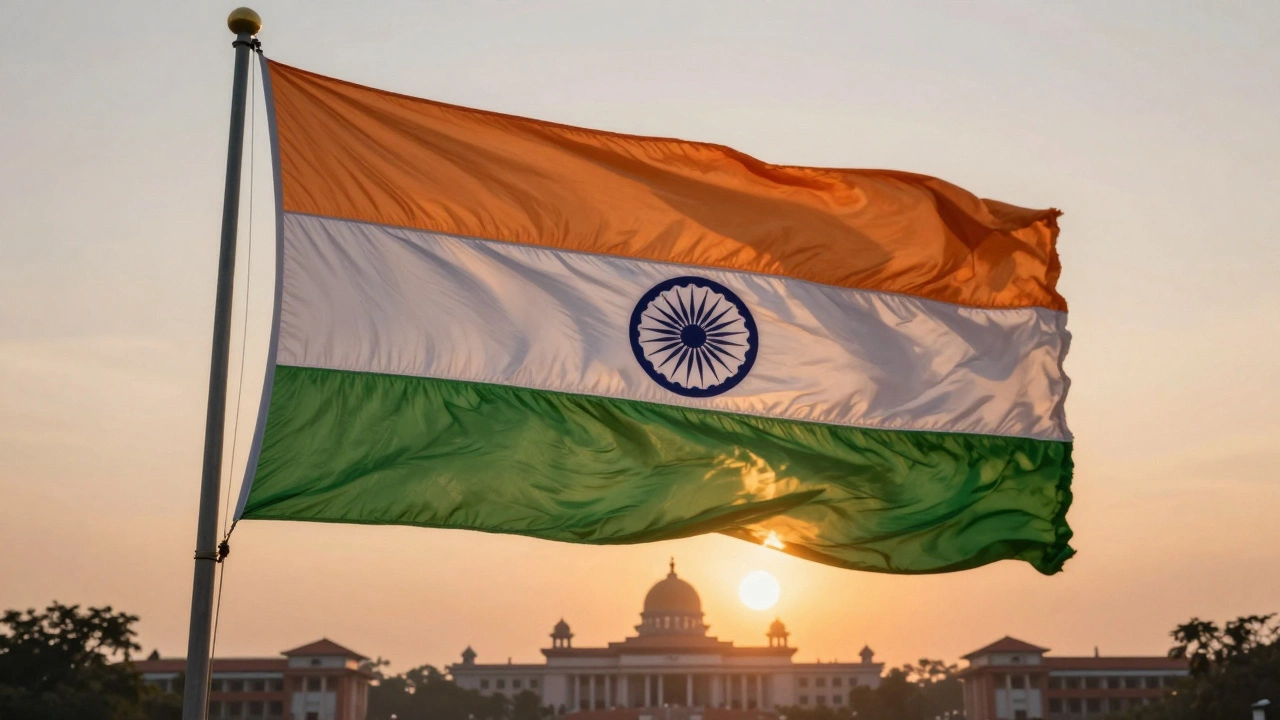
The Indian national flag, called the Tiranga, is one of the most recognized symbols in the world. It’s not just three stripes of saffron, white, and green. Each color has a purpose. Saffron stands for courage and sacrifice. White represents truth and peace. Green stands for faith and fertility. At its center is the Ashoka Chakra-a navy blue wheel with 24 spokes. This isn’t just a design. It’s the Dharmachakra from the Lion Capital of Ashoka, an ancient symbol of law, justice, and the eternal cycle of life. The flag flies over every school, court, and government building. And when it’s raised on Independence Day, millions stand silent, not just out of pride, but because they feel it-this cloth carries their history.
The National Animal: The Tiger That Roars Through India’s Soul
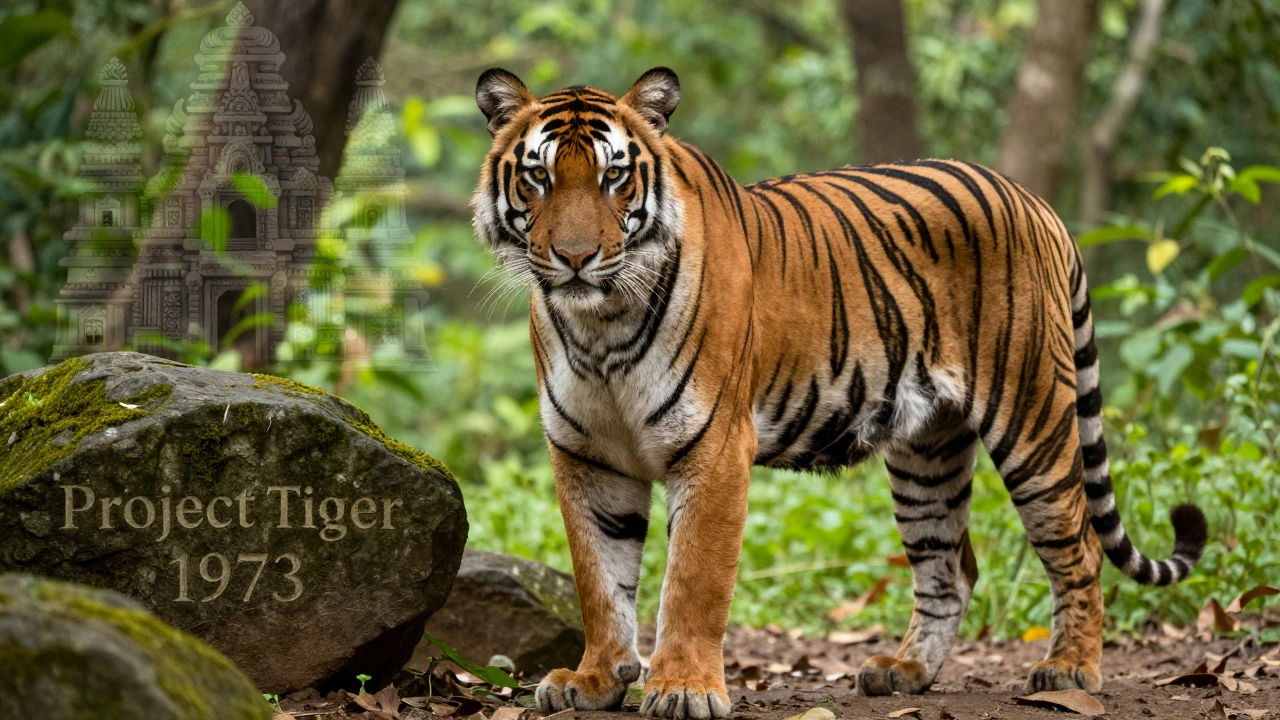
India’s national animal is the Bengal tiger. Not the lion, not the elephant, but the tiger. Why? Because the tiger is wild, powerful, and rare. It doesn’t bow to humans. It lives in forests that have stood for centuries, even as cities grew around them. The tiger symbolizes strength, grace, and resilience. It’s also a warning. When tiger numbers dropped to fewer than 1,400 in the 1970s, India didn’t look away. It launched Project Tiger in 1973-one of the first and most successful wildlife conservation efforts in the world. Today, over 3,000 tigers roam India’s forests. The tiger isn’t just an animal here. It’s a promise: that a nation can protect what’s wild and still thrive.
The National Bird: The Peacock’s Dance of Beauty and Pride
The peacock is India’s national bird. It’s colorful. It’s elegant. And it’s everywhere-in temple carvings, folk dances, wedding attire, and even on old coins. The peacock isn’t just pretty. It represents grace, patience, and beauty that comes from within. In Hindu mythology, the peacock is linked to Saraswati, the goddess of wisdom, and Kartikeya, the god of war. It’s a paradox: a bird that can be both serene and fierce. When you see a peacock spread its tail, it’s not showing off. It’s reminding you that true strength doesn’t need to shout. It just needs to be seen.
The National Emblem: Lions That Watch Over the Nation
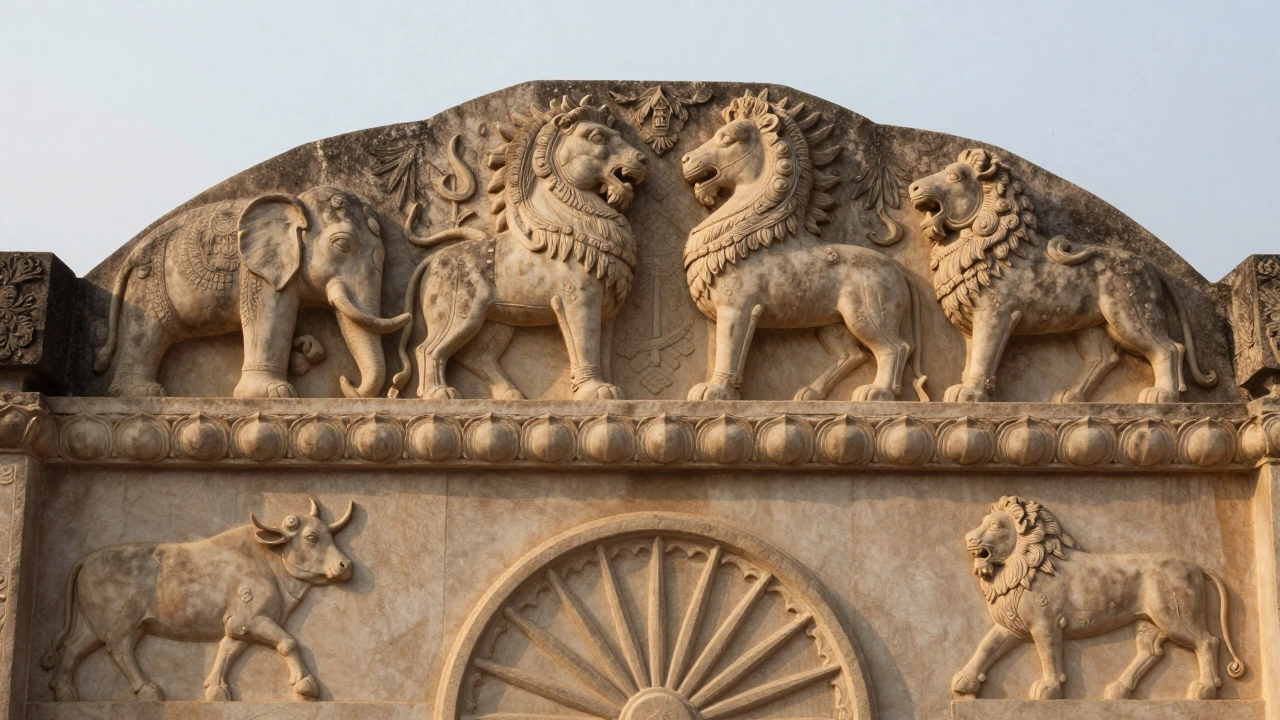
The national emblem of India is the Lion Capital of Ashoka. It’s a sculpture of four lions standing back to back, mounted on a base with an elephant, a galloping horse, a bull, and a lion. Below them is the Ashoka Chakra, just like on the flag. This emblem isn’t new-it’s over 2,300 years old. It was carved during the reign of Emperor Ashoka, who turned from war to peace after the bloody Kalinga War. The lions don’t roar. They watch. They protect. And they stand on a lotus, symbolizing purity and enlightenment. You’ll find this emblem on Indian passports, currency, and government buildings. It’s the official seal of the Republic. It says: India is not just a land. It’s a legacy.
The National Flower: The Lotus That Grows in Mud
The lotus is India’s national flower. It grows in muddy water but blooms clean and untouched. That’s the point. It doesn’t fight the dirt. It rises above it. In Hindu and Buddhist traditions, the lotus is the seat of gods and goddesses. It’s the symbol of purity, knowledge, and spiritual awakening. You’ll see it in temple art, in yoga poses, and even in the design of the new Parliament building. The lotus doesn’t need to be loud. It just needs to be. And that’s why it’s India’s flower.
The National Tree: The Banyan That Holds the Community Together
The banyan tree is India’s national tree. It doesn’t grow straight up. It spreads. Its aerial roots grow down from branches, touch the ground, and become new trunks. One tree becomes a forest. That’s the metaphor. In villages across India, the banyan tree is the meeting place. Elders sit under it. Children play around it. Markets form beneath its shade. It’s called the "village elder" because it outlives generations. It doesn’t demand attention. It just provides. Its roots hold the soil. Its branches hold the people. That’s what India is-connected, enduring, and quietly strong.
Why These Symbols Matter More Than Ever
In a world that’s loud and fast, India’s symbols remind us of what lasts. The tiger doesn’t chase trends. The lotus doesn’t care if you post a photo of it. The banyan tree doesn’t need likes. These symbols were chosen not for their beauty alone, but for what they teach. They’re not about power. They’re about balance. About resilience. About rising above without losing your roots. When you ask what the symbol of India is, you’re really asking: what holds this country together? The answer isn’t one thing. It’s a quiet collection of things that have outlived empires, wars, and changing times. And they’re still here.
Is the tiger the only national symbol of India?
No, the tiger is just one of India’s national symbols. Others include the national flag (Tiranga), the peacock (national bird), the lotus (national flower), the banyan tree (national tree), and the Lion Capital of Ashoka (national emblem). Each represents a different value-strength, grace, purity, endurance, and justice.
Why was the peacock chosen as India’s national bird?
The peacock was chosen because it’s native to India, deeply rooted in its art and mythology, and symbolizes beauty, grace, and pride. It’s also a bird that doesn’t flee danger-it stands tall. Its presence in ancient temples and royal courts made it a natural choice for a symbol that reflects India’s cultural richness.
What does the Ashoka Chakra on the flag mean?
The Ashoka Chakra is a 24-spoke wheel taken from the Lion Capital of Ashoka. Each spoke represents a virtue like love, peace, truth, and courage. Together, they stand for the Dharma-righteousness and moral law. It’s not just decoration. It’s a reminder that progress must be guided by ethics, not just power.
Why is the banyan tree India’s national tree?
The banyan tree symbolizes unity and longevity. Its aerial roots grow into new trunks, creating a vast network that supports life. In Indian villages, it’s where communities gather. It outlives generations. That’s why it was chosen-it reflects how India holds together: through deep roots, shared space, and quiet strength.
Are these symbols still relevant today?
Yes, more than ever. In a time of rapid change, these symbols ground people in shared values. The lotus reminds us to rise above hardship. The tiger reminds us to protect what’s fragile. The banyan reminds us that strength comes from connection. They’re not relics. They’re living lessons.
What’s Next? Understanding India Through Its Symbols
If you want to understand India, don’t just look at its cities or its economy. Look at its symbols. Visit a temple where the peacock is carved into the stone. Walk under a banyan tree in a village square. Watch the flag rise at a school in rural Rajasthan. These aren’t just images on paper. They’re part of daily life. They’re how a billion people remember who they are. And that’s the real symbol of India-not a single thing, but a thousand quiet truths held together by history, nature, and spirit.