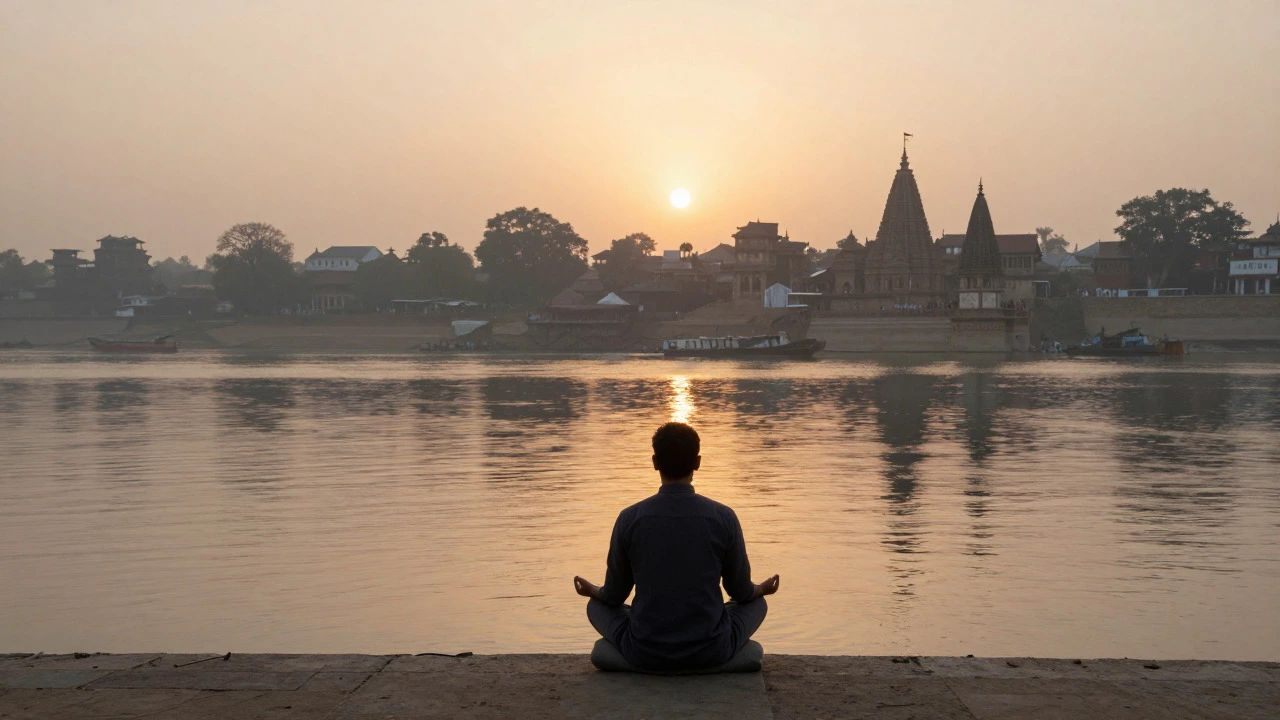
Indian Wisdom & Strength Generator
Explore Wisdom
Select a theme or generate a random quote to understand the core of Indian strength.
"You have the right to work, but never to the fruit of work."
Meaning: This teaching shifts focus from anxiety about results to mastery of action, freeing the mind from stress.
Have you ever wondered why India feels different from almost anywhere else on Earth? It’s not just the spices in the air or the chaotic beauty of its streets. There is a deeper current running through this land-a quiet, unshakeable force that has survived empires, invasions, and centuries of change. When people ask, "What is the power of India?" they are often looking for something beyond GDP figures or military might. They are sensing a spiritual gravity.
This power is rooted in ancient wisdom traditions that teach resilience, acceptance, and inner peace. It is found in the spiritual quotes passed down through generations, from the Vedas to the teachings of modern gurus. In this article, we explore how these timeless words reflect the true strength of India: a strength that comes from within.
The Core of Indian Strength: Inner Peace Over Outer Force
Most nations define power by their ability to project force. India defines it by its ability to absorb chaos and remain centered. This concept is central to Indian Philosophy, which emphasizes inner equilibrium as the highest form of strength. Think about it. How many times have you seen an Indian family navigate a crisis with a calm demeanor that seems impossible to outsiders? That isn’t ignorance; it is practice.
The foundation of this mindset lies in the idea of Dharma-your duty and righteousness. When you know your Dharma, external events lose their power to disturb you. You act because it is right, not because you seek reward. This creates a society where individuals are self-regulated by conscience rather than fear of punishment. It is a subtle but profound source of national stability.
- Resilience: The ability to bounce back from hardship without losing hope.
- Acceptance: Understanding that change is constant (impermanence).
- Service: Finding power in helping others (Seva).
Spiritual Quotes That Define the Indian Spirit
Words carry energy. In India, spiritual quotes are not just decorations for social media; they are mantras for living. They serve as anchors during turbulent times. Let’s look at some powerful examples that capture the essence of Indian strength.
Why are spiritual quotes important in Indian culture?
They provide concise wisdom that guides daily behavior and mental attitude. Unlike complex philosophical texts, quotes are easy to remember and apply in moments of stress or decision-making.
Consider this teaching from the Bhagavad Gita: "You have the right to work, but never to the fruit of work." This simple sentence shifts the focus from anxiety about results to mastery of action. It frees the mind. When millions of people operate from this place of detachment, the collective energy becomes incredibly stable.
Another powerful quote comes from Mahatma Gandhi: "Be the change that you wish to see in the world." This is not just a nice slogan; it is a call to personal responsibility. It suggests that real power starts with the individual. If you want a peaceful country, you must first be a peaceful person. This inward-looking approach is unique to India’s contribution to global thought.
The Role of Diversity in Unity
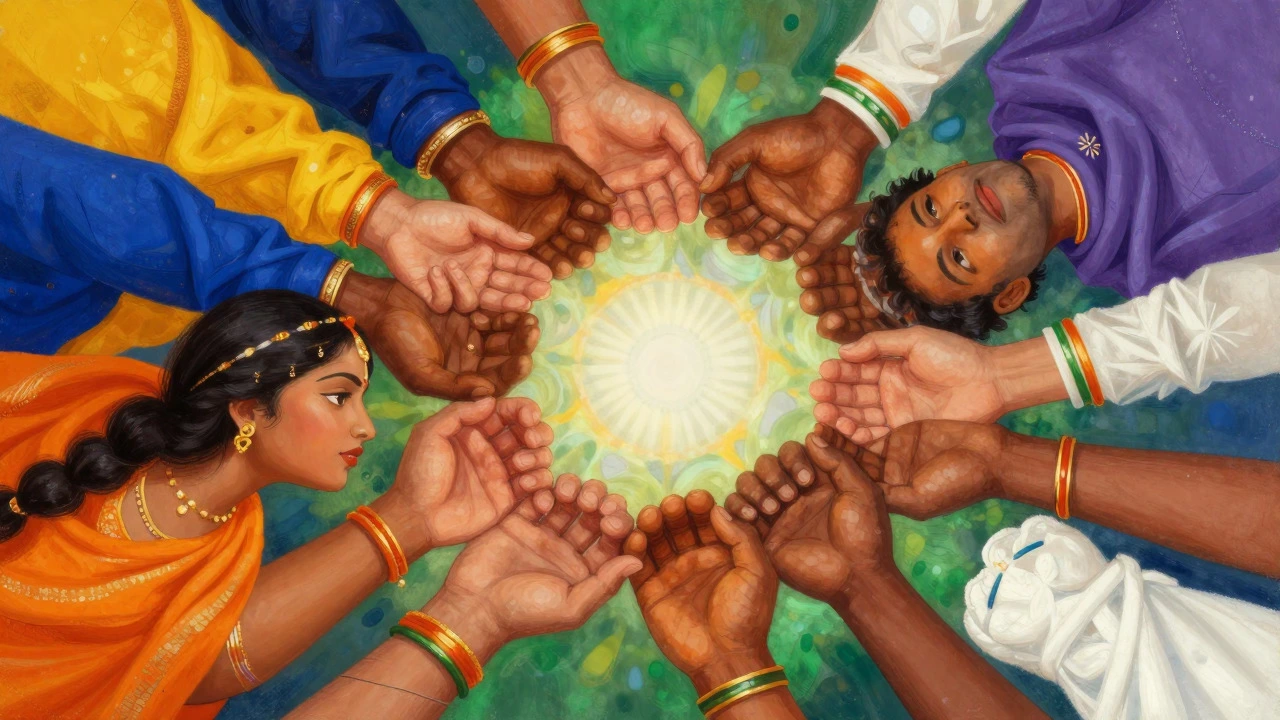
India is often described as a paradox. It is one nation with thousands of languages, religions, and customs. How does this hold together? The answer lies in the concept of Vasudhaiva Kutumbakam-"The world is one family." This ancient Sanskrit phrase encapsulates the Indian view of unity in diversity.
Unlike other regions where diversity leads to fragmentation, India uses it as a source of richness. Each community contributes its own flavor to the national tapestry. This inclusivity is a form of soft power. It allows India to connect with people from all backgrounds. When you travel across India, you notice that while festivals differ, the spirit of celebration remains the same. This shared emotional language binds the country together more effectively than any political decree could.
| Type of Power | Source | Example in India |
|---|---|---|
| Military | Force | Border defense |
| Economic | Wealth | IT Industry growth |
| Spiritual | Wisdom | Yoga and Meditation |
| Cultural | Diversity | Festivals like Diwali and Eid |
Yoga and Meditation: Exporting Inner Strength
If there is one thing the world associates with India today, it is yoga. But yoga is not just exercise. It is a systematic method for mastering the mind. The Yoga Sutras of Patanjali describe yoga as "the cessation of the fluctuations of the mind." This clarity of thought is a superpower in our distracted age.
India’s power lies in its ability to offer solutions to modern problems using ancient tools. Stress, anxiety, and burnout are global issues. India provides meditation techniques that have been refined over thousands of years. By sharing these practices, India influences global well-being. This is cultural diplomacy at its finest. It builds goodwill and respect without saying a word.
Think about the number of foreigners who visit Varanasi or Rishikesh seeking enlightenment. They come for the silence, the river, the teachers. They leave with a piece of India in their hearts. This exchange strengthens India’s position as a spiritual hub. It proves that ideas can travel further and last longer than armies.
Resilience Through History
History shows us that India has faced immense challenges. From colonial rule to partition, the nation has endured pain. Yet, it has never lost its soul. Why? Because the core identity is spiritual, not territorial. Land can be taken, but beliefs cannot be erased unless people forget them. Indians did not forget.
This resilience is visible in everyday life. Look at the small vendor selling chai on the street corner. Despite economic hardships, he smiles. He greets customers warmly. This optimism is not naive; it is a survival strategy rooted in faith. It is a belief that tomorrow will be better. This collective hope fuels the nation’s progress. It drives entrepreneurs, artists, and scientists to innovate despite obstacles.

How to Use These Quotes in Daily Life
You don’t need to live in India to access its power. You can integrate these principles into your routine. Here is how:
- Morning Reflection: Start your day with a short quote. Read it aloud. Let it set the tone for your actions.
- Stress Management: When stressed, recall the Gita’s advice on detachment. Focus on what you can control.
- Conflict Resolution: Use the principle of non-violence (Ahimsa) in arguments. Listen before speaking.
- Gratitude Practice: Embrace the idea of service. Find one way to help someone every day.
These small steps build inner strength. Over time, you will feel more grounded. You will handle challenges with greater ease. This is the practical application of Indian wisdom. It transforms abstract philosophy into tangible results.
The Future of India’s Influence
As the world becomes more connected, the demand for meaning increases. People are searching for purpose beyond material success. India is positioned to lead this conversation. Its spiritual heritage offers a roadmap for holistic living. By combining technology with tradition, India can show the world how to advance without losing humanity.
The power of India is not static. It evolves. It adapts. But its core remains the same: the pursuit of truth and peace. As long as this flame burns, India will continue to inspire. And perhaps, that is the greatest power of all-the ability to light up the darkness in others.
What is the most famous spiritual quote from India?
One of the most widely cited quotes is from the Upanishads: "Tat Tvam Asi" (Thou Art That). It signifies the unity of the individual soul with the universal consciousness.
How does Indian spirituality differ from Western mindfulness?
While Western mindfulness often focuses on stress reduction, Indian spirituality aims for liberation (Moksha) and self-realization. It includes ethical living and devotion alongside meditation.
Can anyone practice Indian spiritual traditions?
Yes. Practices like yoga and meditation are universal. They do not require religious affiliation. Anyone can benefit from the mental clarity and peace they offer.
Why is diversity considered a strength in India?
Diversity fosters creativity and resilience. Different perspectives lead to innovative solutions. It also teaches tolerance and empathy, which are essential for social harmony.
What role do spiritual quotes play in modern Indian society?
They serve as moral compasses. In a fast-changing world, they remind people of core values like honesty, compassion, and duty. They bridge the gap between tradition and modernity.