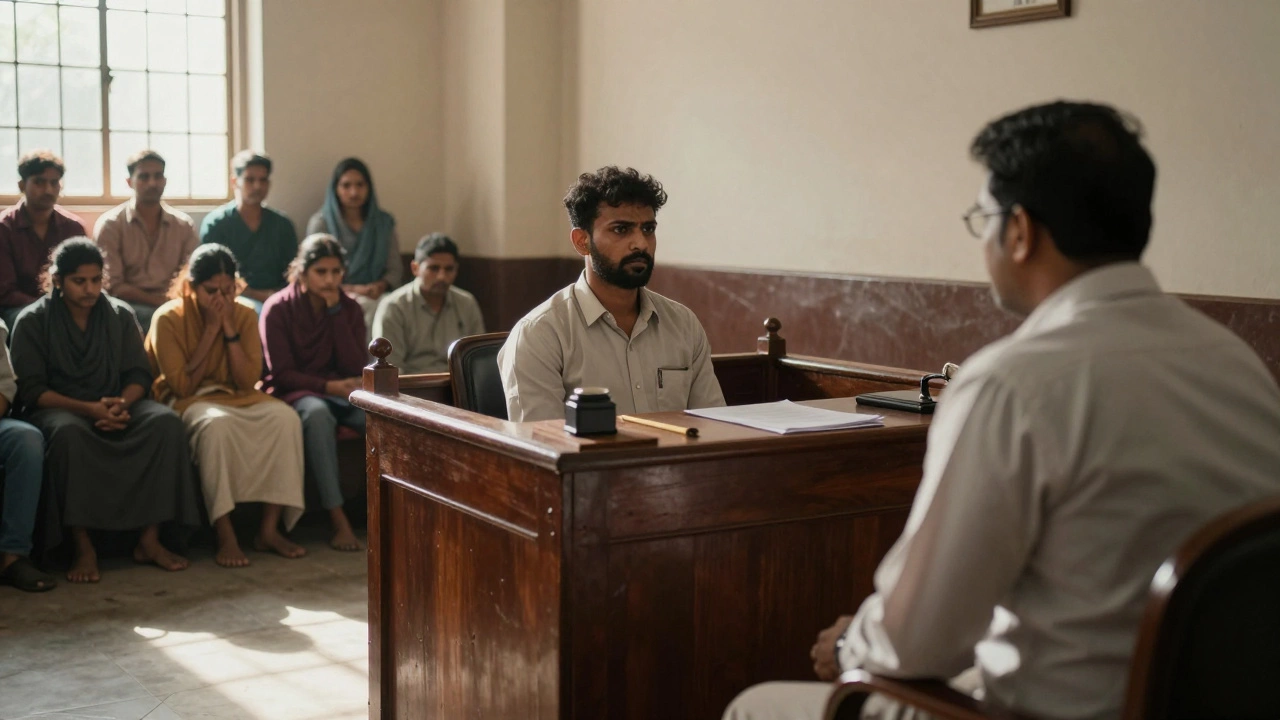
When people hear the phrase life term in India, they often think it means someone will spend the rest of their natural life behind bars. But that’s not always true. The reality is more complex, shaped by court rulings, prison rules, and political decisions. So what exactly does a life sentence mean in India? And can someone actually get out before they die?
What Does Life Imprisonment Actually Mean?
In India, a life sentence under Section 53 of the Indian Penal Code (IPC) doesn’t automatically mean 50 or 60 years. Legally, it means imprisonment for the remainder of the convict’s natural life. But here’s the catch - the law also allows for remission, which means time off for good behavior, and early release through executive clemency.
The Supreme Court of India clarified this in multiple rulings, including the 2014 case of Shatrughan Chauhan v. Union of India. The court said that life imprisonment should not be interpreted as mechanical or automatic. It must be reviewed on a case-by-case basis. This means that while the sentence is labeled ‘life,’ actual time served often ends up being 14 to 20 years - sometimes even less.
Minimum Time Before Parole
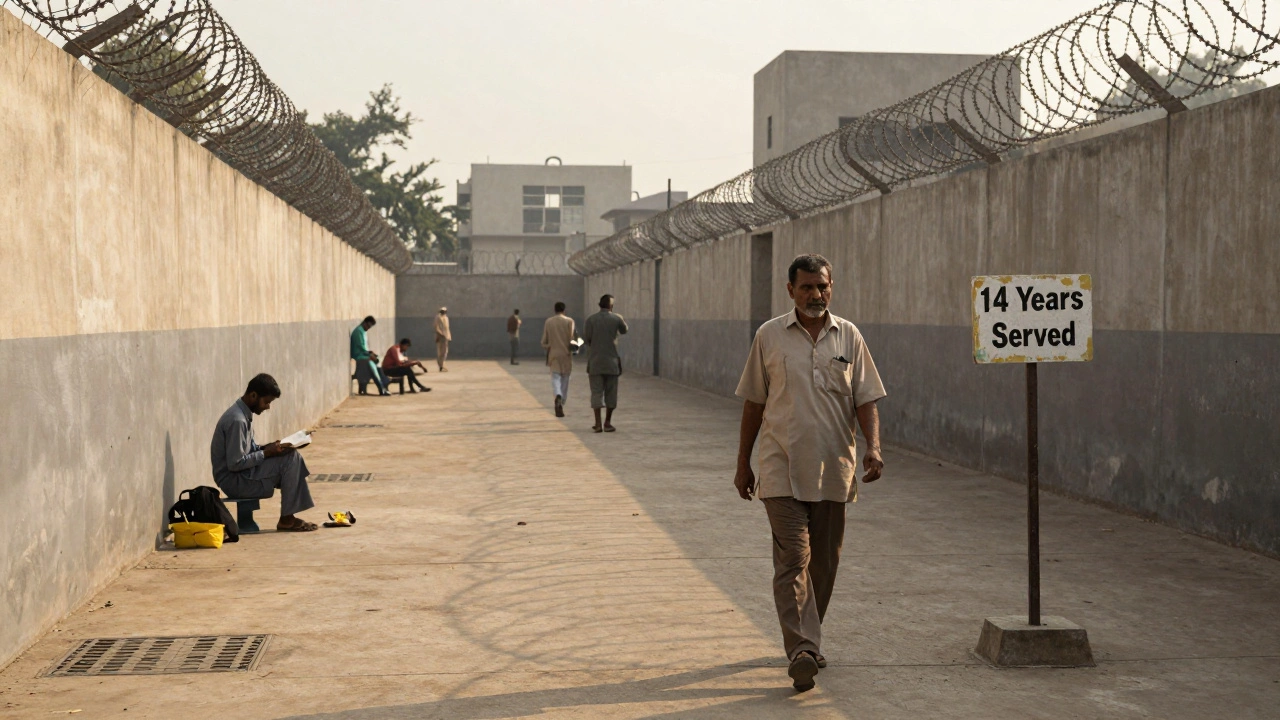
Under the Code of Criminal Procedure (CrPC), Section 433A, a person sentenced to life imprisonment must serve at least 14 years before becoming eligible for release. This rule was introduced to prevent early release in serious crimes like murder, rape, or terrorism. But even then, release isn’t guaranteed. State governments hold the power to grant remission, and each state has its own policies.
For example, in Maharashtra, convicts serving life sentences have been released after 14 years if they’ve shown good conduct and no prior criminal record. In contrast, states like Tamil Nadu and Uttar Pradesh have been more cautious, especially in cases involving violence against women or children. In 2022, a convict in Uttar Pradesh who murdered his wife was denied parole after 16 years because the state government cited public sentiment and the brutality of the crime.
When Is Life Really for Life?
There are exceptions. In cases deemed ‘rarest of rare’ - a legal term used since the landmark 1980 case Bachan Singh v. State of Punjab - courts may impose a life sentence with no possibility of remission. These are rare but significant. The Supreme Court has ruled that if a crime shocks the collective conscience of society, the sentence can be ordered to be served without parole.
Examples include the 2012 Delhi gang rape case. The four convicts were sentenced to death, but if they had received life imprisonment instead, it would have been without the possibility of release. Similarly, in the 2008 Mumbai terror attacks, some convicts were given life terms with no remission clause explicitly written into the judgment.
How Does Remission Work?
Remission is the process of reducing a sentence based on good behavior, participation in rehabilitation programs, or contributions to prison activities. The Prisons Act of 1894 gives state governments the authority to grant remission. But there’s no uniform rule. Each state has a Remission Board that reviews applications.
Here’s how it usually works: After 14 years, the convict’s file is sent to the state’s remission committee. The committee considers factors like:
- Behavior in prison (no disciplinary issues)
- Participation in vocational training or education
- Rehabilitation progress
- Victim’s family stance (sometimes consulted)
- Public opinion and media pressure
Some convicts get released after 14 years. Others wait 20 or more. A 2021 report by the National Crime Records Bureau (NCRB) showed that 68% of life convicts who applied for remission were granted release within 16 years. But in high-profile cases, even after 20 years, release can be blocked.
Life Sentence vs Death Penalty
India still has the death penalty, but it’s rarely used. Between 2010 and 2025, only 12 executions took place. The courts have been shifting toward life imprisonment as the default punishment for capital offenses, unless the crime is exceptionally brutal.
Life imprisonment is now the most common sentence for murder, even in cases that once led to hanging. Why? Because the death penalty is irreversible, and appeals can take decades. Life sentences, even with early release, allow the justice system to retain control - and give room for correction if new evidence emerges.
For example, in 2023, a man convicted of killing his in-laws in Rajasthan was originally sentenced to death. After appeals, the Supreme Court commuted it to life imprisonment, stating that while the crime was heinous, the accused had shown remorse and had no prior record.
What About Political Influence?
Remission decisions aren’t always purely legal. In some cases, political pressure plays a role. In 2020, the Punjab government released a life convict who had served 18 years, citing his age and health. But the victim’s family protested, saying the release was influenced by the convict’s political connections. The case sparked nationwide debate.
There’s no law that bans political influence, but courts have repeatedly warned against it. In 2021, the Supreme Court struck down a remission order in Haryana after finding that the state government had ignored recommendations from the prison department. The court called it an ‘abuse of power.’
How Do Other Countries Compare?
India’s approach is somewhere in the middle. In the United States, life without parole (LWOP) is common in many states - especially for repeat offenders. In contrast, countries like Germany and Canada don’t have life sentences without parole. Most European nations cap life sentences at 20-25 years, even for murder.
India’s system is unique because it blends legal rigidity with administrative flexibility. The law says ‘life,’ but the system often lets people out much earlier. This creates confusion. Many victims’ families feel justice is diluted. Others argue that keeping someone locked up for 50 years is inhumane.
Public Perception and Legal Reality
There’s a big gap between what people believe and what the law allows. Polls from 2024 show that 73% of Indians think a life sentence means the convict will die in prison. But the data tells a different story. According to NCRB, over 1,200 life convicts were released between 2018 and 2025. Only 3% of them reoffended.
Rehabilitation works. Many of those released found jobs, got married, and became community workers. One former convict in Kerala now runs a shelter for ex-inmates. He served 17 years for a murder he committed during a drunken fight - a crime he deeply regrets.
What’s the Future of Life Sentences in India?
Legal experts are pushing for clearer guidelines. In 2025, a Law Commission report recommended standardizing remission rules across all states. It suggested creating a national remission board to reduce bias and inconsistency.
Some propose mandatory minimums: 20 years for murder, 25 for terrorism, 30 for serial offenses. Others argue that every case should be judged individually, with input from victims’ families and mental health experts.
Until then, the system remains a patchwork - a mix of old laws, evolving court interpretations, and political discretion. A life term in India isn’t just about punishment. It’s about whether society believes in redemption, and how much second chances are worth.