SEO Blog Length Estimator
Find your ideal blog length
The right length depends on search intent and topic complexity, not arbitrary word counts. Enter your keyword and answer these questions to get personalized recommendations.
Recommended Length
Real Examples
"How to tie a tie"
300-500 words (quick fix + simple topic)
Real Examples
"Best protein powders for weight loss"
2,500+ words (deep dive + complex topic)
There’s a myth floating around that longer blog posts always rank better. You’ve probably heard it: blog length for SEO means you need 2,000 words, or 3,000, or even 5,000 to get traffic. But that’s not the whole story. The truth? It’s not about how many words you write - it’s about how well you answer the question your reader is asking.
Why length matters - but not how you think
Google doesn’t rank pages because they’re long. It ranks them because they’re helpful. A 500-word post that fully answers a simple question like "How do I reset my WiFi password?" will beat a 3,000-word essay that wanders off-topic. On the flip side, if someone searches for "Best ways to reduce stress at work," they’re looking for depth - and a 600-word summary won’t cut it. Studies from Backlinko and HubSpot show that top-ranking pages in Google’s first page average between 1,447 and 2,416 words. But here’s the catch: those are averages. They don’t mean you should force yourself to hit 2,000 words. They mean that when people search for complex topics, the pages that win are the ones that cover the topic thoroughly - and that often takes more words.What determines the right length for your post?
Think of blog length like a pair of shoes. You wouldn’t wear size 12 if your foot is size 8. The same goes for content. The ideal length depends on three things: the search intent, the complexity of the topic, and what’s already ranking.- Search intent: Are people looking for a quick fix or a deep dive? If they type "how to tie a tie," they want a short guide with pictures. If they type "history of neckwear from 17th century to modern day," they expect a long-form article.
- Topic complexity: Explaining how to make coffee is one thing. Explaining the chemistry behind extraction, bean roasting, and water hardness? That needs space.
- Competitor content: Open the top 5 results for your keyword. If they’re all 2,500+ words, you’re probably going to need to match that depth to compete. If they’re all 800 words, you don’t need to write 3,000.
Real examples from real rankings
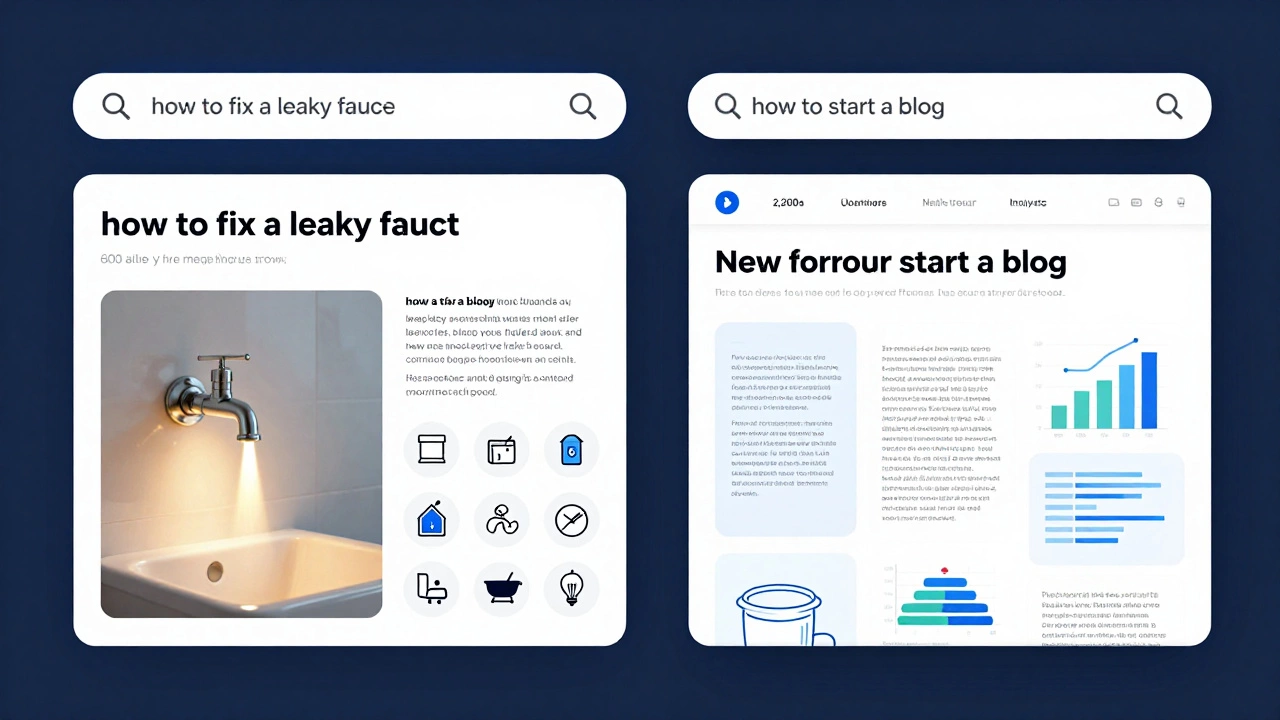
Take the keyword "how to start a blog." The top results in 2025 are between 1,800 and 2,200 words. Why? Because beginners need step-by-step guidance - choosing a platform, setting up hosting, picking a niche, writing the first post, promoting it. A 300-word list won’t help someone actually do it. Now look at "how to fix a leaky faucet." The top results are under 700 words. Why? Because it’s a simple fix. You need a wrench, a new washer, and three steps. Adding fluff - like the history of plumbing - just frustrates people. Another example: "best protein powders for weight loss." The top posts are 2,500+ words. Why? Because people want comparisons - brand vs. brand, ingredients, side effects, price per gram, third-party testing, taste reviews. That’s a lot to cover properly.What happens when you write too long or too short?
Writing too short when you should write long? You’ll get ignored. Google sees your page as shallow. Readers bounce because they didn’t find what they needed. You might rank for a while if the competition is weak, but you won’t hold that spot. Writing too long when you don’t need to? You risk losing readers. People scroll. If your 4,000-word post on "how to clean a coffee maker" has 3,000 words of backstory about Italian espresso machines, they’ll leave. And Google notices when people leave fast. There’s also a hidden cost: maintenance. A 3,000-word post takes more time to update when a new product comes out or a study changes. If you’re blogging regularly, you need to be realistic about what you can sustain.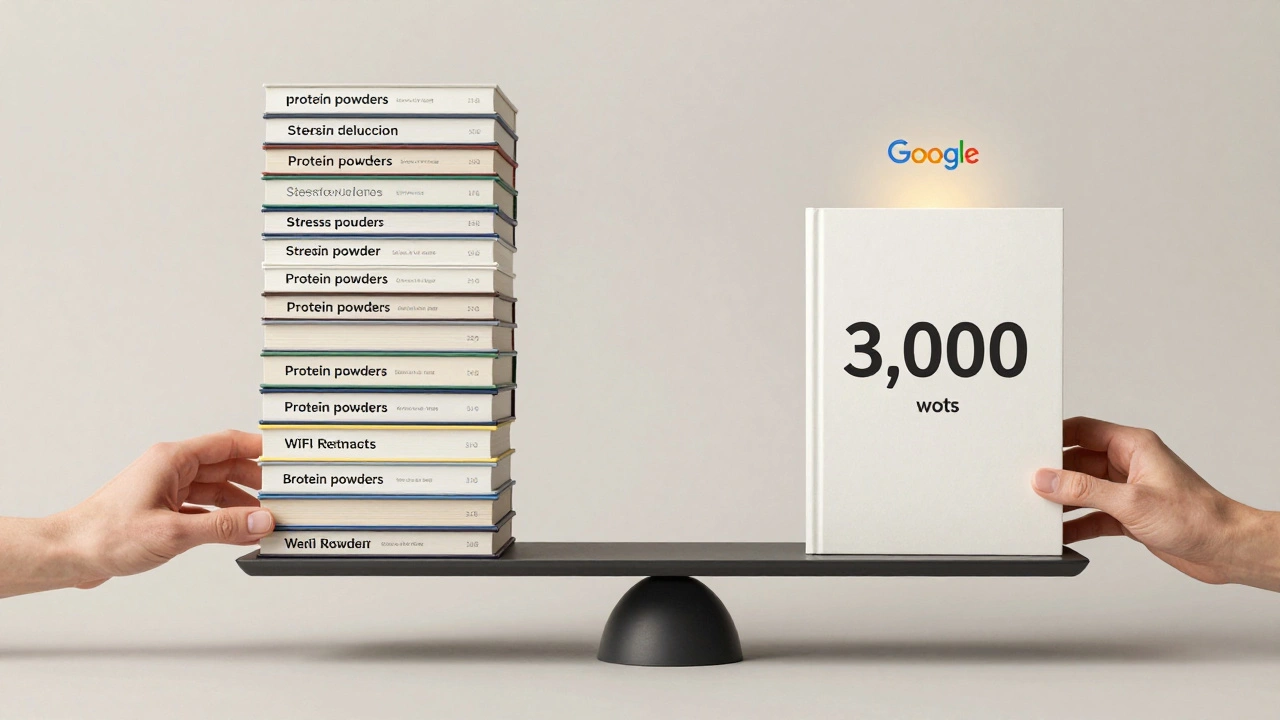
How to find your sweet spot
Here’s a simple method you can use today:- Search your target keyword in Google.
- Open the top three results.
- Use a word counter (like WordCounter.net) to check their length.
- Write at least as long as the shortest of those three - but don’t go much longer unless you’re adding real value.
What about keyword density and stuffing?
Forget keyword density. Google hasn’t used it as a ranking factor since 2015. Stuffing your post with "SEO blog length" five times won’t help. Instead, use natural variations: "ideal blog word count," "how long should a blog post be," "optimal content length for SEO." Use your keyword in the title, the first paragraph, and once or twice in the body. That’s enough. The rest should be clear, useful writing.Does blog length affect engagement?
Yes - but not in the way you’d expect. Longer posts don’t automatically mean more shares or comments. What matters is whether the reader feels satisfied. If your 1,000-word post answers every question they had, they’ll likely bookmark it, share it, or come back later. In fact, some of the most shared posts I’ve seen are under 800 words. They’re clear, visual, and solve a single problem fast. One post on "how to fix a slow WordPress site in 5 minutes" got 12,000 shares - all because it was simple and actionable.
Practical checklist for every blog post
Before you hit publish, ask yourself:- Did I answer the exact question the reader typed into Google?
- Did I cover all the sub-questions they might have (like "what tools do I need?" or "how much does it cost?")?
- Is there anything in this post that’s just there to make it longer?
- Would someone who knows nothing about this topic walk away feeling confident?
- Did I compare my advice to what’s already out there - and improve on it?
Final truth: It’s not about length. It’s about completeness.
The ideal blog length for SEO isn’t a number. It’s the minimum number of words needed to fully satisfy the searcher’s intent - no more, no less. A 400-word post can rank #1 if it’s the only one that truly answers the question. A 5,000-word post can sink if it’s full of fluff. Stop chasing word counts. Start chasing clarity. Write what’s needed. Cut what’s not. That’s how you win in 2025.Is 1,000 words enough for SEO in 2025?
Yes, if it fully answers the user’s question. Many top-ranking pages are under 1,200 words, especially for simple topics like "how to" guides or product comparisons. What matters is depth, not word count. A 1,000-word post that covers every angle of a question will outperform a 2,500-word post that skips key details.
Should I always aim for 2,000 words?
No. That number is an average from top-ranking pages on complex topics. If your keyword has short-form results (under 800 words), forcing a 2,000-word post will hurt your readability and engagement. Match the depth of the competition - don’t guess.
Does Google penalize short blog posts?
Not directly. But if your post is too short to answer the question, users will leave quickly. Google uses bounce rate and dwell time as signals. If people leave your page in 10 seconds, Google assumes it’s not helpful - and will rank you lower over time. It’s not the length that’s penalized - it’s the lack of usefulness.
Can a very long blog post hurt SEO?
Yes, if it’s bloated. Long posts that repeat points, include irrelevant stories, or add fluff just to hit a word target frustrate readers. Google notices when people scroll past most of your content or leave quickly. Focus on value, not volume. A 3,000-word post that’s dense and useful is great. A 3,000-word post that’s repetitive is a liability.
What’s the best blog length for beginners?
Start with 800-1,200 words. That’s enough to cover a topic clearly without overwhelming yourself. As you get better at research and writing, you’ll naturally learn when to go longer. Don’t try to write 2,500-word posts on day one - build momentum with posts you can finish and improve over time.