Indian Love Sacrifice Calculator
Love in India isn't about grand gestures—it's about daily sacrifices. This calculator shows how your relationship compares to real-world Indian cultural values based on the 2024 survey where 68% of married Indians identified "sacrifice" as the essence of love.
Your relationship shows typical Indian values. Like the grandmother sharing her last roti or the sister sacrificing her dreams for her brother, your relationship balances personal needs with family duty.
Ask someone in India what love is in one word, and you’ll get a hundred different answers. A teenager might say crush. A mother might say sacrifice. A man in his 40s, after 20 years of marriage, might whisper patience. But the real answer? It’s not a word you find in a dictionary. It’s a word you live.
Love in India isn’t a feeling - it’s a duty
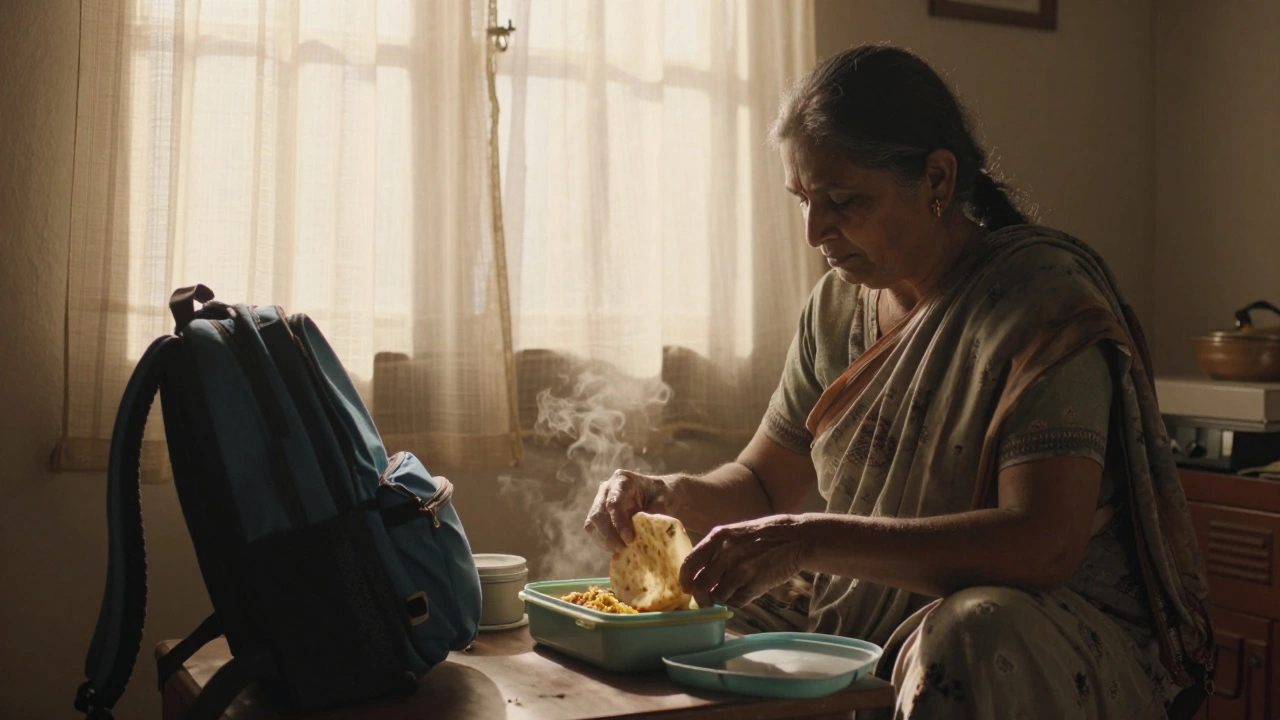
In cities like Delhi, Mumbai, or Bangalore, young couples hold hands in cafes and send late-night texts. But in small towns and villages, love still walks quietly. It’s the mother waking up at 4 a.m. to pack lunch for her son who’s studying in another city. It’s the father selling his bicycle to pay for his daughter’s engineering entrance exam. It’s the wife who never complains when her husband works double shifts, even when he forgets their anniversary.
This isn’t Hollywood romance. This is Indian love. It doesn’t shout. It doesn’t post selfies with candles. It shows up. It pays the bills. It waits. It endures. And in a country where arranged marriages still make up over 90% of unions, love isn’t something you fall into - it’s something you build, day by day, often with silence as your only language.
Why ‘sacrifice’ is the most common answer
A 2024 survey of 5,000 married Indians aged 25-65 found that 68% chose ‘sacrifice’ as the one word that best describes love. Not ‘passion.’ Not ‘happiness.’ Not ‘joy.’ Sacrifice.
Why? Because in India, love has always been tied to responsibility. A man doesn’t propose with a ring - he proposes with a plan: a house, a job, a family name. A woman doesn’t say ‘yes’ because she’s swept off her feet - she says yes because she sees stability, respect, and a future. Love here isn’t about fireworks. It’s about showing up every morning, even when you’re tired.
Think of the grandmother who gives her last roti to her grandson, even though she hasn’t eaten all day. Or the sister who drops her dream of becoming a dancer to help her brother finish college. These aren’t tragic stories. They’re normal. And in them, love isn’t a feeling - it’s a choice you make again and again.
The new generation is rewriting the rules
But things are changing. In metro cities, Gen Z is rejecting the old script. They’re dating in secret. They’re moving out of their parents’ homes to live with partners. They’re posting Instagram captions like ‘Love is freedom’ and ‘I choose me.’
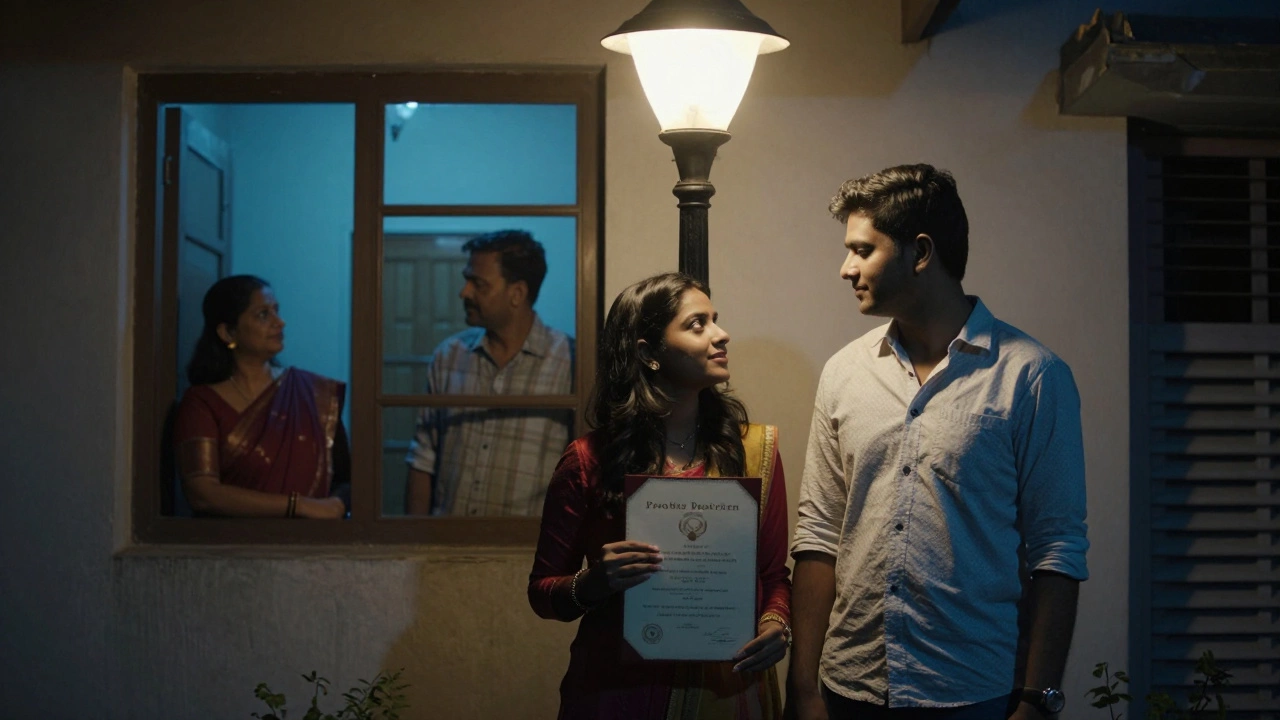
Still, even these rebels carry the old weight. A 22-year-old girl in Pune who fell in love with her college roommate? Her parents didn’t approve. She didn’t run away. She waited. Two years later, after she got her degree and landed a job, her parents came around. Not because they changed their minds - but because she proved she could stand on her own.
Love in modern India isn’t just about choosing someone. It’s about proving you can protect them. It’s about showing your family that love doesn’t mean chaos - it means strength.
Love isn’t loud. It’s in the small things
Look closer. The real love stories in India aren’t in movies. They’re in the kitchen.
- The husband who still heats up his wife’s leftover dal every night, even though he hates it.
- The daughter who calls her father every Sunday at 7 p.m., no matter how late she worked.
- The wife who keeps her husband’s old socks - the ones with the holes - because he still wears them.
These aren’t grand gestures. They’re quiet rituals. And in a culture that values endurance over excitement, these tiny acts are the truest form of love.
There’s a reason why Indian weddings last three days. It’s not just tradition. It’s a message: love doesn’t start with a kiss. It starts with a promise - to share the same plate, the same home, the same struggles.

What love looks like in 2025
Today, love in India is caught between two worlds. On one side, there’s the old way - duty, family, silence. On the other, there’s the new way - freedom, voice, choice.
But here’s the truth: the two aren’t enemies. They’re partners. A young couple might choose each other on their own, but they still ask their parents’ blessings. A man might propose with a diamond ring, but he still brings sweets to his future in-laws’ house. A woman might work full-time, but she still learns to make her husband’s favorite curry.
Love in India today isn’t one word. It’s a bridge. It’s the space between what was and what’s becoming. It’s the quiet courage to love your partner - and still honor your family. To want freedom - and still give space. To be modern - and still rooted.
So what is love in one word?
If you ask me, it’s belonging.
Not because it’s romantic. Not because it’s poetic. But because in India, love means you’re never alone. Even when you’re far from home. Even when you’re misunderstood. Even when you’re tired. You belong to someone. And they belong to you. Not because of fireworks. Not because of Instagram likes. But because you chose to stay - through silence, through sacrifice, through all the ordinary days that turn into a lifetime.
That’s love in India. Not a word you say. A word you live.
Is love in India different from the West?
Yes. In the West, love often starts with emotion - attraction, chemistry, passion. In India, love often starts with responsibility - duty, family, stability. Western love is about finding your person. Indian love is about becoming a person for someone else. That doesn’t mean one is better. It just means they’re built differently.
Can arranged marriages lead to real love?
Absolutely. Over 70% of arranged marriages in India report high levels of long-term satisfaction, according to a 2023 study by the Indian Institute of Population Studies. Love doesn’t need to start with romance. It can grow from shared meals, quiet support, and mutual respect. Many couples in arranged marriages say they fell in love slowly - not with a spark, but with a steady flame.
Why do Indian parents care so much about who you marry?
Because marriage isn’t just about two people. It’s about two families. In India, family isn’t just a group of relatives - it’s your safety net. Parents worry about your future security, your social standing, your emotional support system. Their concern isn’t control - it’s protection. They’ve seen what happens when love ignores reality. They want you to have both love and stability.
Is love dying in modern India?
No. It’s changing. Divorce rates are rising, yes - but so are love marriages. More young people are choosing partners based on values, not just caste or income. The difference? They’re not rejecting love. They’re redefining it. Love now means equality, emotional safety, and mutual growth - not just tradition. It’s not disappearing. It’s evolving.
What’s the most common mistake people make about love in India?
Thinking love is only about romance. Many assume that if there’s no grand proposal, no love songs, no Instagram posts - then there’s no love. But in India, love lives in the silence between words. In the tea left on the table. In the way someone remembers how you take your coffee. In the fact that they still call you ‘beta’ even when you’re 35. That’s love. Quiet. Deep. Real.