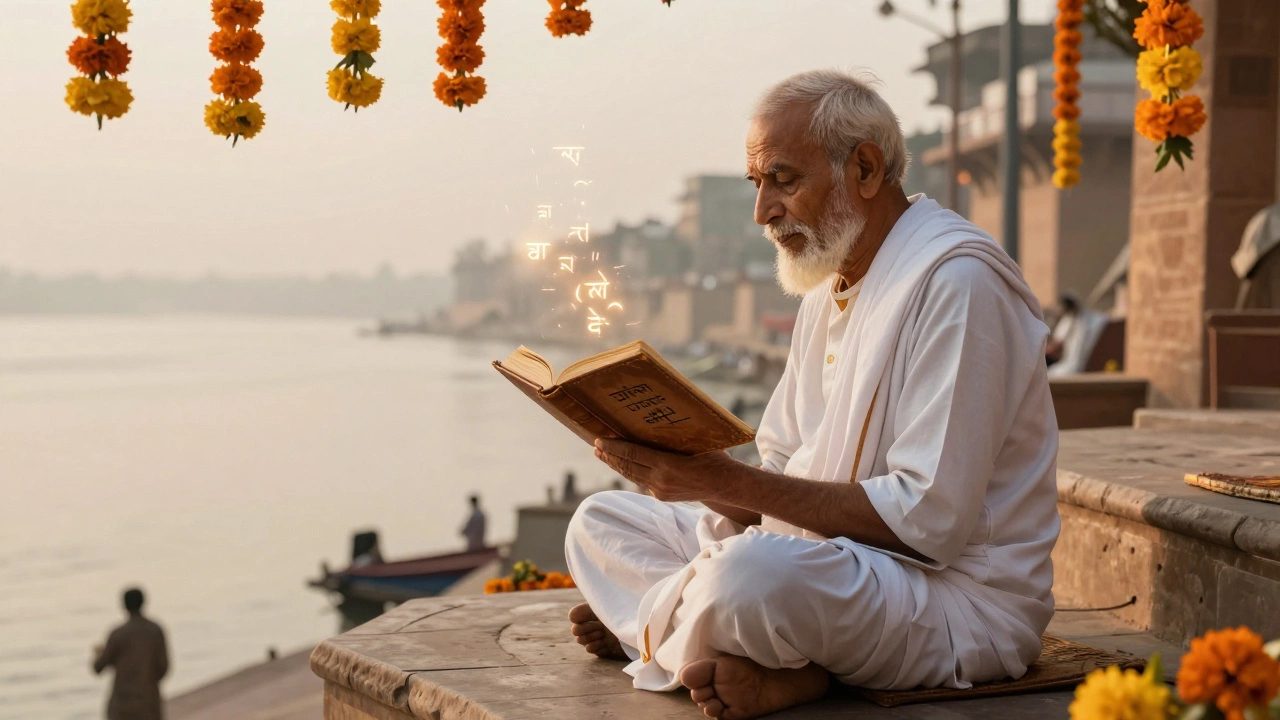
When you hear a short, rhythmic line in Hindi that sticks in your mind like a whisper you can’t shake, you’re probably hearing one of India’s oldest poetic traditions. But what do you actually call it? Is it a poem? A verse? A couplet? The answer isn’t simple-because Hindi poetry isn’t one thing. It’s a family of forms, each with its own rules, history, and soul.
What Is a Hindi Poem Called?
A Hindi poem doesn’t have one single name. Instead, it’s classified by its structure, rhythm, and origin. The most common terms you’ll hear are Dohe, Ghazal, Shairi, and Chaupai. These aren’t just labels-they’re living traditions passed down through centuries, from street bazaars to royal courts to modern WhatsApp forwards.
Most people think of Hindi poetry as long, emotional verses. But the most powerful ones are often short. In fact, the most memorable lines in Hindi literature-lines that still echo in homes across Uttar Pradesh, Bihar, and Madhya Pradesh-are usually just two or four lines long. These aren’t fragments. They’re complete thoughts. Complete emotions. Complete wisdom.
Dohe: The Two-Line Wisdom
If you’ve ever heard someone say, "Dukh mein sumiran sab kare, sukh mein kare na koi", you’ve heard a Dohe. It’s the most popular form of Hindi short poetry. Two lines. Eight syllables per line. Rhyming end words. Simple language. Deep meaning.
Dohe were perfected by saints like Kabir and Tulsidas in the 15th and 16th centuries. Kabir used them to challenge caste, religion, and hypocrisy. Tulsidas used them to tell the story of Ram. Today, Dohe are still used in daily life-weddings, funerals, temple chants, even Instagram captions.
What makes a Dohe work? It’s not rhyme alone. It’s contrast. It’s surprise. It’s truth wrapped in plain words. A good Dohe doesn’t need explanation. You feel it before you understand it.
Ghazal: The Emotional Echo
While Dohe are rooted in Hindi, the Ghazal comes from Persian roots but became deeply Indian. A Ghazal is made of couplets-usually five to fifteen-but each couplet stands alone. The last word of the second line in every couplet repeats in a pattern called the radif, and the poet’s name often appears in the final couplet.
Unlike Dohe, Ghazals are more about mood than message. They speak of love, loss, longing. They don’t preach. They ache. Famous Hindi Ghazal poets include Mir Taqi Mir, Ghalib (who wrote in Urdu but influenced Hindi poetry), and modern voices like Javed Akhtar.
What’s the difference between a Ghazal and a Dohe? A Dohe is a single truth. A Ghazal is a thousand feelings circling one pain. You don’t read a Ghazal-you sit with it.
Chaupai: The Rhythmic Pulse
If you’ve ever heard a temple chant or a devotional song with a steady, drum-like beat, you’ve heard a Chaupai. It’s a four-line verse, usually with 16 syllables total-four per line. It’s built for chanting, not reading.
The Ramcharitmanas by Tulsidas is written mostly in Chaupai. That’s over 10,000 lines of this form. Why? Because the rhythm matches the heartbeat. It’s meant to be recited aloud, slowly, with pauses. In rural India, people still memorize Chaupais from childhood. They recite them when sick, when scared, when praying.
Chaupai isn’t just poetry. It’s a ritual. A tool. A lifeline.

Shairi: The Modern Term
Today, younger poets and social media creators use the word Shairi-a Hindi-Urdu blend meaning “poetry”-to describe any short, emotional Hindi verse. It’s not a traditional form. It’s a catch-all. A TikTok poet might call their four-line piece Shairi even if it doesn’t follow Dohe or Ghazal rules.
Modern Shairi often mixes Hindi with English, uses slang, and breaks meter. But it keeps the soul: short, sharp, and emotional. It’s how Gen Z connects with tradition-not by copying old rules, but by keeping the feeling alive.
Why Short Poetry Still Matters in India
In a world of 30-second reels and scrolling feeds, short poetry is having a comeback. Why? Because it fits life. You don’t need an hour to feel something. Sometimes, you just need one line.
Indian culture has always valued brevity in wisdom. The Bhagavad Gita has 700 verses. The Upanishads are dense with meaning in few words. Hindi poetry follows that same logic. A Dohe can change how you see failure. A Ghazal can help you grieve. A Chaupai can calm your nerves before an exam.
These forms aren’t relics. They’re tools. Tools for healing. Tools for thinking. Tools for remembering who you are.
How to Recognize a True Hindi Poem
Not every rhyming line in Hindi is poetry. Here’s how to tell the real ones:
- Structure matters: Dohe are always two lines. Ghazals are couplets with repeating end words. Chaupais are four lines with steady rhythm.
- Meaning over flair: Real Hindi poetry doesn’t rely on fancy words. It uses everyday language to say something deep.
- It’s meant to be spoken: Try saying it out loud. If it flows like a breath, it’s likely traditional.
- It leaves a mark: You remember it weeks later. Not because it was pretty-but because it was true.
Where to Find Real Hindi Poetry Today
You won’t find the best Hindi poetry in textbooks. You’ll find it in places like:
- Local shaayari gatherings in Lucknow or Varanasi
- YouTube channels where elders recite Kabir’s Dohe
- WhatsApp groups that forward one poem every morning
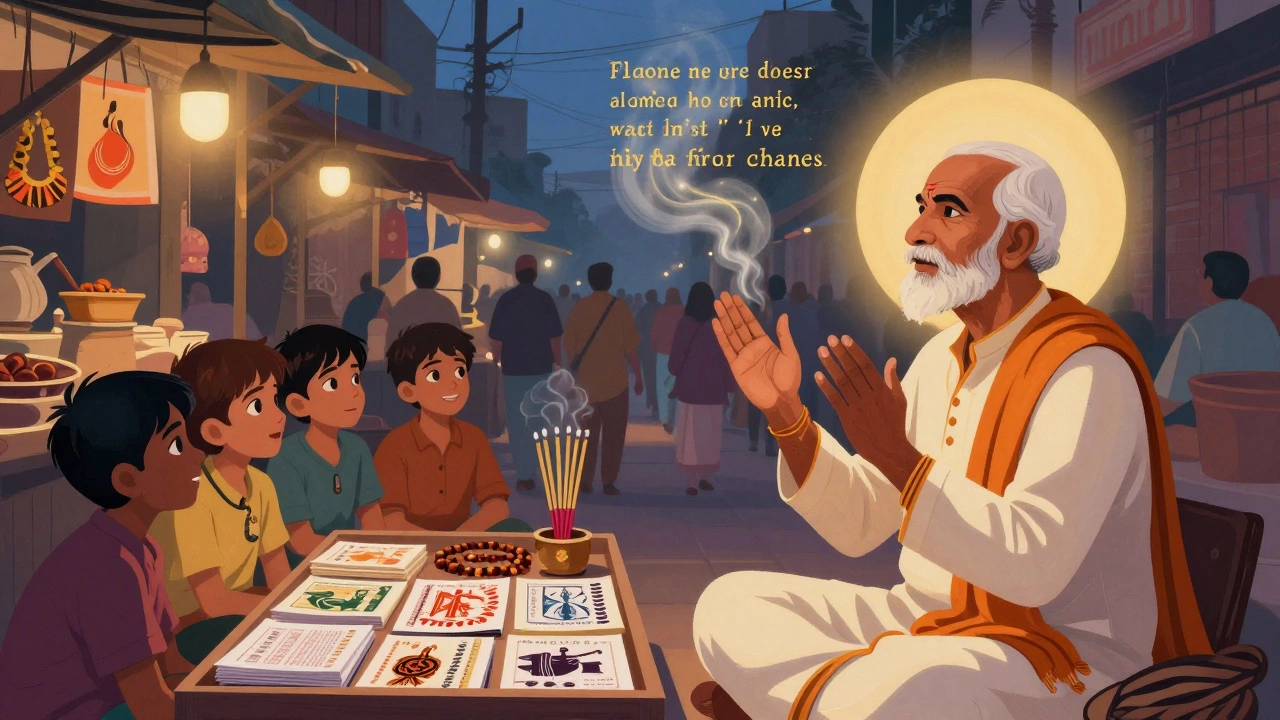
- Street vendors selling printed booklets of Tulsidas or Surdas
- Instagram poets who mix Hindi with modern life
Don’t search for "Hindi poems" on Google. Search for "Kabir ke dohe" or "Tulsidas chaupai". That’s where the real tradition lives.
Try Writing Your Own
Start small. Pick one form. Try a Dohe. Two lines. Eight syllables each. Say something true. Not something pretty. Something real.
Example:
Har din koi naya dard aata hai,
Par dil ke paas koi nahi aata hai.
That’s a Dohe. No fancy words. Just a quiet truth. That’s the power of Hindi poetry.
What is the most common type of Hindi poem?
The most common type is the Dohe-a two-line verse with eight syllables per line. It’s used by saints like Kabir and Tulsidas and remains popular today in daily life, from temples to social media. Its strength lies in simplicity and deep meaning.
Is Ghazal the same as a Hindi poem?
No. Ghazal is a poetic form with Persian roots that became popular in Urdu and Hindi-speaking regions. It’s made of independent couplets with a repeating end word and often explores themes of love and loss. While many Ghazals are written in Hindi or Urdu, it’s not the same as traditional Hindi forms like Dohe or Chaupai.
Can a Hindi poem have English words?
Yes, especially in modern Shairi. Young poets often blend Hindi with English slang to reflect today’s reality. While traditional forms like Dohe stick to pure Hindi, contemporary poetry is evolving. The key isn’t the language-it’s whether the line carries truth and emotion.
Why are Hindi poems usually short?
Because they’re meant to be remembered, repeated, and recited. In a culture where oral tradition matters more than written texts, short forms like Dohe and Chaupai are easier to memorize and pass down. They’re also designed to deliver a single, powerful insight-not a long story.
Are Hindi poems only religious?
No. While many classic poems come from saints and religious texts, Hindi poetry covers all human experiences-love, anger, loneliness, joy, politics. Kabir wrote about hypocrisy. Mir Taqi Mir wrote about heartbreak. Modern poets write about job stress and broken relationships. The form is spiritual, but the content is human.
Where to Go From Here
If you want to feel the heartbeat of Hindi poetry, don’t read about it-listen to it. Find a recording of Kabir’s Dohe recited by an old man in Banaras. Watch a grandmother teach her grandchild a Chaupai before bedtime. Scroll through a WhatsApp group that shares one Ghazal every morning.
You’ll realize something: Hindi poetry isn’t art for art’s sake. It’s survival. It’s connection. It’s the quiet voice that says, "You’re not alone."