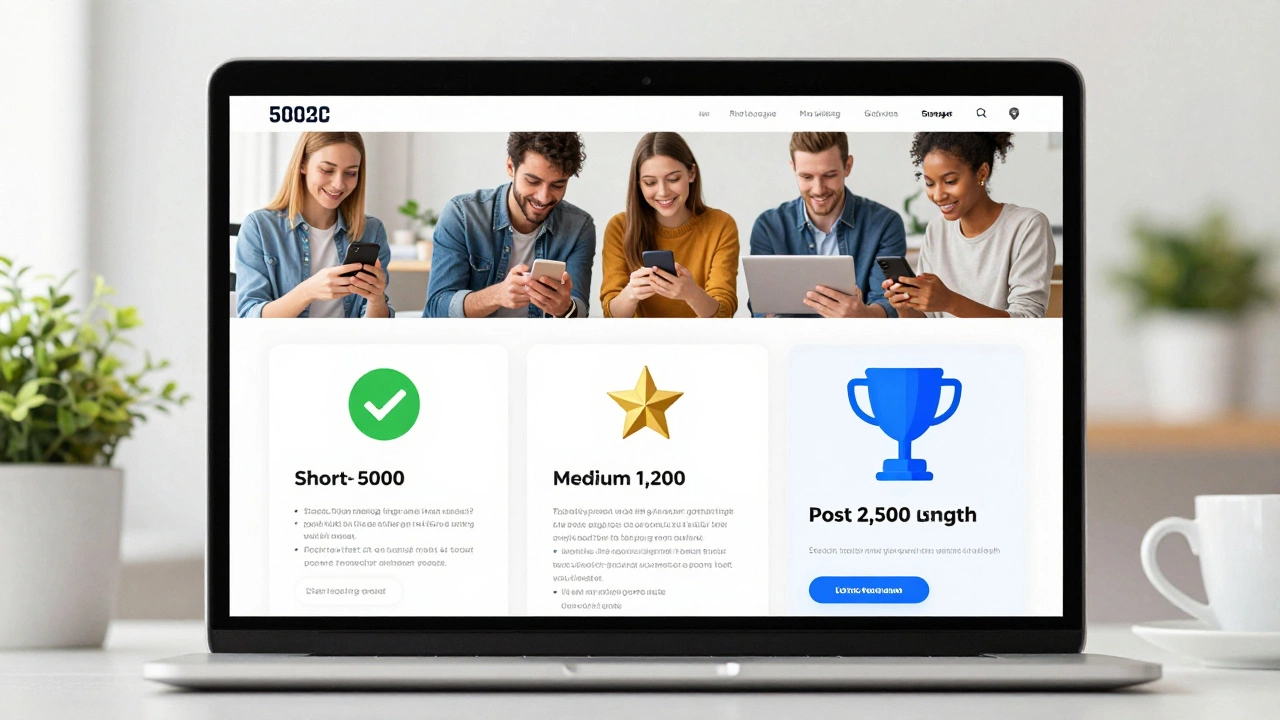
Blog Post Length Calculator
Find Your Perfect Blog Post Length
Calculate the ideal word count for your blog post based on your content type, topic complexity, and audience.
How long should your blog post be? It’s not about hitting a magic number like 1,000 or 2,000 words. It’s about giving your reader exactly what they need - no more, no less. If you write too short, you leave them confused. Too long, and they bounce before they even get to the point. The truth? The best blog post length depends on what you’re trying to do, who you’re writing for, and where they are in their journey.
Short Posts Work When You’re Quick and Clear
Not every blog needs to be a novel. If you’re answering a simple question - like “How do I reset my WordPress password?” or “What’s the best free blogging app for Android?” - then 300 to 600 words is often enough. People searching for quick fixes aren’t looking for essays. They want a clear step-by-step fix, maybe a screenshot or two, and a button to click. Studies from HubSpot and Backlinko show that posts under 700 words have higher read-through rates when the topic is straightforward. If your audience is on mobile, scrolling through a 2,000-word post just to find one setting? They’ll leave.
Think of it like texting. You don’t send a paragraph to ask, “Are we still meeting at 6?” You say, “Still on for 6?” and wait. Blog posts work the same way. If your topic is simple, keep it simple.
Medium Posts Are the Sweet Spot for Most Bloggers
For most bloggers - especially those writing about tools, tips, or how-tos - the sweet spot is between 800 and 1,500 words. This length gives you room to explain the problem, show a real example, break it down into steps, and add a little context without overwhelming the reader.
Take a post like “How to Start a Blog on Medium in 2026”. You need to cover signing up, choosing a niche, writing your first post, and turning on notifications. That’s five to seven clear steps. With a real example - like how someone turned a cooking hobby into 5,000 monthly readers - you can hit 1,200 words naturally. This length also works well for SEO. Google tends to favor content that thoroughly answers a question, and 1,000 words is often enough to cover subtopics like “best Medium features for beginners” or “how to get your first 100 followers.”
And here’s the kicker: readers stay longer. According to data from BuzzSumo, articles between 1,000 and 1,500 words get shared 38% more than shorter ones. Why? Because they feel complete. Not rushed. Not bloated.
Long Posts Dominate When You’re Teaching Something Complex
If you’re writing about something that takes time to understand - like “How to Monetize Your Blog Using Affiliate Marketing in 2026” or “The Complete Guide to SEO for New Bloggers” - then you need depth. Posts over 2,000 words aren’t just okay; they’re necessary.
Why? Because complex topics have layers. You can’t just say, “Use Amazon Associates.” You need to explain how to pick products that match your audience, how to disclose affiliate links legally in the UK, which plugins help track clicks, how to avoid Google penalties, and what kind of content converts best. That’s 2,500 words minimum.
Backlinko’s 2025 analysis of over a million blog posts found that the top-ranking pages on Google averaged 2,400 words. Not because they were long for the sake of it - but because they covered every angle a searcher might care about. One post on “how to choose a blogging platform” included comparisons of WordPress, Medium, Ghost, and Substack - not just features, but real user experiences, pricing changes in 2025, and hidden limits on free plans. That post got over 80,000 views in six months.
Long posts don’t just rank better. They build trust. Readers remember the blog that gave them the full picture. They come back. They share it. They tag friends who need the same help.
What Happens When You Get the Length Wrong?
Underestimating your topic? You’ll get comments like: “This didn’t help at all.” Or worse - readers click away and go to a competitor who actually explained the thing.
Overestimating? You’ll lose people halfway through. Analytics show that 60% of readers drop off after the first 300 words if the content feels fluff-heavy. That’s why so many blogs with 3,000 words still have low engagement. They filled space instead of solving problems.
Here’s a quick test: After writing your post, ask yourself - could someone walk away and actually do what you said? If not, it’s too short. If they’re overwhelmed and don’t know where to start, it’s too long.
Real Examples From Top Blogs in 2026
Look at how top bloggers are doing it right now:
- Neil Patel writes 1,500-2,200 words for “how-to” posts. His post on “How to Start a Blog with No Money” is 1,850 words - packed with screenshots, free tools, and step-by-step instructions.
- Copyblogger averages 1,200-1,600 words. They keep it tight, but every sentence adds value.
- HubSpot’s blog uses 2,000+ words for in-depth guides like “The Ultimate Guide to Blog SEO.” They break it into clear sections with headers, bullet points, and embedded videos.
- Medium creators who grow fast? Most hit 800-1,200 words. Their readers scroll on phones. They want quick wins.
There’s no one-size-fits-all. But there is a pattern: the best bloggers match length to depth.
How to Decide Your Post Length - A Simple Rule
Here’s a practical trick you can use right now:
- Ask: What’s the single problem my reader wants to solve?
- Ask: How many steps or pieces of info do they need to fix it?
- Ask: Are they a beginner, or do they already know the basics?
If the answer is one or two steps - go short (300-600 words).
If it’s three to five steps - go medium (800-1,500 words).
If it’s six or more, or you’re explaining a new system - go long (2,000+ words).
Don’t force a 500-word post into a 2,500-word topic. Don’t stretch a simple tip into 3,000 words just to “look impressive.”
Tools to Help You Get It Right
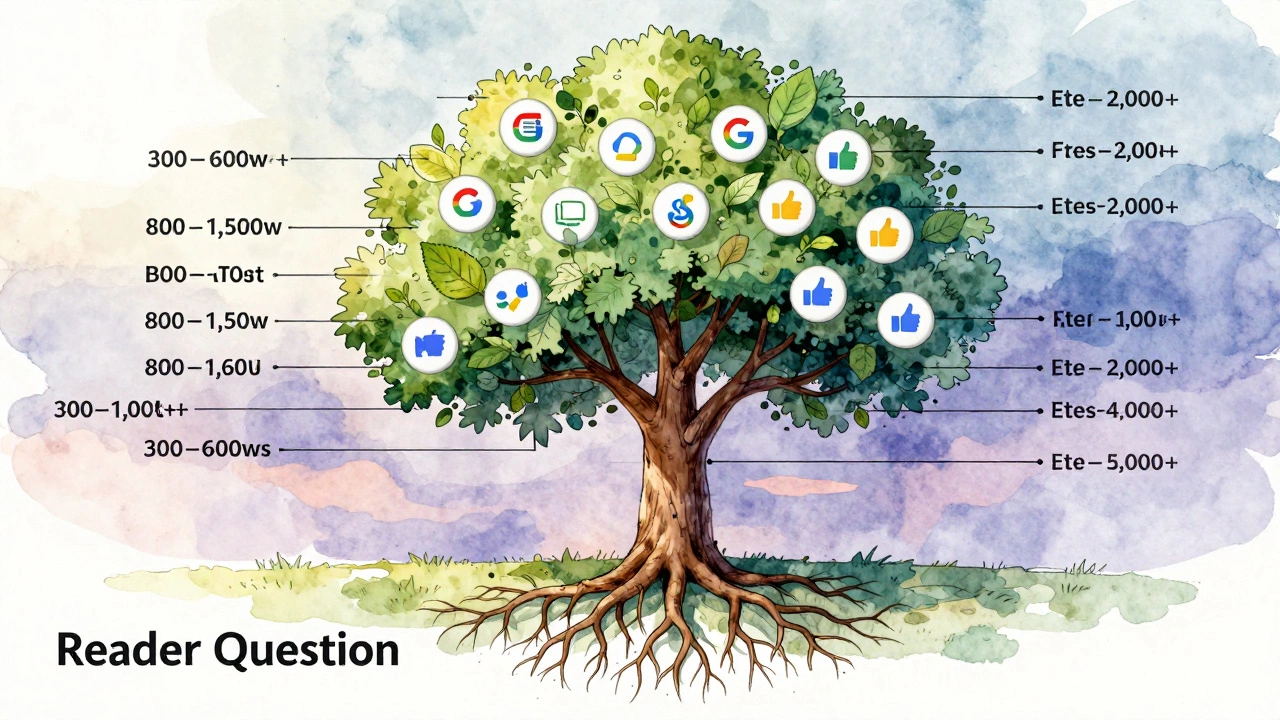
You don’t have to guess. Use these free tools to check your length and readability:
- Grammarly - tells you readability score. Aim for “Easy” or “Standard.”
- Hemingway App - highlights long sentences and passive voice. Keep it clear.
- Google Analytics - check your average time on page. If it’s under 45 seconds for a 1,500-word post, you’re losing people.
- Surfer SEO or Clearscope - shows you how many words top-ranking pages use for your keyword. Use that as a benchmark.
Don’t chase word counts. Chase clarity.
Final Thought: Write for Humans, Not Algorithms
SEO tools tell you what’s trending. But only your reader tells you if you got it right. A 1,200-word post that answers every question? That’s gold. A 3,000-word post that rambles? Even Google will bury it.
The best blog post length is the one that fully solves the reader’s problem - and leaves them thinking, “That was actually helpful.”
Is 1,000 words the perfect blog post length?
No, 1,000 words isn’t a magic number. It’s a good average for many how-to posts, but the right length depends on your topic. A simple tip might need 500 words. A deep guide on monetizing your blog might need 2,500. Focus on covering the topic fully, not hitting a word count.
Should I always write long blog posts to rank better on Google?
Not always. Google rewards content that answers the user’s intent - not just length. A 600-word post that clearly explains how to use a blogging app will beat a 3,000-word post that’s vague or off-topic. Long-form content works best when the topic is complex. For simple questions, shorter is often better.
Does blog post length affect reader engagement?
Yes, but not in the way most people think. Too short, and readers feel cheated. Too long, and they lose focus. The key is matching length to complexity. Posts between 800 and 1,500 words tend to have the highest engagement because they feel complete without being overwhelming. Use Google Analytics to track time on page - if it’s under a minute for a 1,200-word post, you might be losing readers.
What’s the minimum word count for a blog post?
There’s no official minimum, but anything under 300 words rarely ranks well unless it’s answering a very simple question. For example, “How to log in to Medium” can work at 400 words if it includes screenshots and clear steps. Anything shorter than that usually feels incomplete and doesn’t give Google enough to understand your topic.
Can a short blog post still go viral?
Absolutely. Viral posts aren’t about length - they’re about emotion, timing, and clarity. A 500-word post with a powerful story, a surprising fact, or a relatable mistake can spread faster than a 3,000-word essay. Think of it like a tweet: short, sharp, and spot-on. If your post makes someone say, “I needed this,” it doesn’t matter how many words it has.
Next Steps: Test and Track
Don’t just take my word for it. Try this: pick three of your oldest blog posts. One short (under 600 words), one medium (800-1,500), one long (over 2,000). Now check your analytics. Which one got the most time on page? Which one had the lowest bounce rate? Which one got the most shares?
That’s your answer. Not a rule from 2020. Not a trend on Reddit. Your own data.
Write for your reader. Not for a number. And if you’re still unsure? Start with 1,200 words. It’s the safest bet for most topics - and you can always trim or expand later.