Ghazal: The Poetry of Longing in Indian Culture
When you hear the word Ghazal, a form of poetic expression rooted in Urdu and Persian traditions, often centered on themes of unrequited love, separation, and spiritual yearning. Also known as ghazal poetry, it doesn’t just rhyme—it resonates in the spaces between words, in the silence after a line is spoken. This isn’t just ancient literature. It’s the whisper in a mother’s voice when she says, "Tumhare bina kya hai zindagi?" It’s the line in a Bollywood song that makes you pause mid-scroll. It’s the text you send at 2 a.m. when you can’t sleep and you miss someone too much to say it out loud.
Ghazal doesn’t need big words. It thrives on restraint. Each couplet, or sher, a self-contained poetic unit that forms the building block of a ghazal, stands alone like a single breath. The second line often echoes the first, but twists it—just like how love in India often hides in duty, in waiting, in the things left unsaid. This is why Udasi, a Hindi and Urdu term for a deep, quiet sadness that lingers without explanation fits so well with Ghazal. You don’t shout your pain in a Ghazal. You let it sit in the space between the rhyme. And that’s why it still matters today. You’ll find its soul in the way people write birthday wishes in one line, in the melancholy poems tagged #ShokKavita on Instagram, in the YouTube videos where poets recite verses to 100,000 listeners who don’t speak Urdu but feel every word.
What makes Ghazal powerful isn’t its history—it’s its honesty. It doesn’t pretend love is perfect. It doesn’t sell romance. It shows you the cost of staying, the weight of silence, the beauty in not being enough. That’s why it shows up in posts about Indian relationships, about sacrifice as love, about depression wrapped in epic poetry like the Mahabharata. Ghazal isn’t just a form. It’s the emotional DNA of how many Indians feel—and how they’ve learned to say it without saying it at all.
Below, you’ll find real pieces of this world—not theory, not textbooks, but the poems, phrases, and stories that keep Ghazal alive today. Whether it’s through a viral WhatsApp message, a hidden verse in a song, or a blog post that captures the ache in one line—you’ll see how this ancient art still breathes in modern India.
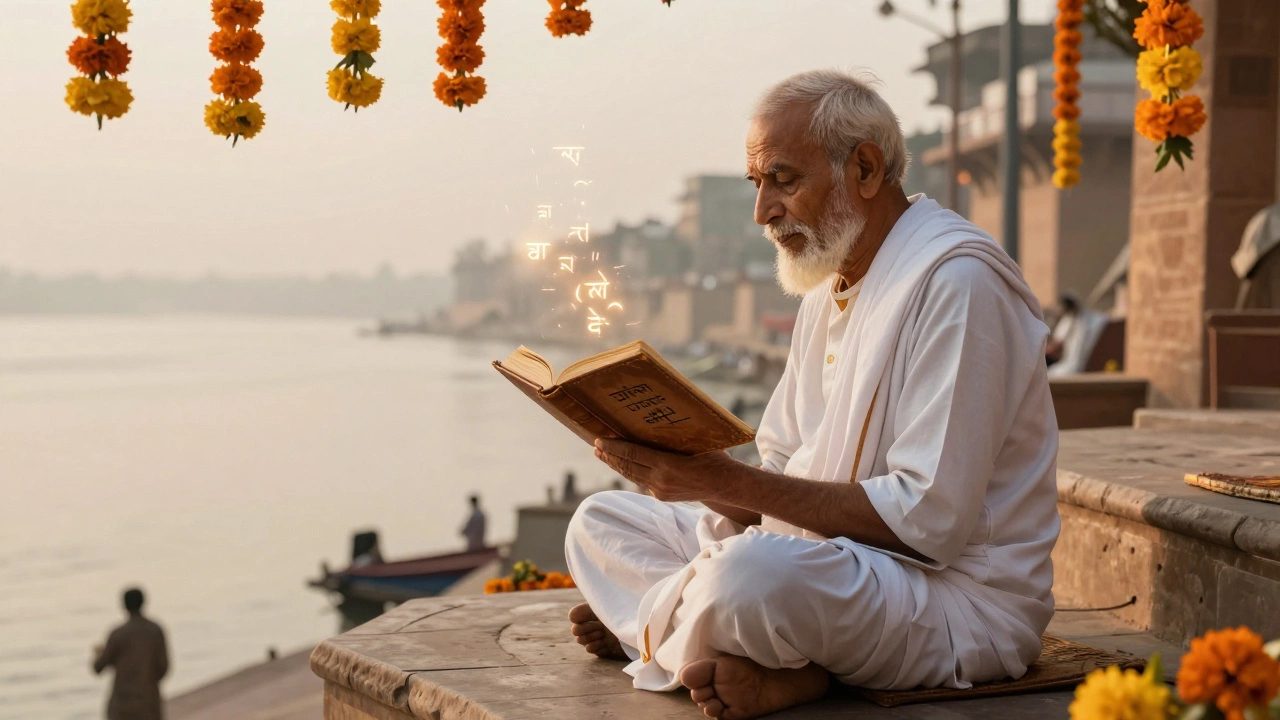
- Arjun Bhardwaj
- 4-12-25
- Short Poetry
What Is a Hindi Poem Called? Types and Names of Traditional Indian Short Poetry
Hindi poems come in traditional forms like Dohe, Ghazal, and Chaupai-each with unique structure and purpose. Discover how these short verses carry centuries of wisdom and still shape modern Indian expression.
Details