India's Economic Status Classifier
Select the category that best describes your perception of a country to see how economists classify it today.
Third World
Non-aligned, Cold War era label
Developing / Emerging
Growing economy, industrializing
Developed
High income, advanced infrastructure
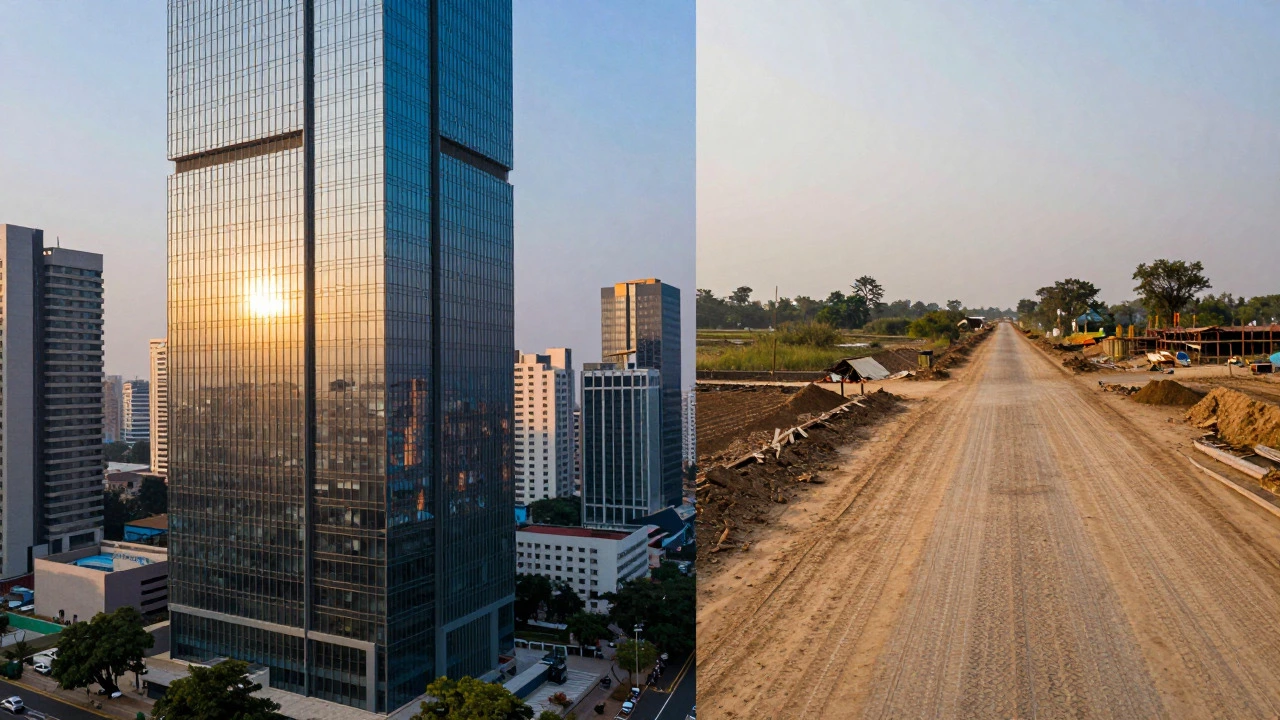
Walk down the street in Mumbai or Bangalore, and you’ll see skyscrapers that rival New York. Take a bus to a rural village in Bihar, and you might encounter roads that are still under construction. This contrast is what makes asking is India a third world country such a tricky question. The short answer is no, but the long answer requires unpacking a term that hasn’t meant anything accurate since the Cold War ended.
We need to clear up the confusion right away. "Third World" was never about how poor a nation was. It was a political label. Today, economists and geographers use different terms like "developing," "emerging market," or "lower-middle income." Understanding this shift helps us look at India’s real position on the global stage without getting stuck on outdated labels.
The Origin of the "Third World" Label
To understand why the term is misleading, we have to go back to the 1950s. During the Cold War, the world was divided into three camps. The First World consisted of nations aligned with the United States and NATO. These were mostly industrialized democracies in Europe and North America.
The Second World included countries aligned with the Soviet Union. Think of the Eastern Bloc, China, and Cuba. These were communist states with centrally planned economies.
Then there was the Third World. This wasn't a measure of wealth. It referred to countries that were non-aligned with either superpower. India, along with nations in Africa, Asia, and Latin America, chose to stay neutral. They formed the Non-Aligned Movement to avoid being pulled into the US-Soviet rivalry.
So, when people called India a "Third World" country in 1960, they were talking about its foreign policy, not its poverty levels. However, because many non-aligned nations were indeed poorer, the term slowly morphed into a synonym for "underdeveloped" in popular culture. That linguistic drift is where the confusion starts today.
Modern Economic Classifications: Where Does India Fit?
In 2026, economists don't use "Third World" anymore. Instead, they look at data. The primary metric is Gross National Income (GNI) per capita. Let's look at how major organizations classify India right now.
| Organization | Classification Term | Criteria Used |
|---|---|---|
| World Bank | Lower-Middle Income | GNI per capita between $1,136 and $4,465 |
| IMF | Emerging Market / Developing Economy | Growth potential, integration into global trade |
| UN Human Development Index | Moderate Human Development | Life expectancy, education, standard of living |
| MSCI Index | Emerging Market | Market size, liquidity, accessibility for investors |
The World Bank places India firmly in the "lower-middle income" category. This means the average citizen earns more than those in low-income nations but significantly less than those in high-income nations like the US or Germany. The IMF calls it an "emerging market," highlighting its rapid growth and increasing influence in global finance.
This distinction matters. Calling India "Third World" implies stagnation. Calling it an "emerging economy" acknowledges momentum. India is currently the fifth-largest economy in the world by nominal GDP and the third-largest by purchasing power parity (PPP). That is not the profile of a stagnant state.
The Tale of Two Indias: Infrastructure and Inequality
If you only look at national GDP, you miss the human reality. India is a land of extremes. This duality is why the old "Third World" stereotype persists in some minds, even if it's factually wrong.
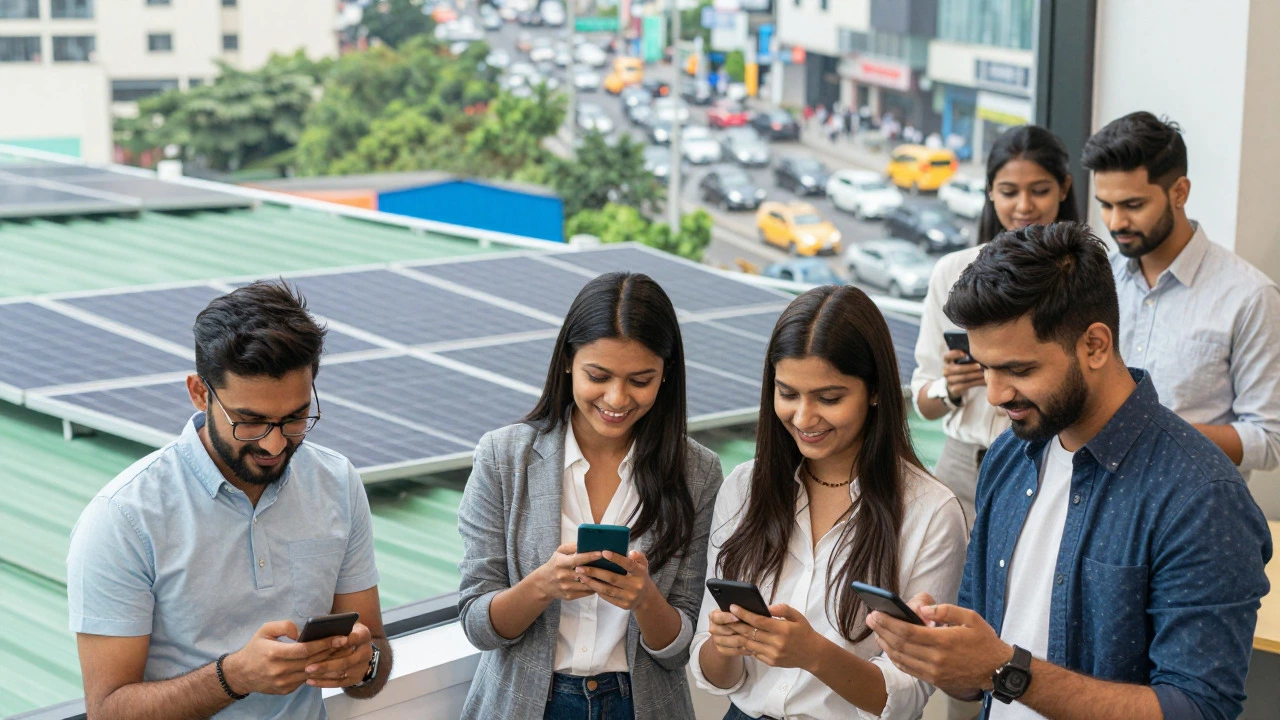
On one hand, you have the tech hubs. Cities like Bengaluru, Hyderabad, and Pune are global centers for software development and IT services. Companies like Tata Consultancy Services and Infosys employ millions and export services worldwide. The Indian middle class is growing rapidly, driving demand for cars, smartphones, and international travel.
On the other hand, significant portions of the population still struggle with basic infrastructure. Access to clean drinking water, reliable electricity, and quality healthcare remains uneven. According to recent UN reports, while extreme poverty has dropped dramatically over the last two decades, income inequality has risen. The gap between the ultra-wealthy and the rural poor is wider than ever.
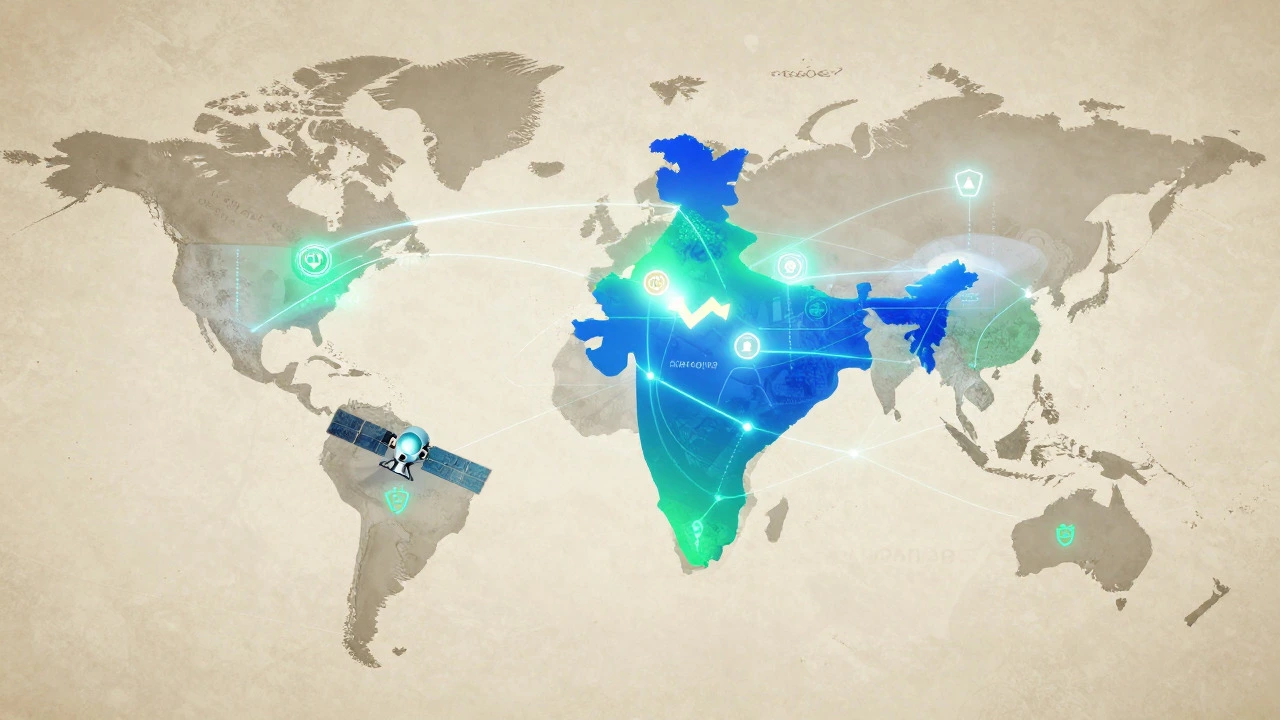
This disparity creates a unique challenge. You can have a stock market boom while a farmer in the same country faces debt traps. You can launch satellites into space while struggling to build all-weather roads in remote districts. This complexity defies simple labels.
Social Indicators: Health, Education, and Literacy
Economic numbers tell half the story. To truly understand a country's development status, we must look at social indicators. How healthy are the people? Are they educated? Can they participate fully in society?
Literacy rates in India have improved significantly. From around 70% in 2011, the rate has climbed higher, driven by government initiatives and private schools. However, the quality of education varies wildly. Urban students often receive world-class training, while rural schools may lack basic resources.
Healthcare is another critical area. Life expectancy in India has increased steadily, reaching nearly 70 years in recent estimates. The government has made massive strides in vaccination programs and maternal health. Yet, the public healthcare system is overstretched. Many Indians rely on out-of-pocket expenses for medical care, which can push families back into poverty after a single illness.
These factors contribute to India's ranking in the Human Development Index (HDI). While India has moved up from "low" to "moderate" human development, it still trails behind neighbors like Sri Lanka and Thailand in certain metrics. This suggests that while the economy is booming, social safety nets need strengthening.
Why the Label Still Sticks
So why do people still ask if India is a Third World country? There are a few reasons.
- Visual Stereotypes: Media coverage often focuses on chaos-traffic jams, slums, or protests. While these exist, they don't capture the quiet efficiency of Indian manufacturing or the cleanliness of new smart cities.
- Outdated Textbooks: Many school curricula haven't updated their definitions of global economics. Students learn "First, Second, Third World" without context, carrying that misunderstanding into adulthood.
- Cognitive Bias: People tend to categorize things simply. "Rich" vs. "Poor" is easier to grasp than "Emerging Market with High Inequality."
Furthermore, the term carries a negative connotation. For decades, being labeled "Third World" implied helplessness. Today, India projects soft power through Bollywood, yoga, and its diaspora. The Indian diaspora is one of the wealthiest and most influential in the world, holding leadership positions in tech giants like Google and Microsoft. This global success contradicts the idea of India as a peripheral or backward nation.
The Path Forward: From Emerging to Developed
India’s goal isn't just to shed a label; it's to achieve tangible development. The government has outlined ambitious targets for becoming a "Viksit Bharat" (Developed India) by 2047. What does this involve?
It means moving beyond labor-intensive industries to high-value manufacturing. Initiatives like "Make in India" aim to turn the country into a global factory, competing with China. It involves digitizing governance through platforms like UPI (Unified Payments Interface), which has revolutionized digital transactions, allowing even small street vendors to accept cashless payments.
It also requires addressing climate change. As a developing nation, India argues for "common but differentiated responsibilities," meaning wealthy nations should bear more burden for historical emissions. Yet, India is investing heavily in renewable energy, aiming for net-zero emissions by 2070.
The journey is ongoing. There will be setbacks. Political shifts, global recessions, and internal challenges will test resilience. But the trajectory is clear. India is no longer the non-aligned, agrarian state of the 1950s. It is a nuclear power, a space-faring nation, and a key player in global supply chains.
Conclusion: Ditching the Old Map
Is India a Third World country? No. That map was drawn sixty years ago and doesn't fit the terrain anymore. India is a complex, dynamic, and contradictory place. It is a lower-middle-income economy with upper-middle-income aspirations. It is a developing nation with developed pockets of excellence.
When we stop using outdated labels, we start seeing the reality. We see a country that is writing its own rules, balancing tradition with technology, and navigating the complexities of modern globalization. The question isn't whether India fits into an old box. The question is how the rest of the world adapts to India's rise.
What is the difference between First World and Third World countries?
Originally, "First World" referred to capitalist, democratic nations allied with the US during the Cold War. "Third World" referred to non-aligned nations, mostly in Asia, Africa, and Latin America. Today, these terms are largely obsolete. Economists prefer "developed" vs. "developing" based on income and industrialization levels.
Is India considered a developing or developed country in 2026?
India is classified as a developing country or an emerging market. While it has a large GDP and advanced sectors like IT and space exploration, its per capita income and human development indices indicate it is still in the process of development.
Why is the term "Third World" considered outdated?
The term is outdated because it originated from Cold War politics, not economics. Since the Soviet Union collapsed, the "Second World" disappeared, and many "Third World" countries became wealthy (like Singapore) or remained poor. The term no longer accurately describes economic or political realities.
What are the main challenges facing India's economic growth?
Key challenges include income inequality, inadequate infrastructure in rural areas, unemployment among youth, and the need for better education and healthcare systems. Balancing rapid urbanization with environmental sustainability is also a major hurdle.
How does India compare to other BRICS nations?
Among BRICS nations (Brazil, Russia, India, China, South Africa), India is one of the fastest-growing economies. While China has a larger total GDP, India has a younger demographic dividend, giving it long-term growth potential that aging populations in Russia and China lack.