
India Greeting Etiquette Checker
You step off the plane in Mumbai or Delhi, eager to greet your friend with a warm embrace. They pull back slightly, offering a hand instead. It’s not personal; it’s cultural. The question of whether you can hug people in India isn’t a simple yes or no-it depends entirely on who you are, where you are, and how well you know each other. For many visitors, navigating these unspoken rules of physical touch is one of the first hurdles in connecting authentically with locals.
The Quick Reality: Context Is Everything
In short, hugging is not illegal in India, but it is highly contextual. If you are an expat living in South Mumbai or a tech worker in Bangalore’s international circles, you might see hugs exchanged daily among colleagues. However, if you walk into a traditional family home in rural Uttar Pradesh or even a conservative neighborhood in Delhi, a hug between strangers-or even acquaintances-can be seen as intrusive, disrespectful, or simply weird. The key lies in reading the room. Indians generally value personal space more than Westerners do, especially across gender lines and generational gaps.
| Situation | Hug Acceptable? | Better Alternative |
|---|---|---|
| Close friends (same gender) | Yes, often | Hug + handshake |
| Mixed-gender friends | Depends on age/city | Handshake or verbal greeting |
| Elders/Respected figures | No | Touching feet (Charan Sparsh) |
| Strangers/Acquaintances | No | Namaste (palms together) |
| Corporate settings (Metro cities) | Moderate, usually same-gender | Professional handshake |
Why Personal Space Matters More Than You Think
To understand why hugging isn’t universal in India, you have to look at the concept of personal boundaries. In many Western cultures, a hug is a default greeting-a low-stakes way to show warmth. In India, physical touch is often reserved for those with whom you share a deep emotional bond. For most Indians, especially outside major metropolitan hubs, the body is considered a private sphere. Invading that space without explicit permission can trigger discomfort rather than connection.
This doesn’t mean Indians are cold or distant. Quite the opposite. Indian hospitality is legendary, but it expresses itself through words, gestures, and shared meals rather than physical contact. When you visit someone’s home, they will likely feed you three times before you’ve had a chance to decline. They will ask detailed questions about your life. But they may never initiate a hug unless you are part of their inner circle. Respecting this boundary shows maturity and cultural sensitivity.
The Gender Divide: Navigating Mixed-Gender Interactions
If there is one rule that stands out clearly, it is this: avoid hugging members of the opposite sex unless you are certain they are comfortable with it. In many parts of India, public displays of affection (PDA) between men and women-even holding hands-can attract stares, comments, or worse. This stems from deeply rooted social norms that prioritize modesty and family honor. While younger generations in cities like Bangalore, Mumbai, and Delhi are increasingly adopting global norms, the majority of the population still adheres to traditional expectations.
Consider this scenario: You’re at a networking event in Hyderabad. A female colleague extends her hand. Do you hug her? Probably not. Stick to a handshake. Now imagine you’re at a birthday party for a close friend group in Gurgaon, where everyone has known each other for years. A quick side-hug might be acceptable. But when in doubt, err on the side of caution. A missed opportunity for a hug is far less damaging than making someone feel uncomfortable or violating their sense of propriety.
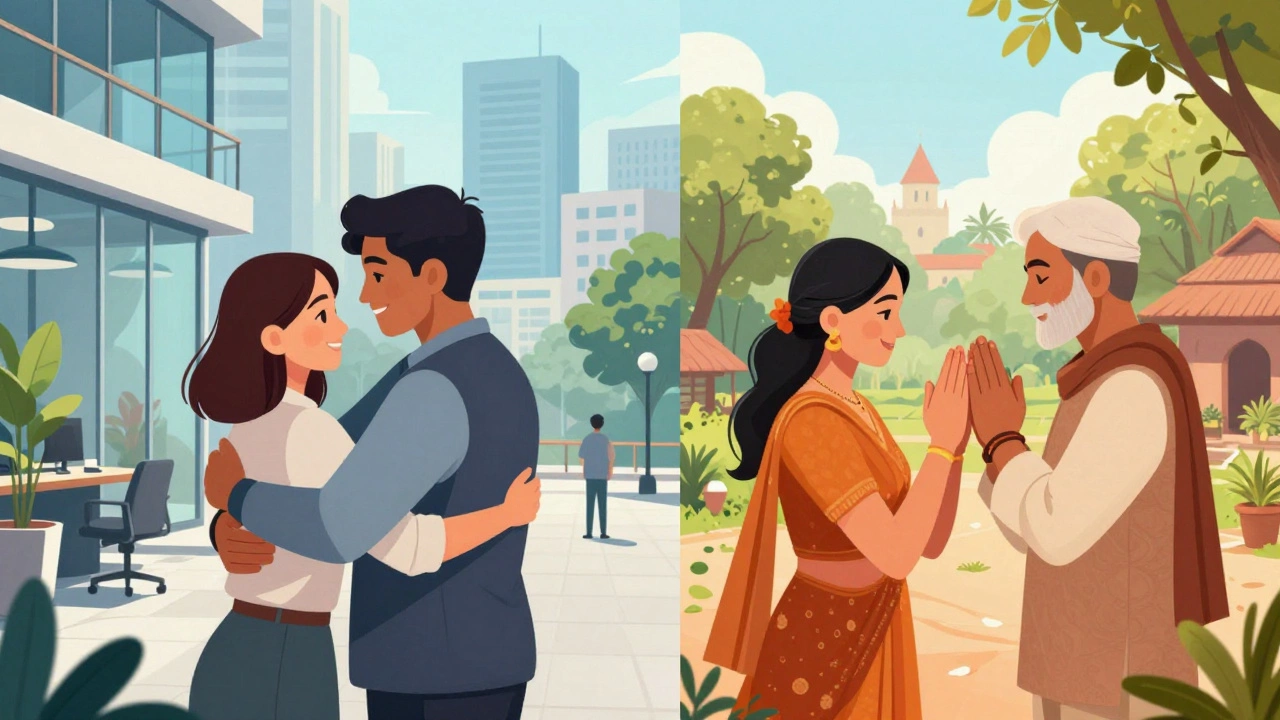
Age and Respect: The Elderly Are Not Hugging Partners
In Indian culture, age commands respect. This isn’t just a polite suggestion; it’s a core value system. When meeting elders-whether they are your parents’ friends, teachers, or community leaders-you do not hug them. Instead, you use a gesture called Namaste (pressing palms together near the chest) or, in more traditional settings, Charan Sparsh (touching their feet). These acts signal humility and reverence. Attempting to hug an elder can be interpreted as arrogant or disrespectful, implying that you place yourself on equal footing with someone who deserves deference.
This rule applies regardless of how close you feel to the person. Even if you’ve grown up playing with your cousin’s older brother, once he becomes a respected figure in his own right, the dynamic shifts. Observing how others interact with elders gives you a clear roadmap. Watch closely. If everyone else is bowing slightly or pressing their palms together, follow suit. It’s a small gesture that earns massive goodwill.
Urban vs. Rural: Geography Changes the Rules
India is not a monolith. What works in one city may fail in another. Metropolitan areas like Mumbai, Delhi, and Bangalore are melting pots of global influence. Here, you’ll find young professionals who grew up watching American TV shows, studying abroad, or working in multinational corporations. Among these groups, hugging is becoming normalized, especially among peers of similar age and background. In contrast, smaller towns and rural villages operate under stricter traditional codes. There, any form of physical affection between unrelated individuals is rare and often frowned upon.
Even within cities, neighborhoods matter. A liberal arts college campus in Pune might be full of hugging students, while a residential area in Lucknow nearby remains conservative. As a visitor or new resident, pay attention to local cues. If you notice people keeping distance during greetings, mirror that behavior. Adaptability is your best tool for building trust.
Safe Alternatives: How to Show Warmth Without Touch
Just because you shouldn’t hug doesn’t mean you can’t connect. Indians appreciate warmth expressed through other channels. Here are safe, culturally appropriate ways to greet people:
- Namaste: Press your palms together near your heart and say “Namaste.” This is universally accepted, respectful, and carries spiritual weight (“I bow to the divine in you”).
- Handshake: Common in professional settings and among younger urbanites. Keep it firm but brief. Avoid initiating with elders unless they extend their hand first.
- Verbal Greetings: Ask “How are you?” or “What’s new?” Indians love engaging in light conversation. Showing interest in their well-being builds rapport faster than physical touch.
- Smile and Eye Contact: A genuine smile goes a long way. Combined with soft eye contact, it signals friendliness without crossing boundaries.
These alternatives work everywhere in India, from corporate offices to village squares. They remove the risk of misinterpretation and allow relationships to develop naturally over time.

When Hugs Do Happen: Recognizing the Exceptions
Hugs do occur in India, but usually under specific conditions. Close siblings often hug. Parents hug their children. Long-lost friends reunite with embraces after years apart. In these cases, the hug is spontaneous, emotionally charged, and mutually understood. It’s not a casual greeting; it’s a release of built-up emotion.
If you’re invited into such moments, accept them graciously. But don’t initiate them lightly. Wait for clear signals. Did your friend open their arms first? Did they step into your personal space willingly? If yes, then a hug may be welcome. If they stand still with closed arms, stick to a handshake or Namaste. Reading body language is crucial here. Indians may not say “don’t hug me,” but their posture will tell you everything.
Common Mistakes Visitors Make
Newcomers to India often stumble over physical greetings due to ingrained habits from home. Here are the most common errors:
- Assuming familiarity: Treating a new acquaintance like an old friend by hugging immediately.
- Ignoring gender norms: Hugging someone of the opposite sex without prior consent or established comfort levels.
- Overlooking age hierarchy: Hugging elders instead of showing proper respect through gestures like Namaste.
- Forcing intimacy: Trying to recreate Western-style casual touch in environments where it’s unwelcome.
Each mistake can create awkwardness or offense. The good news? Most Indians are forgiving of foreigners who try their best. Acknowledge your error politely, apologize if needed, and adjust your behavior moving forward. Humility wins points every time.
Building Trust Through Respectful Distance
Paradoxically, respecting physical boundaries helps you build closer relationships in India. When you refrain from hugging prematurely, you demonstrate awareness and respect for local customs. This makes people feel safer around you. Over time, as trust grows, some individuals may invite you into their personal space voluntarily. Maybe they’ll offer a handshake that turns into a shoulder pat. Or perhaps, after months of friendship, they’ll surprise you with a hug during a special occasion.
Let the relationship dictate the level of physical contact, not the other way around. Patience pays off. By prioritizing cultural sensitivity over convenience, you position yourself as someone who values authenticity over assimilation. That’s a trait admired across all cultures.
Is it rude to hug someone in India?
It depends on context. Hugging close friends of the same gender in urban areas is usually fine. However, hugging strangers, elders, or members of the opposite sex without prior consent can be perceived as rude or inappropriate. Always read the situation and err on the side of caution.
What should I do instead of hugging when meeting someone in India?
Use the Namaste gesture (palms pressed together near the chest) accompanied by a smile. In professional settings, a handshake is also acceptable. Verbal greetings and asking about well-being are great ways to show warmth without physical contact.
Can I hug my Indian colleagues at work?
In large metro cities like Mumbai or Bangalore, some workplaces may tolerate occasional hugging among peers. However, it’s safer to stick to handshakes unless your colleague initiates otherwise. Never assume comfort levels based on office culture alone.
How do Indians greet their elders respectfully?
Indians typically greet elders with Namaste or Charan Sparsh (touching their feet). These gestures symbolize deep respect and humility. Hugging elders is generally avoided as it may seem disrespectful to their seniority.
Are there regions in India where hugging is more common?
Yes, major metropolitan areas like Mumbai, Delhi, and Bangalore tend to have more relaxed attitudes toward hugging, especially among younger, globally exposed populations. Rural areas and smaller cities maintain stricter traditional norms regarding physical contact.