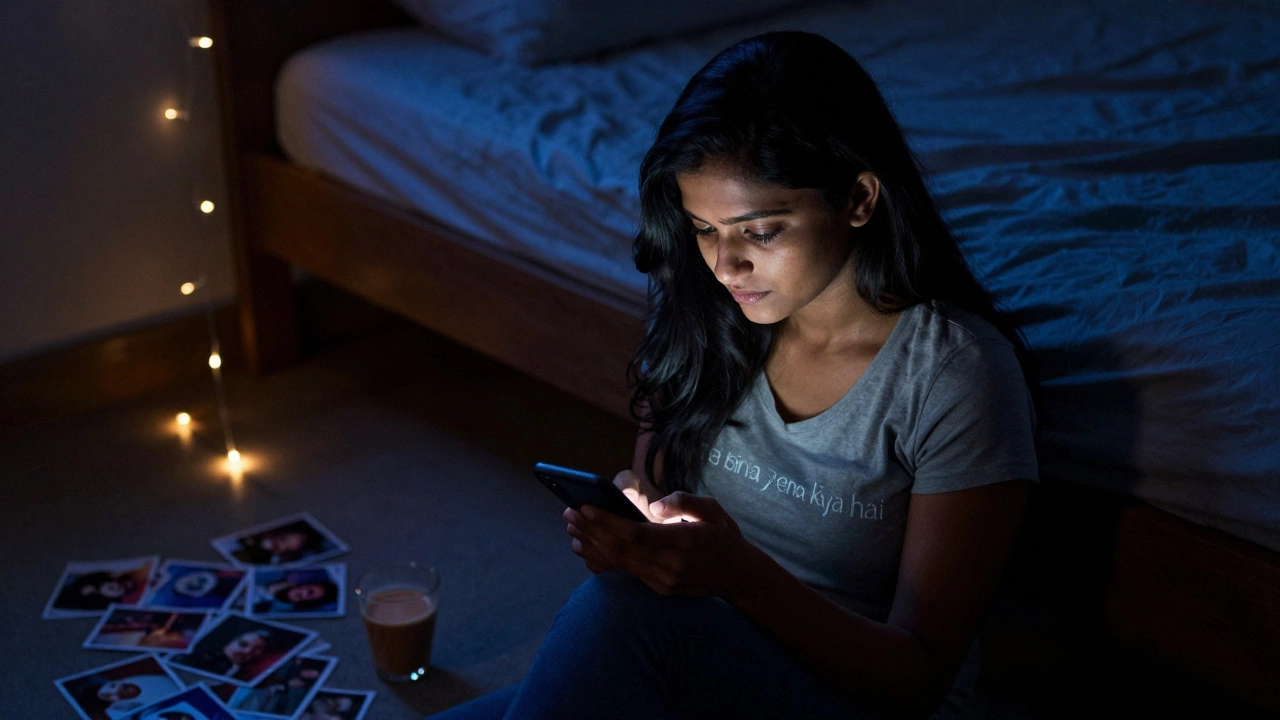
Ever scrolled through WhatsApp and seen someone’s status say, ‘Tere bina jeena kya hai’ or ‘My heart has a new address’? That’s a love status. In India, love status isn’t just a message-it’s a public declaration, a quiet cry, a hidden confession, or sometimes, just a way to feel seen. It’s the modern-day equivalent of writing a love letter on a school desk, but now it’s visible to 300 contacts, your cousins, your boss, and your ex.
What Exactly Is a Love Status?
A love status is a short text, often paired with a romantic image or song, shared on platforms like WhatsApp, Instagram, or Facebook to express feelings about a romantic relationship. It’s not always about being officially together-it could be longing, heartbreak, hope, or quiet joy. In India, where open talk about love is still shaped by family expectations and social norms, these statuses become a safe space to say what you can’t say out loud.
Unlike Western cultures where relationship status on Facebook means ‘in a relationship’ or ‘single,’ Indian love statuses are poetic, ambiguous, and layered. One person might use a Bollywood lyric to signal they’re in love, while another uses a sad quote to hint they’re heartbroken. There’s no button to click. No ‘it’s complicated’ toggle. Just words-and the weight they carry.
Why Do Indians Use Love Statuses So Much?
India’s dating culture is complicated. Arranged marriages still dominate, but young people are falling in love anyway-often in secret. Social media becomes the only place where they can express what’s inside. A WhatsApp status is low-risk. No one has to respond. No one has to know it’s about them. It’s a whisper in a crowded room.
Studies show that over 72% of Indian users aged 18-28 update their WhatsApp status at least once a week, and nearly 40% of those updates are related to love, heartbreak, or longing. It’s not just teens. I’ve seen uncles in their 40s sharing old Hindi song lyrics after 20 years of marriage. For them, it’s nostalgia. For others, it’s survival.
Love statuses also work as emotional armor. If you’re secretly dating someone your family doesn’t approve of, a status like ‘Dil ki baat koi samajh na sake’ lets you vent without naming names. It’s a coded language passed down through memes, songs, and shared pain.
Common Types of Love Statuses in India
Indian love statuses fall into clear patterns. You’ll see them over and over-not because they’re unoriginal, but because they work. Here are the most common types:
- Classic Bollywood Lyrics - Lines from movies like Yeh Jawaani Hai Deewani, Kabir Singh, or Dilwale Dulhania Le Jayenge are the go-to. They’re poetic, familiar, and emotionally charged. A status like ‘Tere bina zindagi se koi shikwa nahi’ says more than a paragraph could.
- English Poetic Quotes - Often copied from Instagram pages like @love_quotes_india. Examples: ‘You’re my favorite notification’ or ‘I didn’t choose you. My soul did.’ These feel more ‘global’ but still carry local pain.
- One-Line Heartbreaks - Short, brutal, and real. ‘Still waiting for a ‘good morning’ that never came.’ ‘I loved you more than you knew.’ These are the ones that make you pause mid-scroll.
- Religious or Spiritual Love - Blending devotion with romance. ‘Tu mera khuda hai’ or ‘Allah ne tujhe mere liye bheja hai’. This mix of faith and love is uniquely Indian.
- Humorous or Sarcastic - ‘My girlfriend says I’m her favorite distraction. I think she means my phone.’ These are usually shared by people who don’t want to be taken seriously-but still want to be noticed.
How Love Statuses Affect Real Relationships
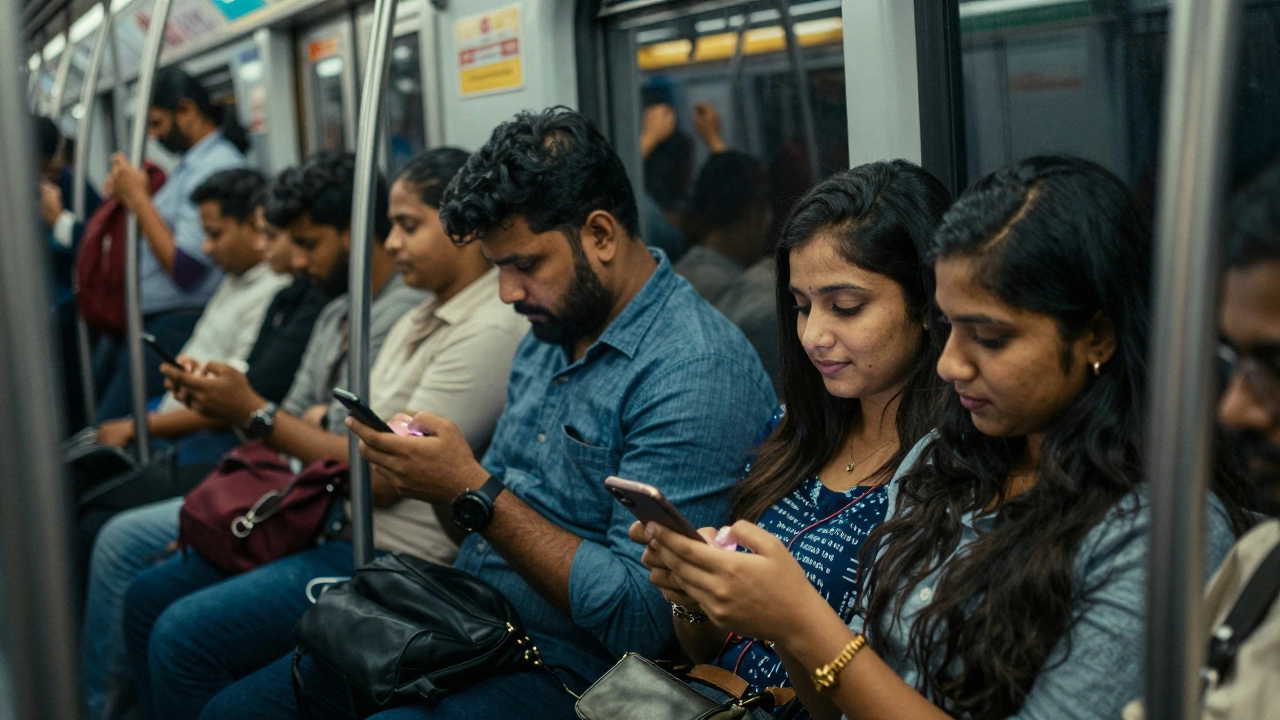
These statuses don’t stay online. They spill into real life. I’ve seen couples break up because one person didn’t like the other’s status. I’ve seen parents confront their kids over a quote they didn’t understand. I’ve seen someone finally confess after months of sending the same lyric every day.
There’s a famous case from Delhi in 2023-a college student kept posting ‘Tere saath khoye hain hum, ab kahin na milenge’ for 117 days. No one knew who it was for. Then, on Day 118, he posted a photo of her holding his hand at a café. The status changed to ‘Found you.’ Over 12,000 people saw it. He got 87 messages. Only three were from friends. The rest were strangers saying, ‘I felt that.’
Love statuses create emotional intimacy without physical closeness. They’re the digital equivalent of holding someone’s hand in a crowded train-no one else knows it’s happening, but it means everything.
When Love Statuses Go Wrong
Not every status ends in a happy ending. Sometimes, they cause real damage.
There’s pressure to perform. If you’re in love, you feel like you need to post. If you’re not posting, people assume you’re not interested. If you post too much, you’re called ‘cringe.’ If you post too little, you’re ‘cold.’ It’s a tightrope walk.
Some people use love statuses to manipulate. A partner might post a sad quote to guilt-trip their significant other into texting. Others use them to keep options open-posting romantic lines while dating multiple people, hoping one will ‘get it.’
And then there’s the family factor. Parents in small towns still check WhatsApp statuses. A status like ‘Tumhare bina kuch bhi nahi’ can lead to awkward family questions, forced meetings, or even forced breakups. In rural India, a love status has been known to trigger caste-based objections or religious disapproval.
What’s Changing in 2026?
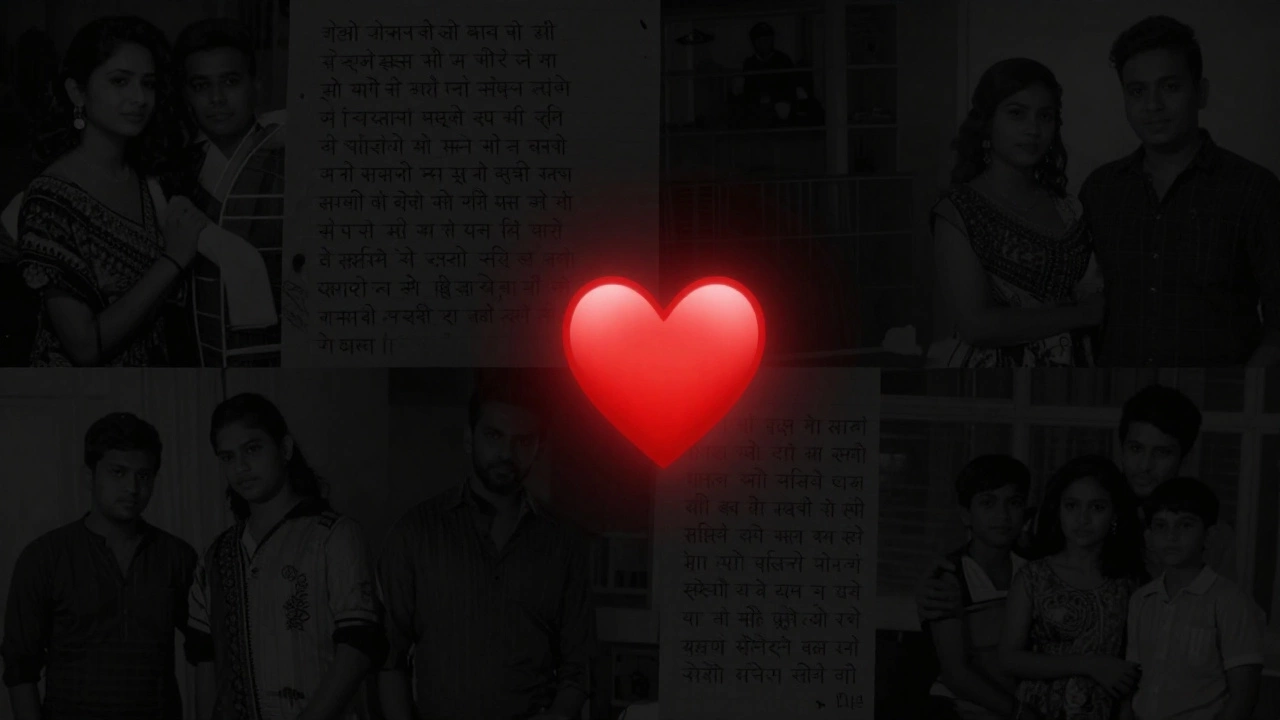
Love statuses are evolving. Gen Z is moving away from clichés. More people are using memes, inside jokes, or even silent statuses-just a black screen with a heart emoji. Some use voice notes instead of text: a 10-second recording of them humming a song they both love.
There’s also a rise in ‘anti-love statuses.’ ‘I’m not single. I’m self-owned.’ ‘Love is not a status update.’ These are reactions to the pressure of performing romance online.
But the core hasn’t changed. In India, love is still something you hide. And the only place you can safely show it is in 140 characters.
Why This Matters
Love statuses aren’t just digital noise. They’re cultural artifacts. They reflect how a generation is learning to love in a society that doesn’t always make space for it. They’re the quiet rebellion of young Indians who want to feel, to be seen, to be known-without saying a word out loud.
Behind every love status is a real person. Someone who stayed up late wondering if you’d see it. Someone who hoped you’d reply. Someone who needed to say it-even if only to the universe.
So the next time you see a love status, don’t scroll past it. Pause. Maybe it’s not for you. But maybe, just maybe, it’s someone’s entire heart in one line.
What is a love status in India?
A love status in India is a short text or quote shared on social media platforms like WhatsApp or Instagram to express romantic feelings-whether it’s love, longing, heartbreak, or hope. Unlike Western ‘relationship status’ labels, Indian love statuses are often poetic, ambiguous, and used as a safe way to communicate emotions that can’t be spoken openly.
Why do Indian people use Bollywood lyrics in love statuses?
Bollywood lyrics are deeply embedded in Indian emotional culture. They’re familiar, expressive, and carry decades of shared meaning. Using lines from movies like ‘Dilwale Dulhania Le Jayenge’ or ‘Kabir Singh’ lets people convey complex feelings without explaining them. It’s like speaking in a language everyone already knows.
Can a love status cause relationship problems?
Yes. Love statuses can cause misunderstandings, jealousy, or even family interference. A status meant as a private message can be seen by parents, exes, or coworkers. Some people use them to manipulate partners into reacting, while others misinterpret them as public declarations. In conservative families, a romantic status has led to forced breakups or social shame.
Are love statuses only for young people?
No. While most common among teens and young adults, many middle-aged and older Indians use love statuses too. For some, it’s nostalgia-sharing a song from their youth. For others, it’s a quiet way to express love to a long-term partner without saying it outright. A status like ‘Tere bina kuch bhi nahi’ isn’t just for new love-it’s for lasting love too.
What’s the difference between a love status and a relationship status?
A relationship status on Facebook or Instagram is a formal label-‘single,’ ‘in a relationship,’ ‘engaged.’ A love status in India is emotional, poetic, and unofficial. It doesn’t confirm anything. It just says how someone feels. One is a checkbox. The other is a heartbeat.
Is it okay to post love statuses if you’re not officially dating?
It’s common-and often expected-in Indian social circles. Many people post romantic statuses during the early stages of dating, even if they haven’t defined the relationship. It’s a way to test the waters, express interest, or signal availability. But it can lead to confusion if the other person doesn’t interpret it the same way.