One-Word Poem Generator
Create Your Minimalist Poem
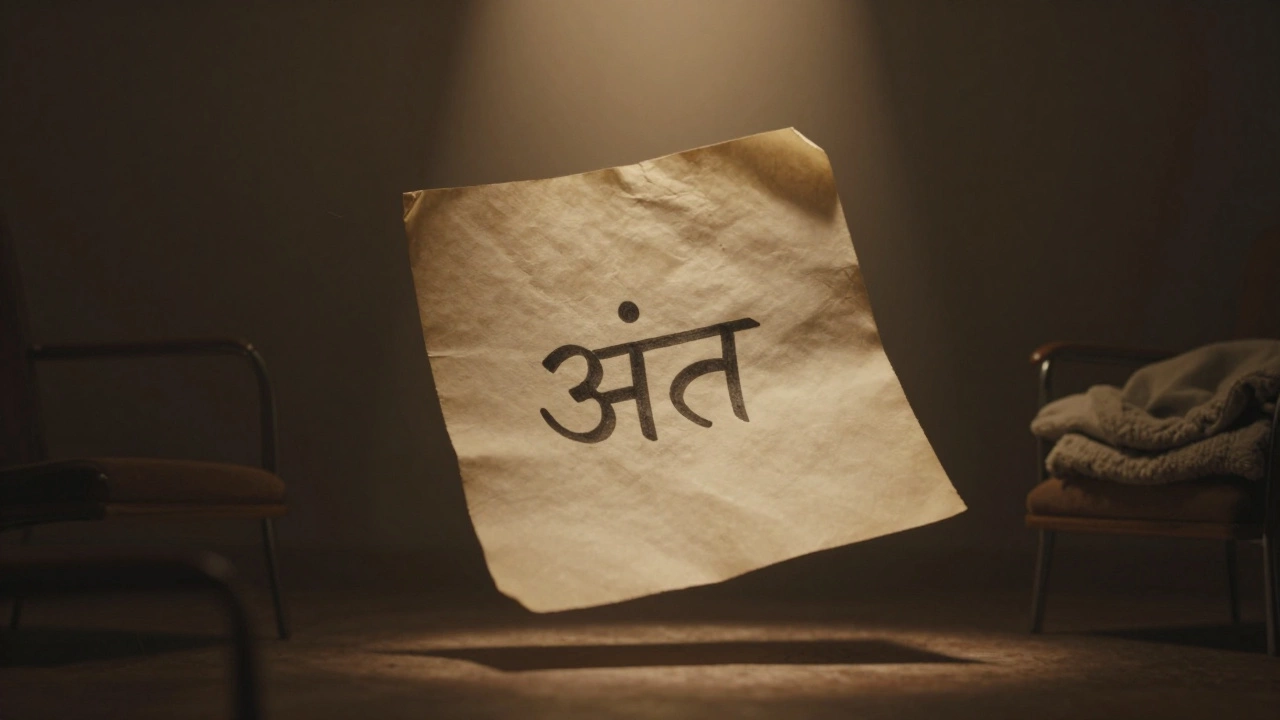
Based on the legendary one-word Hindi poem "अंत" by Atal Bihari Vajpayee, this tool helps you discover the emotional power of silence in poetry.
Cultural Inspiration
By Atal Bihari Vajpayee (1968)
The silence after the last breath
By Shakti Chattopadhyay
The absence of my mother
By Subramania Bharati
Truth without drama
Your Poem
Enter a word to see your poem's meaning
Most people think poetry needs lines, rhythm, rhyme, or at least a few words. But the shortest poem ever written? It’s just one word. And it came from India.
In 1968, Indian poet Atal Bihari Vajpayee published a poem in the Hindi newspaper Navbharat Times. It had no title. No punctuation. Just one word: "अंत" - which means "end."
That’s it. One word. But it carried the weight of a lifetime.
Readers didn’t just see a word. They felt it. The poem was written after the death of Vajpayee’s close friend, a fellow poet who had spent his final days in silence. No last words. No farewell letter. Just an empty bed and a quiet room. Vajpayee didn’t write about grief. He didn’t describe tears or memories. He didn’t need to. The word "अंत" was the silence after the last breath. It was the end of a friendship. The end of a life. The end of everything that was left unsaid.
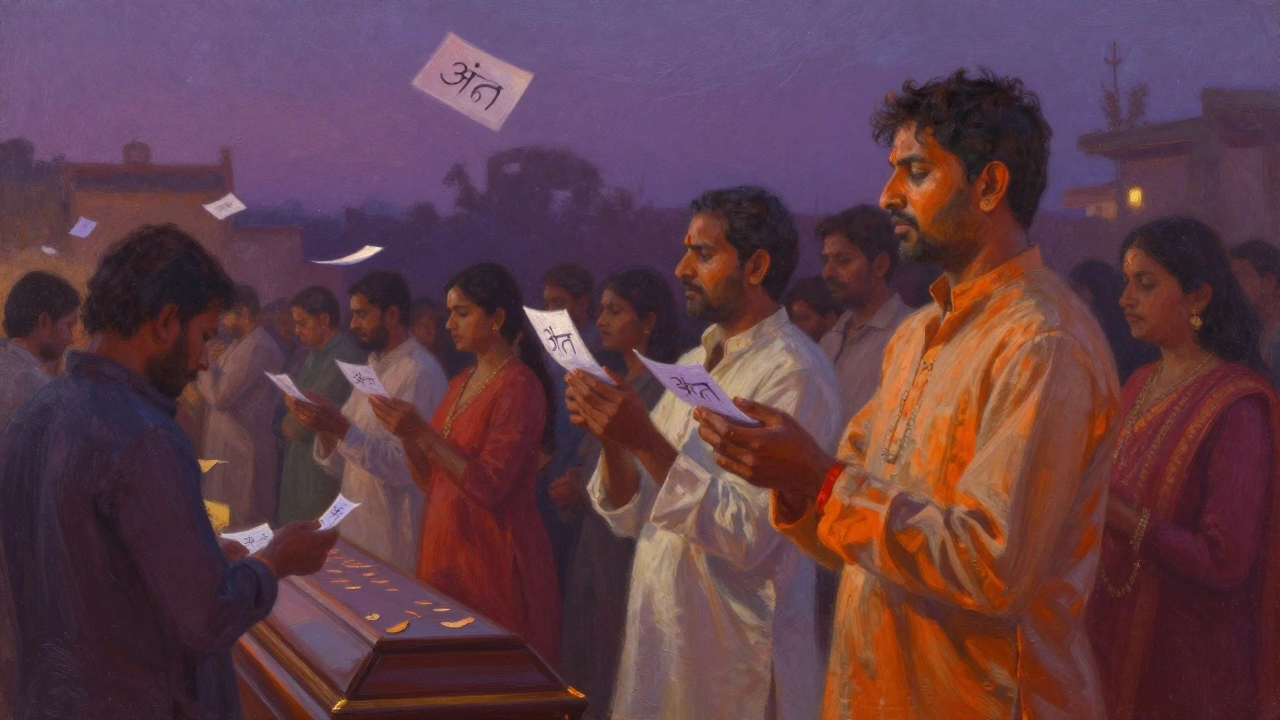
This one-word poem became legendary in Indian literary circles. It wasn’t published in a fancy book. No awards were given. But students copied it into notebooks. Teachers used it to explain how poetry doesn’t need length to hurt. And in small towns across Uttar Pradesh, Bihar, and Madhya Pradesh, people still whisper it at funerals - not as a quote, but as a prayer.
Why Does One Word Work When Thousands Don’t?
Modern poetry often tries too hard. It strings together metaphors like beads. It stacks emotions like bricks. But the shortest poem works because it strips everything away. It doesn’t explain grief. It becomes grief.
Think of it like this: you’re sitting in a hospital waiting room. The doctor walks out. Says nothing. Just looks at you. That look? That’s the poem. No words needed. The silence speaks louder than any eulogy.
That’s what Vajpayee did. He didn’t write about death. He wrote the moment death happened. And in Indian culture, where silence is often more powerful than speech, that made all the difference.
The Cultural Roots of Minimal Sad Poetry in India
India has a long tradition of poetry that values restraint. Ancient Sanskrit verses like those by Kalidasa often used just a few syllables to paint entire landscapes of emotion. The ghazal tradition, popular in Urdu and Persian poetry, thrived on implication - what was left unsaid mattered more than what was written.
Modern Indian poets like Subramania Bharati and Sarojini Naidu used brevity to carry deep sorrow. Bharati’s poem "Jhansi Ki Rani" ends with a single line: "She died for her land." No fanfare. No drama. Just truth.
Even folk songs from rural India - sung by widows during mourning rituals - often repeat one phrase over and over: "Mera man kahin door hai" - "My heart is somewhere far away."
That’s the pattern. In Indian sad poetry, emptiness is not a flaw. It’s the point.
Other Famous One-Word Poems Around the World
India’s one-word poem isn’t alone. In 1950, American poet E.E. Cummings published a poem titled "l(a" - just seven letters that, when read vertically, form the word "loneliness". It’s visual, not verbal. But it still lands like a hammer.
Japanese haiku sometimes push into minimalism. The poet Matsuo Bashō wrote: "Old pond / frog jumps in / sound of water." Three lines. Seventeen syllables. But the silence between them? That’s where the sadness lives.
Even in Western poetry, there are echoes. William Carlos Williams wrote "The Red Wheelbarrow" - eight lines, no verbs, no emotion. Just objects. And yet, people cry reading it.
But none of them carry the cultural weight of Vajpayee’s "अंत". Because in India, the word isn’t just a word. It’s a ritual. A final offering. A breath held too long.
How to Write a Poem That Fits in One Word
You don’t need to be a famous poet to write a one-word poem. But you do need to have lived something real.
Here’s how it works:
- Find the moment that broke you - not the big event, but the quiet one after. The phone call that came too late. The chair still sitting by the window. The empty cup on the table.
- Forget describing it. Don’t say "I miss you." Don’t say "it hurts." Just name the thing that’s left.
- That thing? That’s your poem.
Try it yourself. What’s the one word that says everything about your loss?
Maybe it’s "Still" - like the silence after someone stops calling.
Or "Unanswered" - like the text you never sent.
Or "Empty" - like your side of the bed.
That’s the power of minimal poetry. It doesn’t ask you to understand. It asks you to feel.
Why This Poem Still Matters Today
In 2026, we’re drowning in words. Social media feeds, notifications, algorithms, captions, reels, stories - everything screams for attention. But the shortest poem? It doesn’t scream. It waits.
It’s the poem you read when your phone dies and you’re sitting alone in the dark. It’s the poem you whisper when you can’t cry anymore. It’s the poem that doesn’t need to be shared - because sharing it would break its silence.
That’s why it still lives. Not because it’s clever. Not because it’s famous. But because it’s true.
And in a world that’s lost its way in noise, sometimes the only thing left to say… is one word.
What is the shortest poem ever written?
The shortest poem ever published is the one-word Hindi poem "अंत" (Ant), meaning "end," written by Indian poet Atal Bihari Vajpayee in 1968. It was published in a newspaper as a tribute to a deceased friend and has since become a cultural symbol of silent grief in India.
Is a one-word poem really considered poetry?
Yes. Poetry isn’t defined by length, but by emotional impact. Ancient traditions like Sanskrit verse, Japanese haiku, and Indian ghazals have always valued implication over explanation. A single word can carry the weight of a lifetime if it’s rooted in real experience. Vajpayee’s poem proves that poetry lives in silence as much as in sound.
Why is this poem so powerful in Indian culture?
In Indian culture, silence is often more respectful than speech, especially in mourning. The word "अंत" doesn’t describe death - it becomes it. It’s used in rituals, whispered at funerals, and written in diaries as a quiet tribute. It reflects a deep tradition where what’s left unsaid holds more meaning than what’s spoken.
Are there other famous one-word poems in India?
While Vajpayee’s "अंत" is the most famous, other poets have experimented with minimalism. For example, the Bengali poet Shakti Chattopadhyay wrote a poem consisting of just the word "খালি" (Khali), meaning "empty," to describe the absence of his mother after her death. These poems aren’t common, but when they appear, they’re unforgettable.
Can I write my own one-word poem?
Absolutely. Find the one word that holds your deepest grief - not the emotion, but the thing that represents it: a key, a chair, a date, a silence. That word is your poem. Don’t explain it. Don’t justify it. Just let it sit. That’s all poetry ever needed to be.